











Here is the ultimate 3-day Angkor Archaeological Park, which combines the essential temples – Angkor Wat, Angkor Thom, Bayon and Ta Prohm – with the quieter sites of the Grand Circuit and a half-day visit to Banteay Srei.
Rather than following the standard Small Circuit and Grand Circuit blindly, the route is designed to reduce unnecessary backtracking while giving you time for lunch, rest and the long walks between temple complexes.
A quick guide to Angkor Archaeological Park
Angkor Archaeological Park is much larger than Angkor Wat alone. The park covers about 400 km², with temples, reservoirs, canals and the remains of several Khmer capitals spread around Siem Reap, so planning by area matters more than trying to visit as many temples as possible.
| Practical detail | Information |
|---|---|
| Location | Siem Reap Province, Cambodia |
| Park scale | ~400 km² |
| UNESCO status | World Heritage Site, inscribed 1992 |
| Park access | 5:00 AM–6:30 PM overall; individual sites vary |
| 1-day pass | US$37 |
| 3-day pass | US$62; valid within 7 days |
| 7-day pass | US$72; valid within 30 days |
| Main transport | Tuk-tuk, private car, bicycle/e-bike, guided tour |

How the park is laid out
For a first visit, think of Angkor as several clusters rather than one enormous temple complex:
- Central Angkor: Angkor Wat, Angkor Thom, Bayon, Baphuon, Ta Prohm, Banteay Kdei, Srah Srang
- Grand Circuit: Preah Khan, Neak Pean, Ta Som, East Mebon, Pre Rup
- Outer eastern area: Banteay Srei, Banteay Samre
CAMBODIA AT A GLANCE
Discover features in Cambodia travel and things you may not know before you go.
The ideal 3-day itinerary at Angkor Archaeological Park
Day 1: Angkor Wat Sunrise, Angkor Thom and Ta Prohm
The first day covers the temples that define most visitors’ first impression of Angkor: Angkor Wat, Angkor Thom and Ta Prohm. Start before sunrise, but do not try to stay inside the park continuously until sunset – the midday heat is a good reason to return to Siem Reap for a proper break.
| Time | Stop | Suggested time |
|---|---|---|
| 4:30–5:00 AM | Leave Siem Reap | – |
| 5:00–6:30 AM | Angkor Wat sunrise | 1–1.5 hrs |
| 6:30–8:30 AM | Angkor Wat | 1.5–2 hrs |
| 8:45–11:00 AM | Angkor Thom + Bayon | 2–2.25 hrs |
| 11:00 AM–2:00 PM | Lunch + rest | 2–3 hrs |
| 2:30–4:00 PM | Ta Prohm | 1–1.5 hrs |
| 4:00–5:00 PM | Banteay Kdei + Srah Srang | ~1 hr |
| Evening | Return to Siem Reap | – |
4:30–5:00 AM – Leave Siem Reap: For an Angkor Wat sunrise, plan to leave your hotel around 4:30–4:45 AM for a typical visit. The exact departure time depends on your hotel and the sunrise time on your travel date, so confirm it with your driver the evening before. Angkor Wat opens at 5:00 AM, but arriving at the gate does not mean walking straight into an empty viewing spot. Sunrise is one of the busiest periods at the temple, particularly during peak travel periods.
5:00–8:30 AM / Angkor Wat: Spend the first part of the morning around the Angkor Wat moat and main entrance for sunrise, then stay to explore the temple itself. Allow around 2–3 hours in total if Angkor Wat is a major reason for your trip. The temple is large enough that rushing through it in 45 minutes usually means missing much of the interior.
Planning tip: Angkor Wat opens at 5:00 AM, while the upper Bakan area has separate access rules and opening times. Visitors under 12 and pregnant women are not permitted to climb to the upper level.

Angkor Wat

Ta Prohm
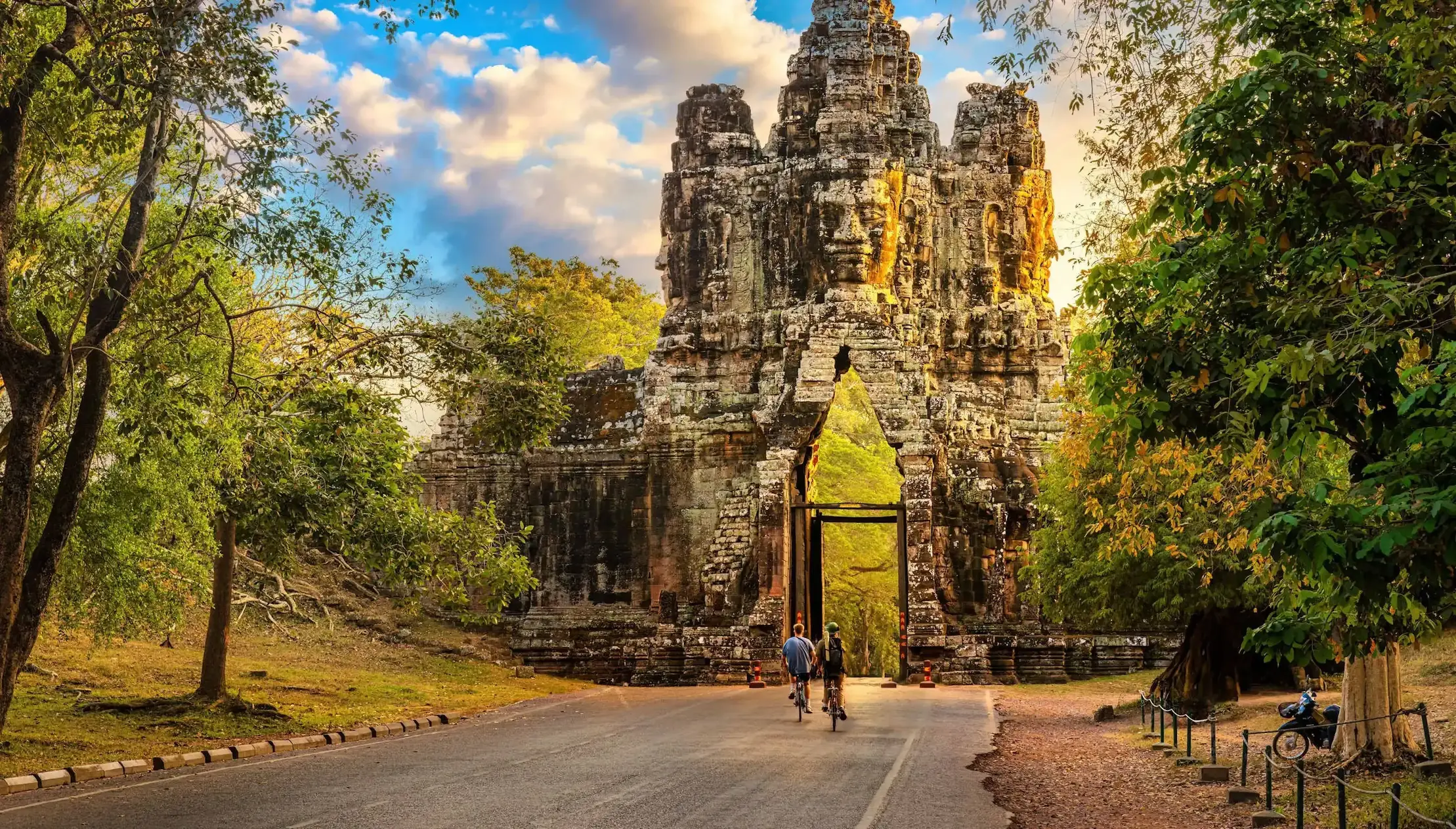
8:45–11:00 AM / Angkor Thom and Bayon: After Angkor Wat, continue north to Angkor Thom, the walled royal city built under King Jayavarman VII. Enter through the South Gate, then continue toward Bayon, the temple known for its large carved faces. Bayon opens at 7:30 AM, so this timing works well after an early morning at Angkor Wat. Allow around two hours for this area if you want to see more than Bayon itself. Baphuon, the Terrace of the Elephants and the Terrace of the Leper King are all nearby, so they can be added without another long drive.
2:30–4:00 PM / Ta Prohm: Return to the park in the afternoon and head to Ta Prohm, one of the most recognizable temples after Angkor Wat. The temple is best approached as a walking route rather than a quick photo stop. Give yourself around 60–90 minutes to follow the main paths and see the better-preserved galleries, courtyards and areas where tree roots have grown around the stone structures.
4:00–5:00 PM / Banteay Kdei and Srah Srang: If your energy levels are still good, finish the day at Banteay Kdei, followed by Srah Srang, the large reservoir directly opposite it.
CAMBODIA IN DEPTH (15 DAYS)
Experience the best of Siem Reap, Phnom Penh, and Tonle Sap in our comprehensive Cambodia tour.
Day 2: Grand Circuit and Banteay Srei
Day 2 combines the northern Grand Circuit with an afternoon extension to the pink sandstone temple of Banteay Srei, maximizing travel efficiency in the northern sector.
| Time | Stop | Highlight | Time Needed |
|---|---|---|---|
| 7:00–8:30 AM | Preah Khan | Sprawling maze-like temple complex | 75–90 min |
| 8:45–9:30 AM | Neak Pean & Ta Som | Island sanctuary & tree-root gateway | ~60 min |
| 9:45–10:45 AM | Pre Rup | Tiered brick temple pyramid | 45–60 min |
| 11:00 AM–2:00 PM | Lunch & Rest | Break during peak heat | 3 hrs |
| 2:30–4:30 PM | Banteay Srei | Exquisite pink sandstone carvings | 60–90 min |
| 4:30 PM onward | Return to Siem Reap | Free evening | – |

Banteay Srei
7:00–8:30 AM / Preah Khan: Start at Preah Khan at the western edge of the Grand Circuit. This expansive monastery features long, corridor-like galleries, vaulted archways, and overgrown stone courtyards.
8:45–9:30 AM / Neak Pean and Ta Som: Take a short wooden boardwalk across a lotus-filled lake to Neak Pean, a small circular sanctuary built on an island. Continue east to Ta Som, famous for its eastern outer gateway completely engulfed by a sacred fig tree.
9:45–10:45 AM / Pre Rup: Visit Pre Rup, a mountain-temple built of warm reddish brick and laterite. Climb its tiered terraces for sweeping vistas over the surrounding jungle canopy.
2:30–4:30 PM / Banteay Srei: After lunch and a midday rest, drive ~25 km northeast to Banteay Srei (“Citadel of the Women”). Dedicated to Shiva, this 10th-century temple is carved from fine pinkish sandstone, featuring some of the most intricate bas-reliefs in Khmer art.
Day 3: Roluos Group and Kampong Phluk Floating Village
Day 3 ventures east of Siem Reap to explore early Khmer architecture at the Roluos Group, followed by an afternoon boat journey to the stilted community of Kampong Phluk on Tonle Sap Lake.
| Time | Stop | Experience | Time Needed |
|---|---|---|---|
| 7:30 AM | Leave Siem Reap | Drive east toward Roluos (~13 km) | ~20 min |
| 8:00–10:30 AM | Roluos Group | Bakong, Preah Ko, and Lolei | 2–2.5 hrs |
| 10:30 AM–1:30 PM | Lunch & Midday Rest | Break in Siem Reap or local venue | 3 hrs |
| 2:00–5:30 PM | Kampong Phluk (Tonle Sap) | Stilted village & flooded mangrove forest boat tour | 3–3.5 hrs |
| 5:30 PM onward | Return to Siem Reap | Free evening | – |
8:00–10:30 AM / The Roluos Group (Bakong, Preah Ko, Lolei): Spend the morning exploring the ancient capital of Hariharalaya, built in the late 9th century before the capital moved to Angkor:
- Bakong: The largest temple of the group, featuring a massive sandstone stepped pyramid surrounded by a broad moat.
- Preah Ko: Known for its six brick towers adorned with delicate plaster carvings and sacred bull statues (Nandi).
- Lolei: Built on an island in a former reservoir (baray), featuring preserved sandstone lintels.
2:00–5:30 PM / Kampong Phluk Floating Village: After lunch, head southeast (~15–20 minutes from Roluos) to Kampong Phluk on the edge of Tonle Sap Lake. Board a wooden boat to cruise through a community of houses built on tall wooden stilts (rising up to 6–10 meters). Depending on the seasonal water levels, switch to small rowing boats to explore the flooded mangrove forest. Conclude your tour watching the sunset over the vast waters of Tonle Sap before returning to Siem Reap.
Note on Tonle Sap: Kampong Phluk requires a separate boat excursion ticket, which is not covered by the standard Angkor Enterprise Pass.

Kampong Phluk
How much does it cost to visit Angkor Archeological Park?
For all new travellers coming to Angkor Archeological Park, you can only purchase authentic tickets directly through Angkor Enterprise. Third-party websites or travel agencies cannot issue legal passes independently.
- 1-Day Pass: $37 USD
- 3-Day Pass: $62 USD (valid for any 3 days within a 7-day or 10-day window, depending on the current ticketing software update; days do not need to be consecutive)
- 7-Day Pass: $72 USD (valid for any 7 days within a 30-day window)
Note: Children under 12 enter for free but must present a valid passport at the gates as proof of age.
Not just that, there are a few popular excursions around Siem Reap sit outside the standard Angkor pass:
- Beng Mealea: US$10
- Kbal Spean: US$5
- Koh Ker: US$15

VIETNAM & CAMBODIA DISCOVERY (19 DAYS)
Combine the majestic temples of Angkor with the stunning landscapes of Vietnam in this unforgettable journey.
Getting around Angkor: Which transport should you choose?
| Transport | Best for | What the day feels like | Main drawback | Typical 2026 market range* |
|---|---|---|---|---|
| Tuk-tuk | Most first-time visitors | Open-air, easy to stop and move between temples | Hot and dusty in the afternoon | ~$20–35/day |
| Private car | Families, couples, or honeymooners in Cambodia | Air-conditioned and more comfortable between stops | Higher cost | ~$40–45+/day |
| Bicycle | Fit travellers who enjoy slow travel | Quiet and independent, but physically demanding | Heat + long distances | ~$3–6/day (~$10–15/day for e-bike) |
Plan your Angkor trip with Travel Sense Asia
Three days gives you enough time to see Angkor Wat, explore the main temples around Angkor Thom, follow the Grand Circuit, and make the longer trip to Banteay Srei without rushing through every stop.
If you are combining Angkor with Siem Reap, Phnom Penh, Laos, Vietnam or other parts of Southeast Asia, Travel Sense Asia can help arrange the itinerary around your travel dates, preferred pace and transport needs.
FAQs
What is the difference between the Angkor Small Circuit and Grand Circuit?
The Small Circuit covers the main temples around Angkor Wat and Angkor Thom, including Angkor Wat, Bayon and Ta Prohm. It is the natural starting point for a first visit because the temples are relatively close together.
The Grand Circuit extends farther north and east to temples such as Preah Khan, Neak Pean, Ta Som, East Mebon and Pre Rup. The temples are generally quieter, and the route involves more driving between stops.
What are the must-visit temples in Angkor Archaeological Park?
- Angkor Wat: Start here for the long galleries, detailed bas-reliefs, courtyards and central sanctuary. Give yourself around 2–3 hours, especially if you are visiting at sunrise.
- Bayon: Best known for its large carved faces, but also worth exploring for the bas-reliefs running through its lower galleries.
- Ta Prohm: Smaller courtyards and narrow galleries make it feel very different from Angkor Wat, with tree roots growing across parts of the structure.
- Preah Khan: A large complex of long corridors, courtyards and layered galleries. It is a good choice if you want more time exploring the architecture rather than simply taking photos.
- Banteay Srei: Located farther northeast of the main temple group, it is known for its detailed carvings in red and pink sandstone.
Can children visit Angkor Wat?
Yes. Children can visit the main temples, but the amount of walking and heat can make a full temple day tiring for younger travellers.
If travelling with children, keep the itinerary shorter, build in a proper midday break and avoid trying to visit every temple on the route. Note that access to the upper Bakan area of Angkor Wat has additional restrictions, including a minimum age of 12.
Can you visit Angkor by bicycle?
Cycling between the main temples in the Small Circuit is possible, but three days of riding in Cambodia’s heat can become tiring, particularly if you also want to walk through large temple complexes. An e-bike is a more practical alternative for travellers who want independence without doing all the pedalling themselves.