












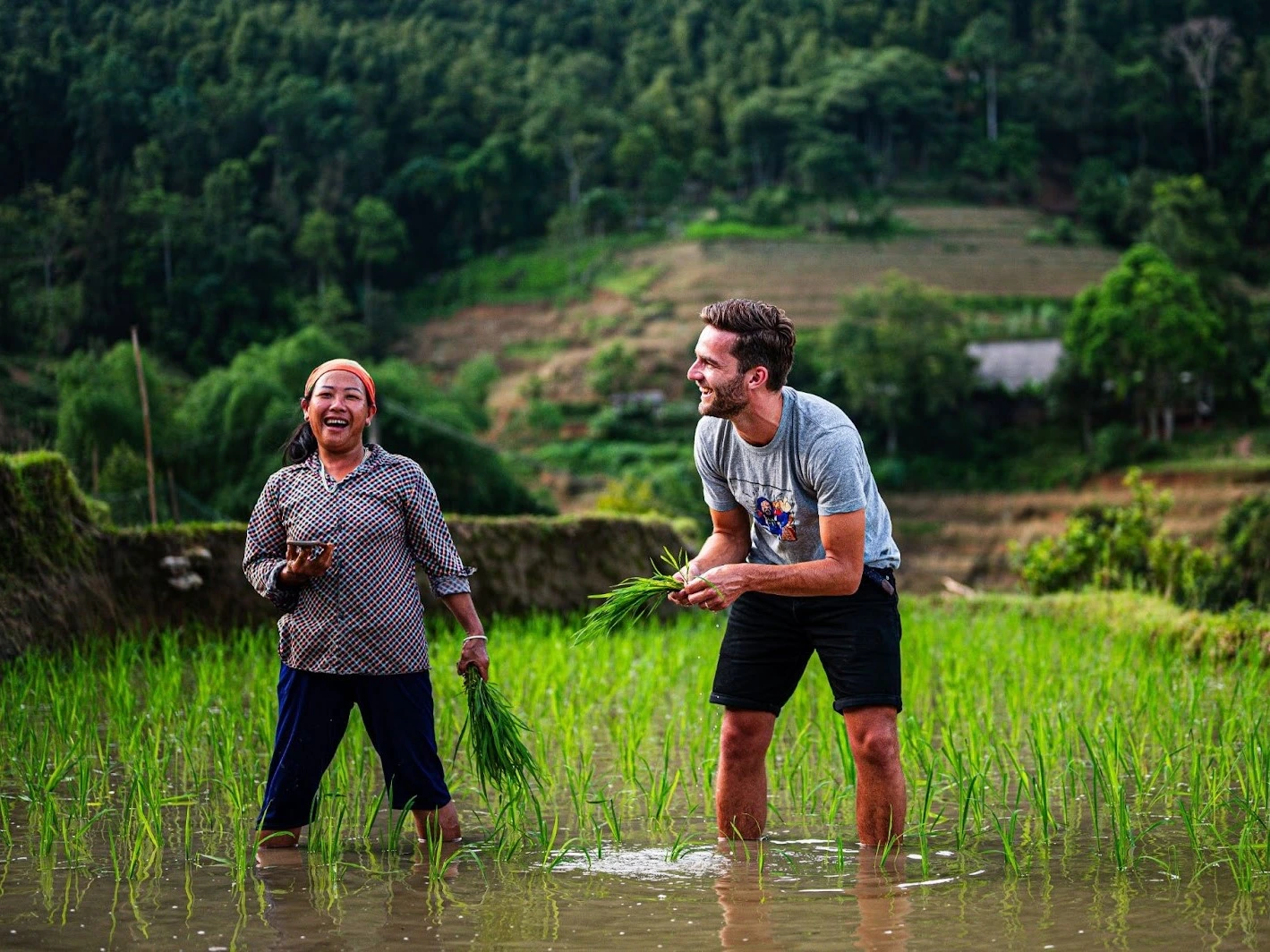
With a history of wet rice cultivation stretching back thousands of years, Vietnam is renowned for its breathtaking rice fields, especially in the northern region. Here, generations of farmers have learned to adapt their farming to diverse landscapes, from fertile deltas to towering mountain slopes.
Today, rice fields are more than just a source of livelihood. They’re also must-see destinations for travelers seeking authentic beauty and culture. But there’s more to experience than a quick hike and an Instagram photo. Rice fields in Northern Vietnam invite you to slow down and explore deeper. In this article, you can find better ways to help you absorb the most unique beauty of Northern Vietnam agriculture.
What makes rice fields in Northern Vietnam special?
The beauty of adaptation: How are rice fields shaped by the land?
Rice cultivation in Northern Vietnam is deeply intertwined with the region’s history and culture. The diverse geography, from the lowlands of the Red River Delta to the steep hills of the northwestern mountains, has shaped unique rice field forms over generations.
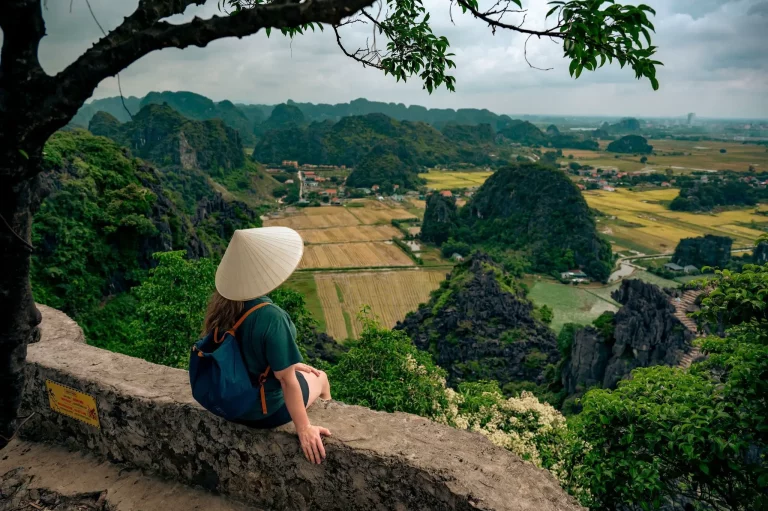
In the Red River Delta, such as in Thai Binh, the province with the largest rice-growing area, the fields stretch out in flat, organized grids like giant checkerboards. These lowland areas, enriched by sediment from rivers, are perfect for large-scale rice cultivation. Whereas, in places like Ninh Binh, fields appear like a patchwork quilt, nestled between limestone mountains or bordering peaceful rivers. The scenery here is both dramatic and serene.

Source | Internet

Source | Internet
In the remote and mountainous regions, rice paddies take on a whole new form: terraced fields carved into hillsides and steep slopes. Farmers here have mastered the art of bringing water from mountain streams to nourish their crops. With a complex irrigation system, they can let water flow step-by-step down the terraces. In places like Yen Bai, Lao Cai and Ha Giang, you’ll see these stunning formations, where rice paddies ripple across valleys and mountains in waves.
Therefore, in Northern Vietnam, rice fields are not just a visual delight but also a testament to human resilience. The farmers have transformed challenging terrains into productive land, making these landscapes even more impressive.
TRAVEL INSPIRATION
Discover why autumn is the absolute best time to witness the golden harvest and the landscapes in Northern Vietnam.
2. Seasons of change: How do rice fields transform through the year?
The appearance of rice fields varies dramatically throughout the year, changing with each stage of the rice-growing process. The cycle begins with planting and ends with harvest, creating a visual journey that reflects the passage of time and the rhythm of nature.
Nursery stage: Before transplanting, farmers sow rice seeds in small, well-prepared plots to grow young seedlings. These nursery beds appear as small patches of vibrant green and are carefully tended for about 2–3 weeks.
Transplanting stage: At this stage, fields are filled with water and prepared for planting. Once the seedlings are strong enough, they are transplanted into flooded fields. The landscape appears like a vast mirror reflecting the sky, with neat rows of green seedlings just beginning to grow.
Tillering stage: The rice plants start to grow vigorously and produce multiple shoots. Fields turn a lush green, creating a vibrant and refreshing scene. This is when the paddies look their most fertile and healthy.
Flowering stage: The rice begins to bloom and form grains. The green leaves are now tinged with pale yellow as the grains mature. Fields sway gently in the breeze, creating a soft, golden shimmer across the landscape.
Harvesting stage: The rice is fully ripe and ready for harvest. Fields turn golden yellow, and farmers begin cutting the stalks. After harvesting, the fields may appear more bare, but still retain a rustic charm. Yet, above all, the smiles on the farmers’ faces are truly the focus of this stage, when happiness and hard work outshine.


What are the best activities to experience rice fields in Northern Vietnam?
To truly appreciate the rice fields in Northern Vietnam, it’s essential to experience them from different perspectives. Here are some of the best ways to explore:
From ground level: Have a walking or cycling tour in Mai Chau and Ninh Binh
Walking or cycling through the fields offers an intimate connection with the landscape. In places like Mai Chau, cycling allows you to pass by endless fields, traditional stilt houses, and picturesque paths. In Ninh Binh, cycling through the countryside offers peaceful views and the chance to interact with farmers.

Source | Internet
RECOMMENDED ESCAPE
Ride through the peaceful stilt-house villages and endless green fields of Mai Chau in our package tour.

Source | Internet
From elevated viewpoints: Hiking through trails in Ha Giang and Ninh Binh
For panoramic views, head to high points like the summit of Mua Cave in Ninh Binh or the hills of Hoang Su Phi in Ha Giang. From these heights, you’ll be treated to sweeping vistas of rice terraces, often framed by clouds or mist.
HOANG SU PHI HARVEST
Discover the most majestic and untouched terraced fields in Vietnam during the golden season.
From the water: Gliding by boat through rice fields in Ninh Binh
In places like Tam Coc, you can explore the rice fields from a boat, gliding along the Ngo Dong River. The boat tour takes you through fields of ripened rice and limestone caves, offering breathtaking views, particularly during the green or golden seasons.

Source | Internet
NINH BINH EXCURSION
Glide through the “Halong Bay on land” and its breathtaking rice paddies on a traditional rowboat.

Source | Internet
From the air: Soaring above rice fields in Mu Cang Chai by paragliding
During the harvest season in Khau Pha or Mu Cang Chai (Yen Bai), visitors are allowed to soar above the rice terraces and take in the mesmerizing patterns below. The aerial view provides a sense of tranquility, as you drift over the fields with panoramic views of the surrounding landscape.
When are the rice seasons in Northern Vietnam?
The appearance of rice fields changes throughout the year, depending on the weather, climate, and local practices. There are two main rice crops in Northern Vietnam:
- Winter-Spring Crop: Sown around December–January and harvested in May–June.
- Summer-Autumn Crop: Sown in June–July and harvested in September–October.
In the mountainous regions, rice can only be grown during the summer-autumn crop, starting in May and ending in October, due to harsher weather conditions and limited irrigation systems.
TRUSTED BY THE VIETNAM NATIONAL AUTHORITY OF TOURISM
Travel Sense Asia is incredibly proud to be featured on the official Vietnam Tourism board as a premium travel partner.
FAQ: Exploring Northern Vietnam’s Rice Fields
1. When is the exact best time to see the golden rice terraces in Vietnam?
The golden harvest season in the mountainous areas (like Sapa, Mu Cang Chai, and Hoang Su Phi) typically falls between mid-September and early October. This is when the terraces turn a brilliant yellow before being harvested.
2. Do I need to be physically fit to see the rice fields?
Not necessarily! While trekking in places like Ha Giang or Mu Cang Chai requires good stamina, you can easily enjoy flat, relaxing walks or bicycle rides through the rice fields in destinations like Mai Chau and Ninh Binh.
3. Is it possible to visit the rice terraces during the rainy season?
Yes, visiting during the “pouring water season” (May to June) offers a completely different but equally stunning perspective. The mountain terraces act like giant mirrors reflecting the sky before the vibrant green rice stalks begin to grow.
4. Should I hire a local guide to explore the rice terraces?
If you are exploring the deep ethnic villages in Sapa, Ha Giang, or Mu Cang Chai, a local guide is highly recommended. They can navigate the tricky mountain trails and help you connect with the local farmers to learn about their unique agricultural traditions safely.
Plan your ultimate harvest journey
The rice fields of Northern Vietnam are more than just picturesque landscapes, they represent a deep connection between people and the land, shaped by centuries of agricultural tradition. Whether you’re walking through lush fields, cycling along winding paths, or soaring above terraced valleys, each moment spent here offers a unique glimpse into the heart of Vietnam’s rural life.
If you’re planning to explore the beauty of rice fields in Northern Vietnam, Travel Sense Asia would be delighted to create a customized itinerary and make your Vietnam journey unforgettable. Simply reach out to us, and our local experts will take care of all the details.