












Vietnam has become one of the top destinations in Asia for travelers from the United States and Canada. With stunning beaches, vibrant cities, rich cultural heritage, and world-renowned cuisine, the country attracts millions of visitors each year. But before you start planning the best way to travel to Vietnam, understanding the Vietnam visa requirements is crucial.
This comprehensive guide will walk you through everything US and Canadian passport holders need to know about getting a Vietnam visa, including types of visas available, how to apply, entry requirements, and tips for combining your visa application with planning the best way to travel around Vietnam.
Do US and Canadian citizens need a visa for Vietnam?
Normally, yes. Travelers from the United States and Canada must obtain a Vietnam visa before entering.
The good news is that Vietnam has simplified the process in recent years with the introduction of the e-Visa system, allowing applicants to complete everything online without visiting an embassy or consulate. This digital option is especially convenient for tourists who want a quick and hassle-free way to secure entry.
Can US & Canadian travelers enter Vietnam visa-free?
Generally, U.S. and Canadian passport holders must apply for a Vietnam visa before entering. However, there are a few special exceptions:
Phu Quoc visa-exemption (30 days)
- Applies to all foreign travelers, including U.S. and Canadian citizens.
- You can enter Phu Quoc visa-free for up to 30 days, but only if you remain on the island.
- If your itinerary includes any other destinations in Vietnam (Hanoi, Ho Chi Minh City, Da Nang, Hoi An, etc.), you’ll need a valid visa (stamped visa, or visa on arrival with an approval letter).
Dual citizenship or a second passport that qualifies for visa-exemption to Vietnam
- If you also hold a passport from a country that enjoys Vietnam’s visa waiver program (e.g., Japan, South Korea, France, Germany, Italy, UK, etc.), you can enter Vietnam visa-free using that passport.
- Exemption periods range from 15 to 45 days, depending on the country.
Visa exemption for family members of Vietnamese citizens
- If you are a spouse or child of a Vietnamese citizen, you can apply for a 5-year Visa Exemption Certificate.
- This allows multiple entries into Vietnam, with a maximum stay of 6 months per visit without needing a separate visa.
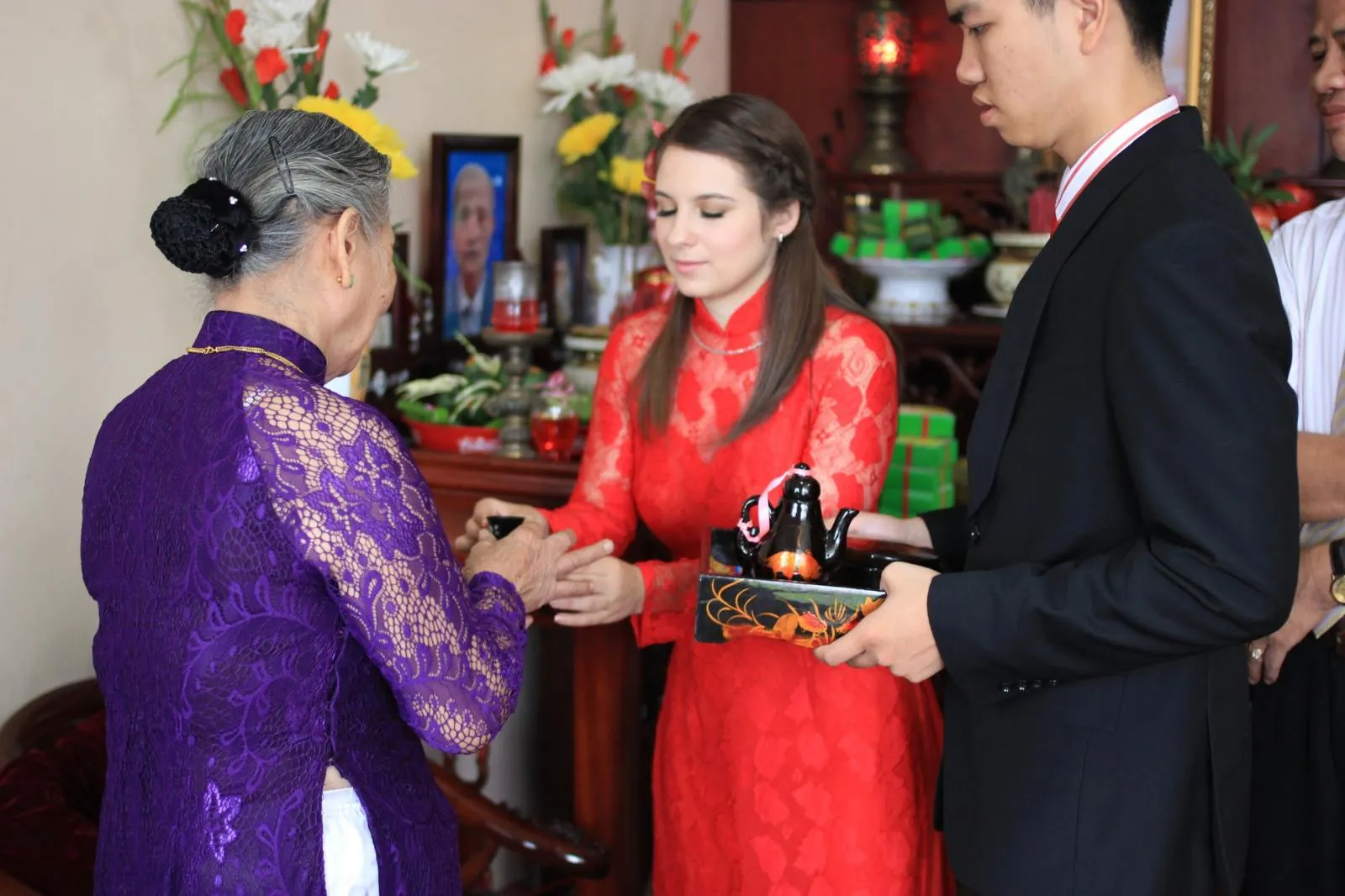
Visa exemption for family members of Vietnamese citizens
Types of Vietnam Visa for U.S. citizens and Canadian citizens
Vietnam e-Visa: The most popular way to enter Vietnam
Today, the Vietnam e-Visa has become the most popular choice for U.S. and Canadian travelers. This system allows you to apply entirely online through the official Vietnam Immigration website, avoiding embassy visits or arrival hassles. For U.S. and Canadian tourists, the e-Visa is widely considered the best way to travel to Vietnam, as it is simple, affordable (starting from $25 USD), and valid for all major entry points.
Key features of the Vietnam e-Visa:
- Validity: Up to 90 days.
- Number of entries: Single or multiple entries available.
- Platform: Application and payment are completed 100% online.
- Processing time: Usually 3–5 business days.
- Requirement: Must present a printed copy of your e-Visa at the border.
- Borders of entry: Accepted at all major ports of entry (air, land, and sea) as listed by the Vietnamese government.
- Extension: Vietnam e-visas cannot be renewed or extended inside Vietnam. If you wish to stay longer than your visa allows, you will need to leave the country and apply for a new visa (visa run).
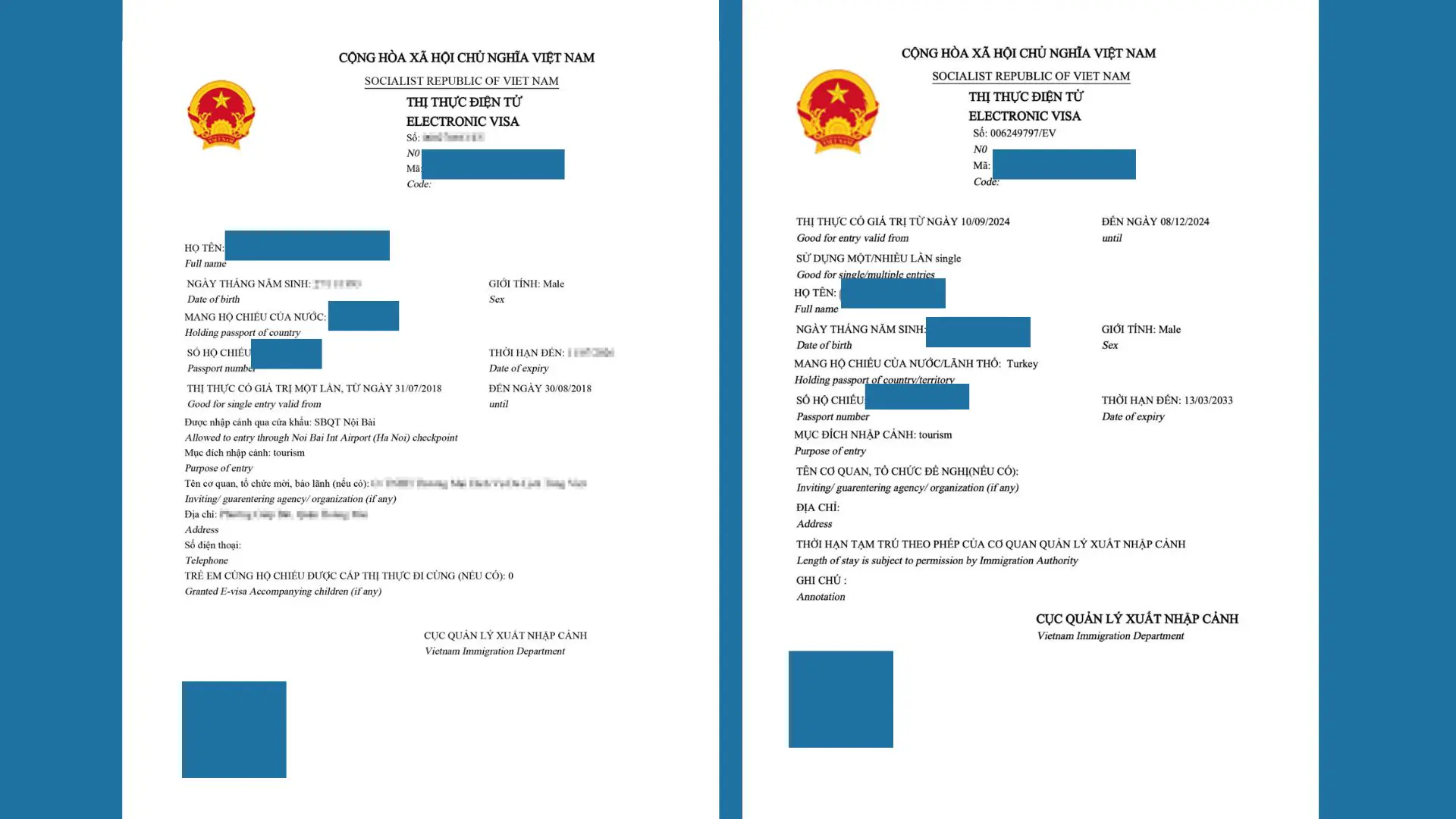
Vietnam e-visa
Stamped Vietnam visa via Embassy or Consulate
A standard Vietnam tourist visa is an official document issued directly by a Vietnamese Embassy or Consulate in your country (such as the U.S. or Canada) or where you are residing.
- Validity: Tourist visas from embassies typically allow stays of 1–3 months, and you can choose between single or multiple entries.
- Application process: Requires submitting your application form, passport, and photos directly to the Vietnamese Embassy or Consulate. Some missions allow applications by mail, but processing is more reliable if done in person.
- Pre-approval requirement: In some missions, they may request a pre-approval letter from the Vietnam Immigration Department before issuing the visa. This letter can be arranged through an authorized travel agency or a sponsor in Vietnam.
- Borders of entry: Stamped Vietnam visa issued by a Vietnamese Mission allows entry through any of Vietnam’s international border gates, whether you are arriving by air, land, or sea.
- Cost: Fees vary widely depending on visa length and number of entries, generally between $50–$155 USD.
- Extension: Currently, stamped Vietnam tourist visa cannot be renewed or extended inside Vietnam (except stamped Vietnam business visa and Vietnam 5-year visa exemption certificate). If you wish to stay longer than your visa allows, you will need to leave the country and apply for a new visa (visa run).
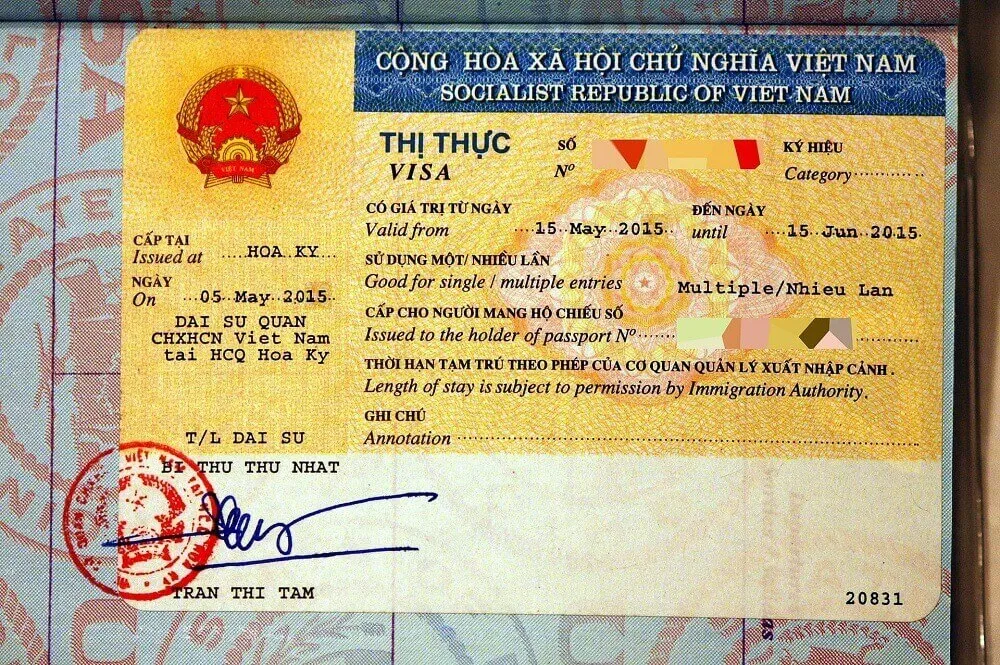
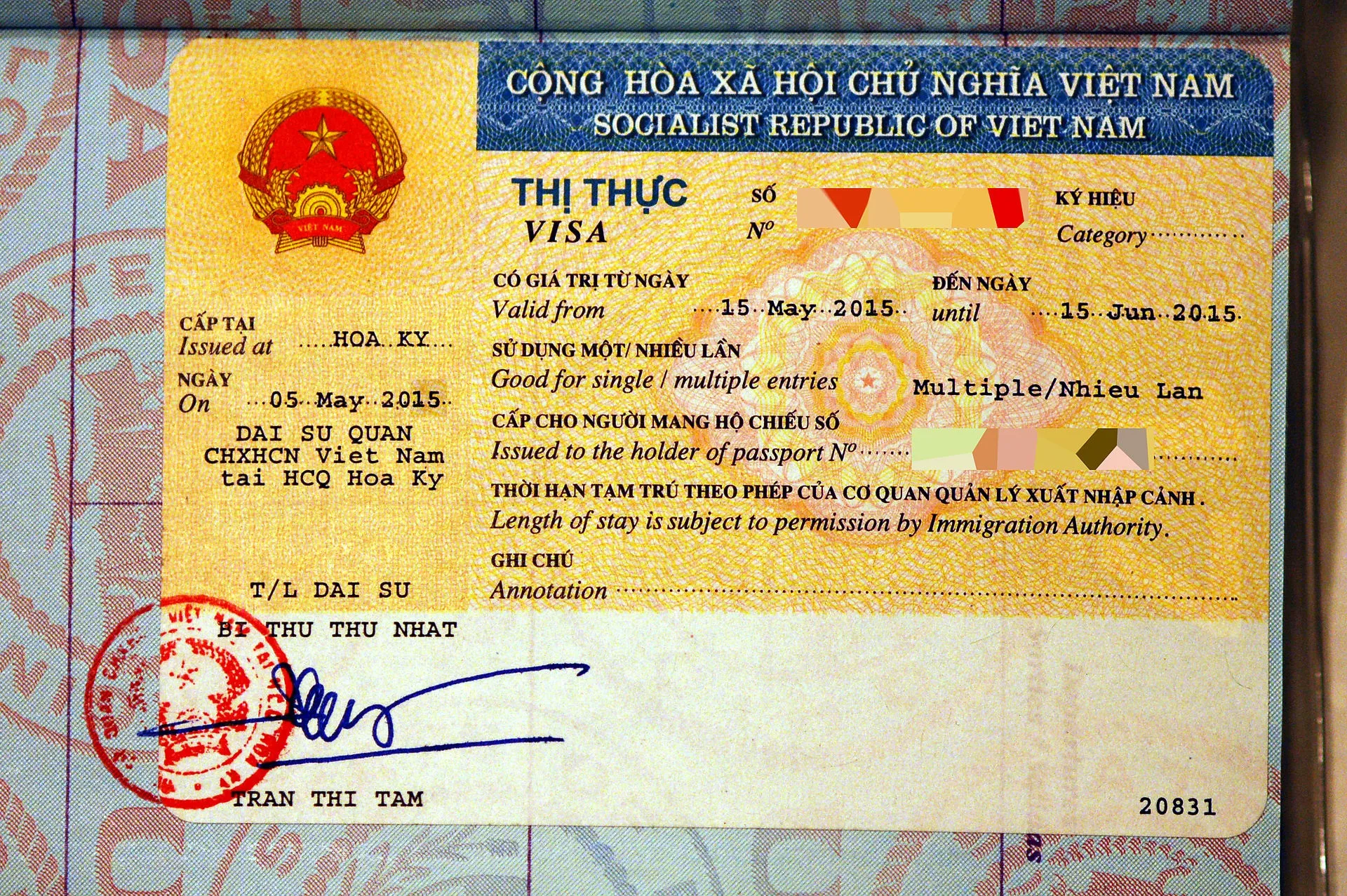
Stamped Vietnam visa issued by the Embassy of Vietnam in Washington D.C.
Vietnam Visa on Arrival (VOA)
For many years, the Vietnam standard visa and Vietnam visa on arrival were the most common ways that travelers secured entry into the country. However, a Vietnam visa on arrival is not a walk-in visa at the airport, travelers must obtain a pre-approval letter issued by the Vietnam Immigration Department before flying. With this approval letter, airlines allow passengers to board their flight. Upon landing at a Vietnam international airport, travelers proceed to the VOA counter to receive their visa stamp.
Because of these requirements, VOA works only under specific conditions and comes with several limitations:
- Borders of entry: only for air arrivals (not land or sea).
- Validity: Typically allows stays of 15–30 days, single entry only for tourist purpose.
- Pre-approval requirement: This pre-approval letter can be arranged through authorized travel agencies or local businesses approved by the government.
- Extension: Vietnam tourist visa on arrival cannot be renewed or extended inside Vietnam. If you wish to stay longer than your visa allows, you will need to leave the country and apply for a new visa (visa run).
Vietnam visa on arrival is usually recommended for special cases such as business visits, family emergencies, or travelers who cannot apply for an e-Visa in time.
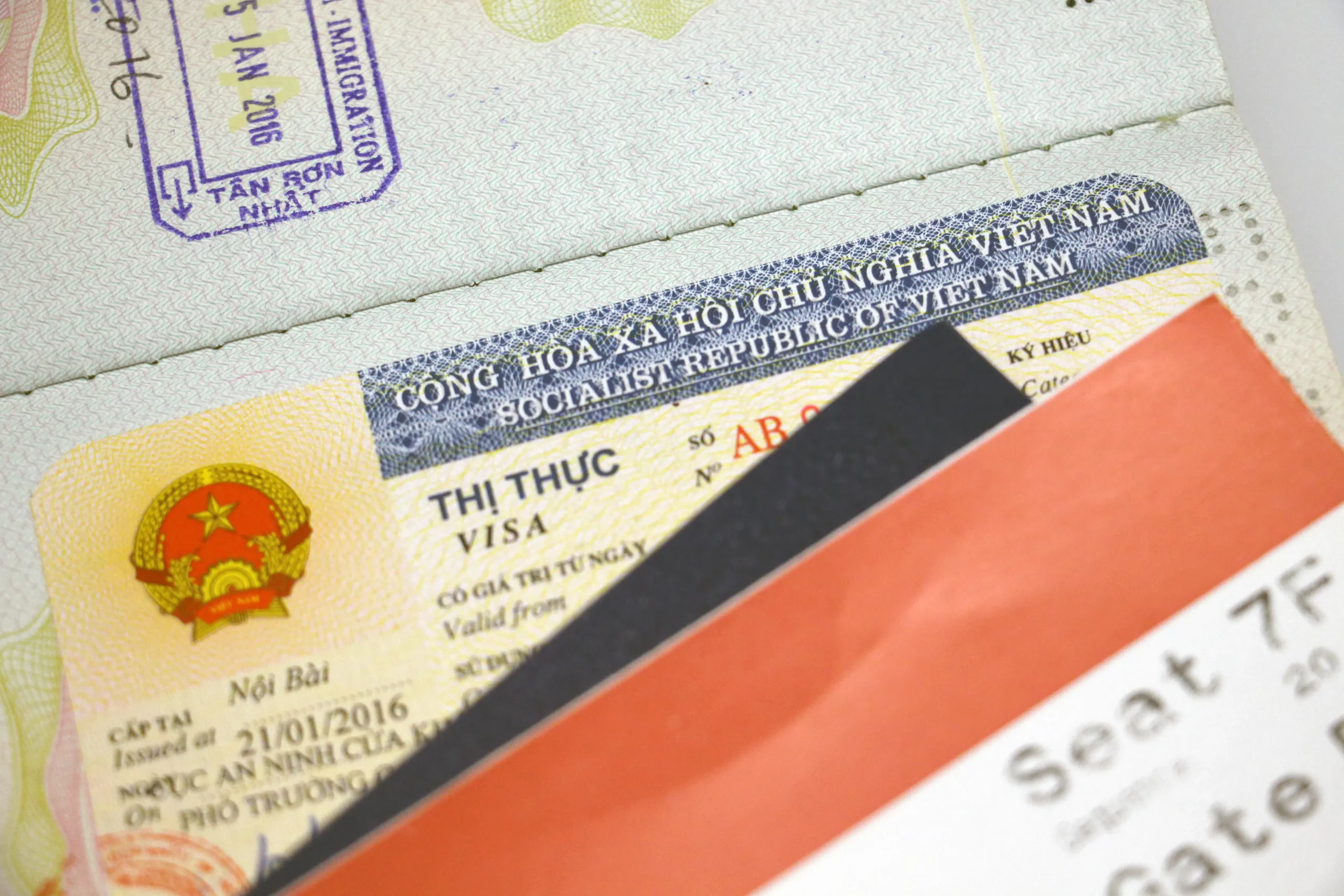
Vietnam visa on arrival issued at the Immigration counter in Noi Bai Airport (Hanoi)
Vietnam visa requirements & How US & Canadian citizens apply for a visa?
Step-by-step: How to apply for a Vietnam e-Visa?
The Vietnam e-Visa is issued electronically by the Vietnam Immigration Department and can be applied for on the official portal.
Step 1. Check eligibility and timing
As of the current official guidance, you can apply on the government e-Visa portal from outside Vietnam (foreigners who are abroad). Check the full eligible-ports list and any country-specific rules on the portal before you apply.
Standard processing typically takes 3-5 working days; allow at least 2 weeks before travel to avoid delays. Expedited options exist through some service providers, but processing speed and availability vary.
Step 2. Prepare required documents
- Passport valid at least 6 months after your arrival date with 2+ blank pages.
- Clear digital scan/photo of your passport personal data page.
- Digital passport-style photo (follow the portal’s photo requirements).
- Exact planned entry port (must match the entry port on your e-Visa).
- Credit/debit card for online payment (Visa/Master widely accepted; AmEx often not accepted on some payment channels).
Step 3. Apply on the official portal
- Go to https://evisa.gov.vn (official). Select language and click Apply.
- Upload documents (passport scan + photo), fill in personal and passport details, trip details (purpose, dates, address in Vietnam), and entry/exit ports.
- Double-check every field: name spellings, passport number, and entry port must match your passport and arrival plans.
Step 4. Pay the fee
Government fee (via official portal): USD 25 single-entry (30/90 days depending on category) or USD 50 multiple-entry (check portal for available validity options). Payments on the official portal are non-refundable.
Step 5. Wait for processing and receive your e-Visa
Standard processing takes around 3–5 working days (times can vary). Check application status on the portal using your registration code or email. Once approved, download and print the PDF e-Visa. Carry a printed copy when you travel.
Step 6. On arrival
Present your passport with tyhe printed e-Visa at immigration. Make sure you enter via a port listed as allowed for e-Visa holders (the portal publishes the list of entry/exit ports).
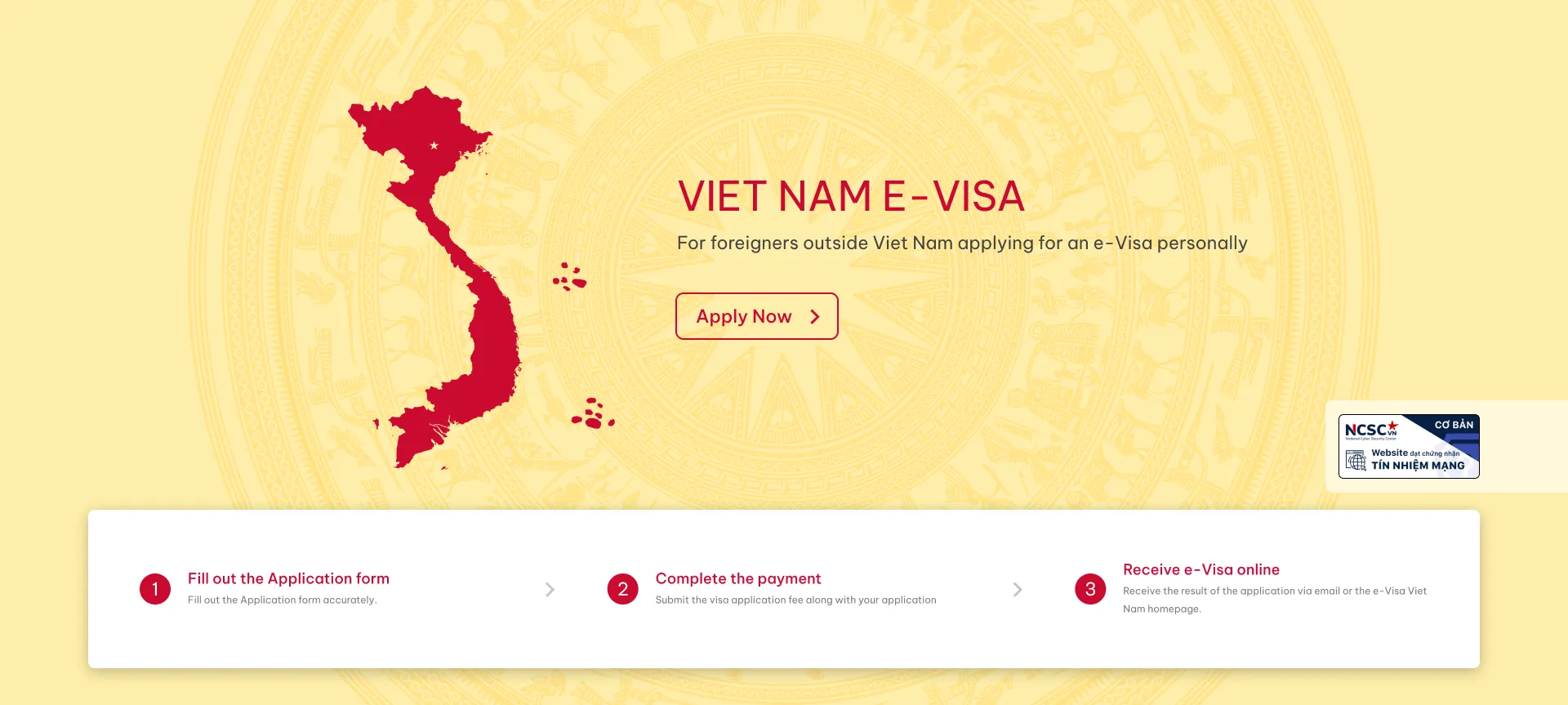
The official website of Vietnam Immigration Department
Step-by-Step: How to apply for a Vietnam visa via Vietnamese Embassies or Consulates?
For U.S. and Canadian travelers who want extra peace of mind, applying for a Vietnam tourist visa through an embassy or consulate is the most reliable way. Unlike the Visa on Arrival or eVisa, this method gives you the visa already stamped in your passport before you travel, eliminating the need for approval letters or long queues at the airport.
Step 1. Locate the nearest embassy or consulate
In the U.S., Vietnam maintains an embassy in Washington D.C. and consulates in San Francisco, Houston, and New York.
In Canada, you can apply through the Vietnam Embassy in Ottawa, or the consulates in Vancouver.
Each office may have slightly different requirements or payment methods, so always check their official websites for the most up-to-date application forms, instructions, and fees.
Step 2. Prepare the required documents
Before submitting your application, make sure you have all the necessary documents ready. These usually include:
- A valid passport with at least 6 months validity from your planned entry date and at least 2 blank pages.
- Completed visa application form, available for download from the embassy or consulate website.
- The pre-approval letter, if required at your specific mission.
- Two recent passport-sized photos (white background, taken within the last 6 months).
- Visa fee payment, which may be accepted as a money order, cashier’s check, or credit card (varies by consulate).
- Prepaid, self-addressed return envelope (if applying by mail) so your passport and visa can be safely returned.
Step 3. Submit your application
You can either apply in person at the embassy or consulate, or send your documents by mail. When filling out your form, clearly specify:
- Whether you need a single-entry or multiple-entry visa.
- The duration of your stay: common options include 1 month and 3 months for tourist purpose, or even 6 months and 12 months for business travelers.
Step 4. Pay the fee
Visa fees typically range from $50 to $155 USD, depending on the visa’s length and whether it is single or multiple entry.
Step 5. Wait for processing and receive your visa
Processing times are generally quick, ranging from 3 to 7 business days. Some consulates also offer expedited services for an additional fee if you need your visa urgently. Once approved, your passport will be returned with the visa already stamped inside. If you applied in person, you’ll need to return to the embassy or consulate to collect it. If you applied by mail, your passport will arrive in your prepaid envelope with the visa enclosed.

The Embassy of Vietnam in Ottawa, Canada
Step-by-Step: How to apply for a Vietnam visa on arrival (VOA)?
Step 1. Contact for the pre-approval letter
Contact a reliable visa service authorized to handle VOA applications. Complete the form with your personal information, passport details, and intended travel dates. Double-check your arrival airport (VOA is valid only at international airports such as Noi Bai (Hanoi), Tan Son Nhat (Ho Chi Minh City), or Da Nang. Then pay the service fee (usually between $15–25 USD, depending on processing time).
Step 2. Receive your pre-approval letter
Within 2–3 business days (or faster with express service), you’ll receive a the pre-approval letter for your visa on arrival. Print out at least one copy to bring with you.
Step 3. Prepare the required documents for departure and arrival
- A valid passport with at least 6 months validity from your planned entry date and at least 2 blank pages.
- Two recent passport-sized photos (white background, taken within the last 6 months).
- The printed pre-approval letter
Step 4. Pay the stamp fee at the immigration counter in Vietnam
On arrival in Vietnam, proceed to the “Visa on Arrival” counter before the passport control line. Submit your documents and pay the stamping fee.
Wait a few minutes for your passport to be returned with the Vietnam visa stamped inside.

The immigration counter at an airport in Vietnam
How to apply for visa extensions in Vietnam?
If you plan to stay in Vietnam longer than your current visa allows, you have two options: visa extension or visa renewal. While both let you remain in Vietnam legally without leaving the country, they are slightly different.
Visa extension means you keep your existing visa but extend its validity. You’ll get an extension stamp in your passport showing the new permitted stay. This option is cheaper but only valid for a single entry (business purpose). You can get your Vietnam visa extended through the Immigration Offices in Hanoi, Da Nang and Ho Chi Minh City.
Visa renewal works like getting a new visa sticker and a new duration stamp in your passport. Since it involves issuing a new visa, it is usually more expensive than an extension. Currently, however, visa renewal services are limited and not currently available through Vietnam’s Immigration Office.
Tips to apply for a Vietnam visa quickly and smoothly
Applying for a Vietnam visa doesn’t have to be stressful. With the right preparation, US and Canadian travelers can meet all the Vietnam visa requirements quickly and avoid unnecessary delays. Here are some practical tips to make the process smooth and efficient:
Start early: Don’t wait until the last minute. Submit your application at least 2–3 weeks before departure. This buffer gives you time to correct mistakes, upload missing documents, or handle any unexpected delays. Travelers who apply early often find the process much smoother and less stressful.
Check requirements carefully: A valid passport is the foundation of every application. Make sure yours has at least six months of validity remaining and at least two blank pages for stamps. Depending on the type of visa, you may also need recent passport photos and proof of onward travel. Reviewing the requirements in advance helps avoid common errors.
Be accurate: Small mistakes can cause big problems. Double-check your name, passport number, travel dates, and entry/exit points. An error in your port of entry, for example, may result in being denied boarding or refused at immigration. Accuracy is the fastest way to keep your Vietnam visa on track.
Keep copies: Always print out your approval letter or e-Visa and keep digital backups on your phone or email. Immigration officers often ask to see a hard copy, and having multiple versions ensures you are never caught unprepared.
Use trusted support: If you are short on time, worried about mistakes, or simply want peace of mind, consider using a professional service like what Travel Sense Asia also offers currently. Our team can help travelers avoid common errors, keeps you updated throughout the process, and can even arrange urgent approvals.
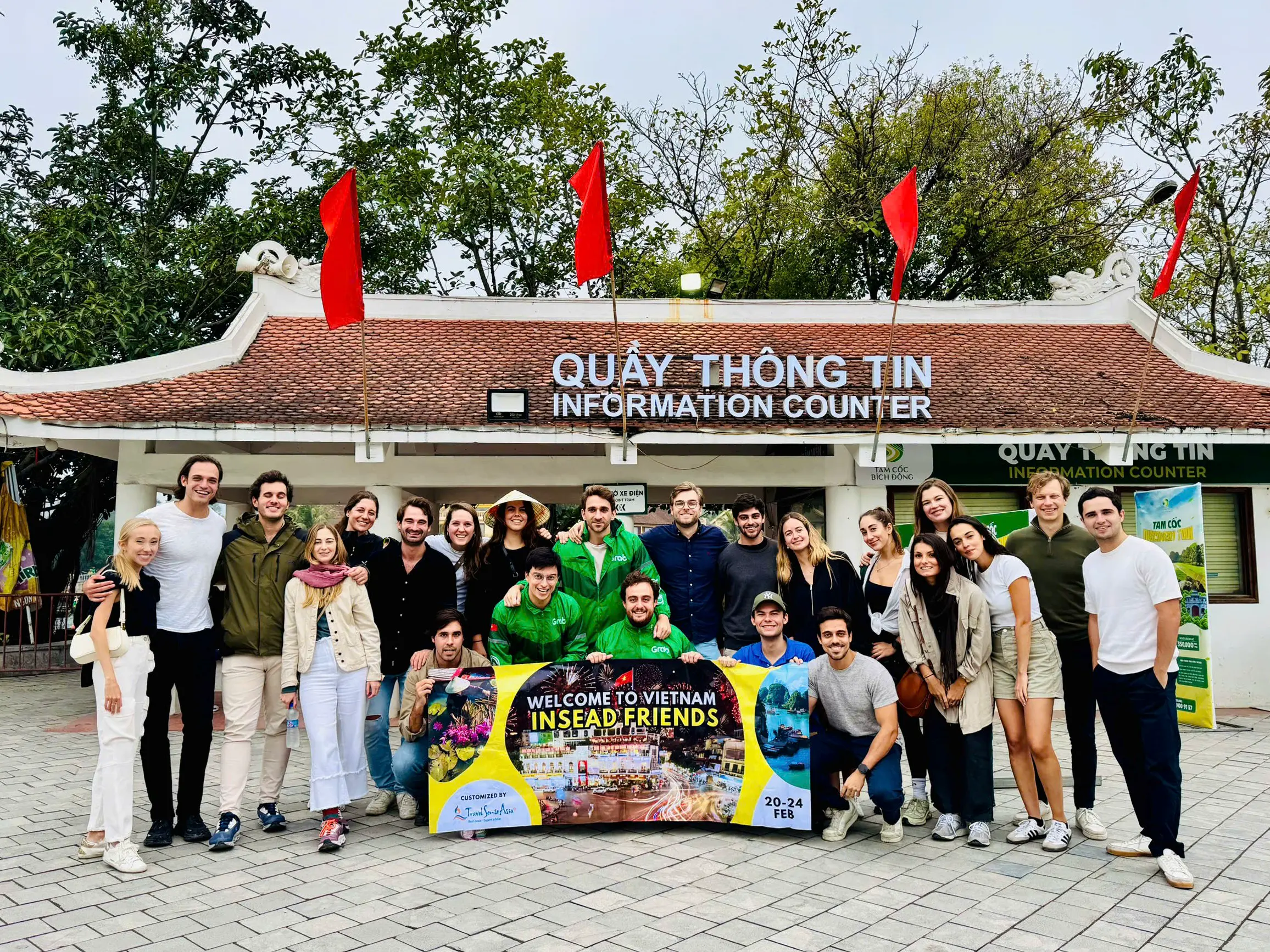
A travel group organized by Travel Sense Asia
Final thoughts
Planning a trip to Vietnam can feel overwhelming, between understand the Vietnam visa requirements, booking flights, arranging transport, and deciding on an itinerary. We hope this guide helps you clearly understand how to apply for a Vietnam visa on your own with confidence.
But if you’re looking for a trusted supplier to manage your visa, we at Travel Sense Asia can help you out. From handling your Vietnam visa application to showing you the best way to travel to Vietnam through tailor-made tours, our team ensures your holiday is seamless and unforgettable. Ready to start your journey?