












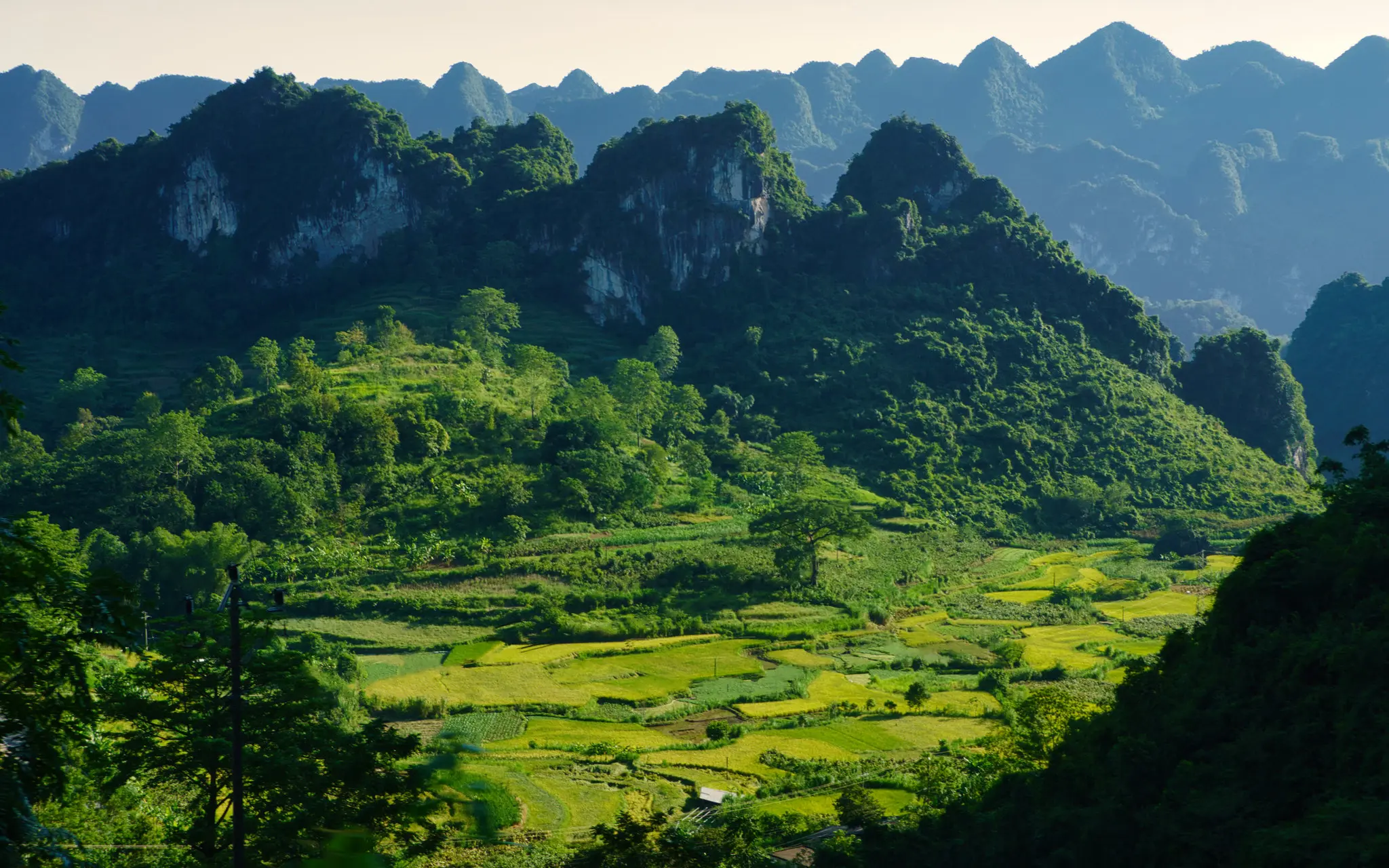
Located in Vietnam’s far northeast, Cao Bang is one of most best-kept secrets for travellers coming to Northern Vietnam. With 5 major river systems & 47 lakes, water & nature play a significant role here, as the region is recognised as a UNESCO Global GEO Park.
At the same time, Cao Bang is not the easiest place to plan your trip. Attractions are spread out, & key routes like the Cao Bang loop need a bit of preparation. This article is your ultimate Cao Bang travel guide where you’ll be introduced to: where to go, how to get around, and what to prioritize, so you can plan your Cao Bang trip with more confidence.
How to get to Cao Bang from Hanoi?
The distance from Hanoi to Cao Bang is roughly 280–300 km (about 175–185 miles) depending on the route you take.
Sleeper bus to Cao Bang (most popular)
If you’re traveling on a budget or want to save time, sleeper buses are the go-to option for many travelers.
-
- Travel time: ~6–8 hours (often overnight)
- Why choose it: Affordable and widely available. Bonus: You’ll save a night’s accommodation by traveling overnight.
- Drop-off: Usually in Cao Bang city

A typical VIP sleeper bus from Hanoi to Cao Bang
Limousine van to Cao Bang (more comfortable)
Door-to-door service with the option to stop along the way. Perfect for families, groups, or first-time visitors.
-
- Travel time: ~5–6 hours
- Why choose it: Fewer passengers, big legroom, and a quieter ride. Best for travelers who want comfort without spending too much

Inside a luxury limousine van operated in Vietnam
TRAVEL TIPS
Plan your journey perfectly! Learn more about the Best time to visit Vietnam: specific months or year-round.
When is the best time to visit Cao Bang?
Best overall time to visit Cao Bang: late October to April
For most first-time visitors, the October-April period is the safest and most predictable time to visit Cao Bang. This is the region’s dry season, when the weather is generally stable and roads are in better condition.
Do note that December to February can get very cold, especially in the early mornings and evenings. But in return, you’ll often get crisp air, beautiful views, and fewer weather disruptions.

Fishermen in Phong Nam, Cao Bang
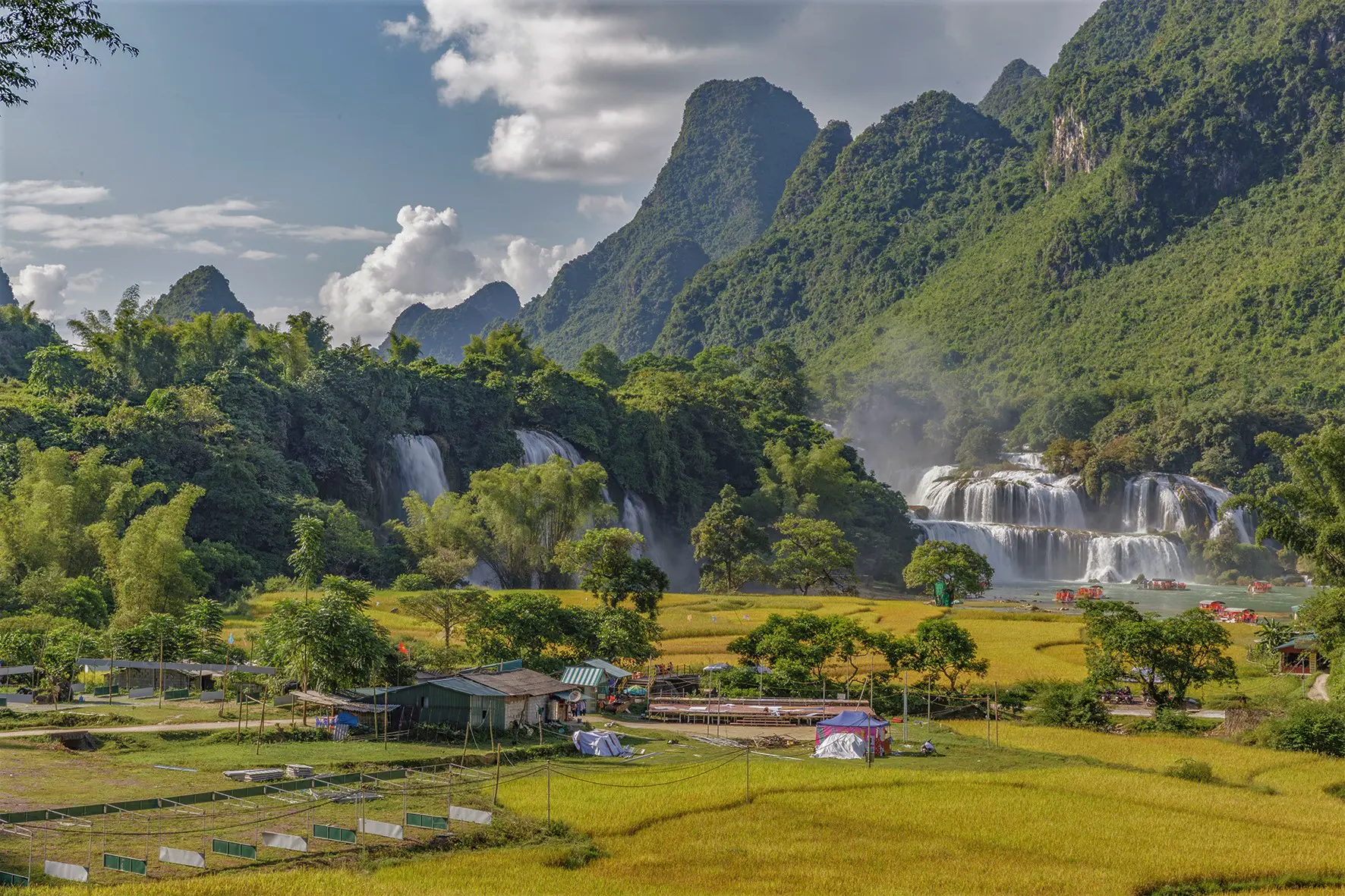
Ban Gioc Waterfall during the harvest season
Best time to visit Ban Gioc waterfall: Only in stable dry weather
Ban Gioc waterfall is the highlight of Cao Bang, but timing matters more than you might expect. The waterfall can look especially beautiful from late August to September, when the rice fields turn golden and the water flow is strong and dramatic.
However, this period is less predictable because it overlaps with the tail end of the rainy season. Water can turn muddy instead of clear, strong currents may affect boat access and in rare cases, flooding can limit access temporarily.
Places that you shouldn’t miss in Cao Bang (beside Ban Gioc waterfall)
From iconic sights like Ban Gioc Waterfall and Nguom Ngao Cave to scenic passes, local craft villages, and hidden viewpoints, these are the places you shouldn’t miss if you want a well-rounded experience of Cao Bang.
Ban Gioc waterfall
Ban Gioc waterfall is the most famous sight in Cao Bang, and for good reason. It sits on the Vietnam–China border in Trung Khanh district, surrounded by limestone karsts, green fields, and the Quay Son River. The waterfall is often described as one of the largest border waterfalls in the world, as its measures are roughly 300 metres wide and 53 metres high, divided into several tiers.
For most travellers, Ban Gioc is best visited as a day trip from Cao Bang city. The drive usually takes about two hours each way, depending on the road and stops along the route.
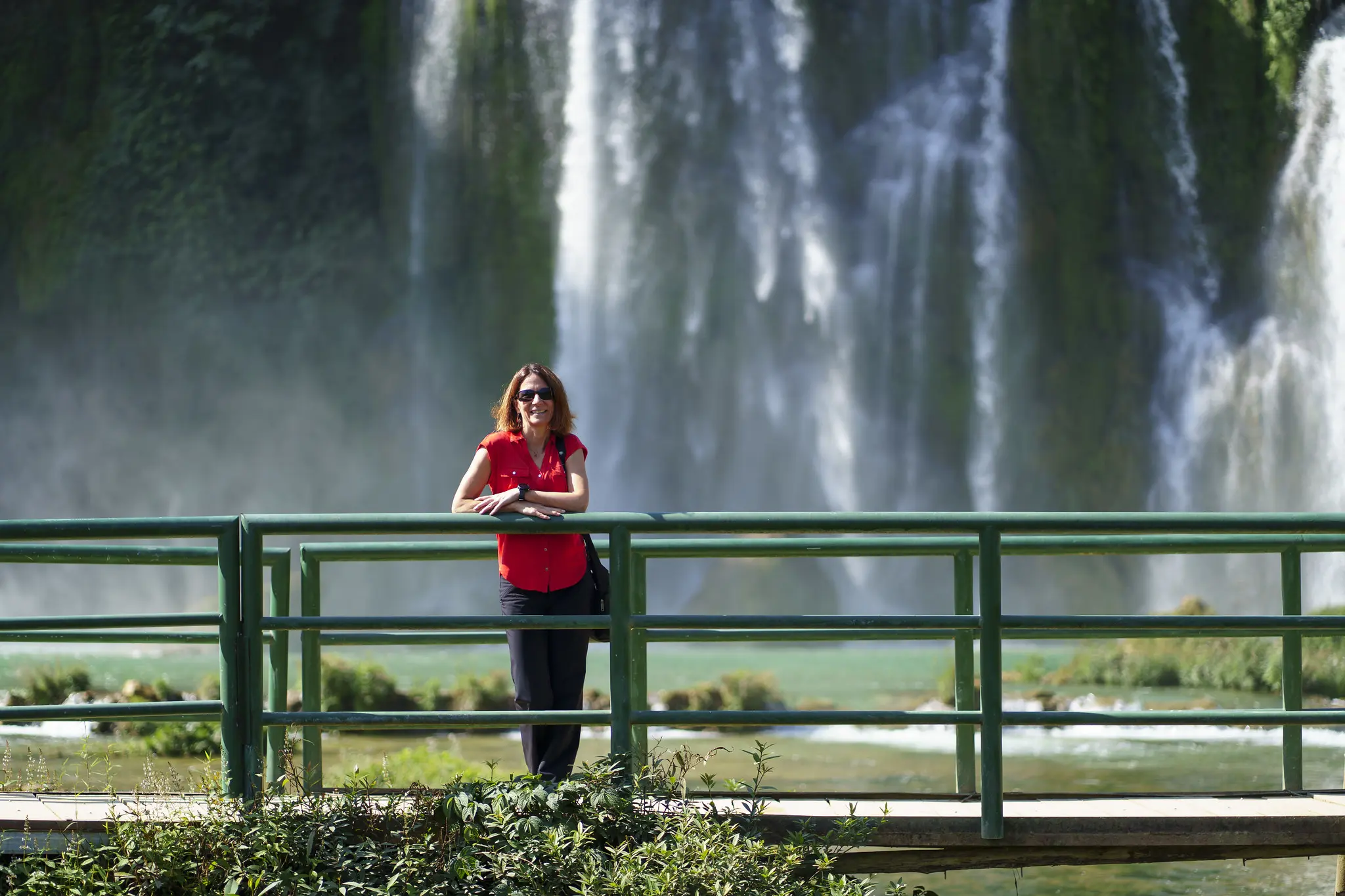
A tourist taking photos at Ban Gioc Waterfall
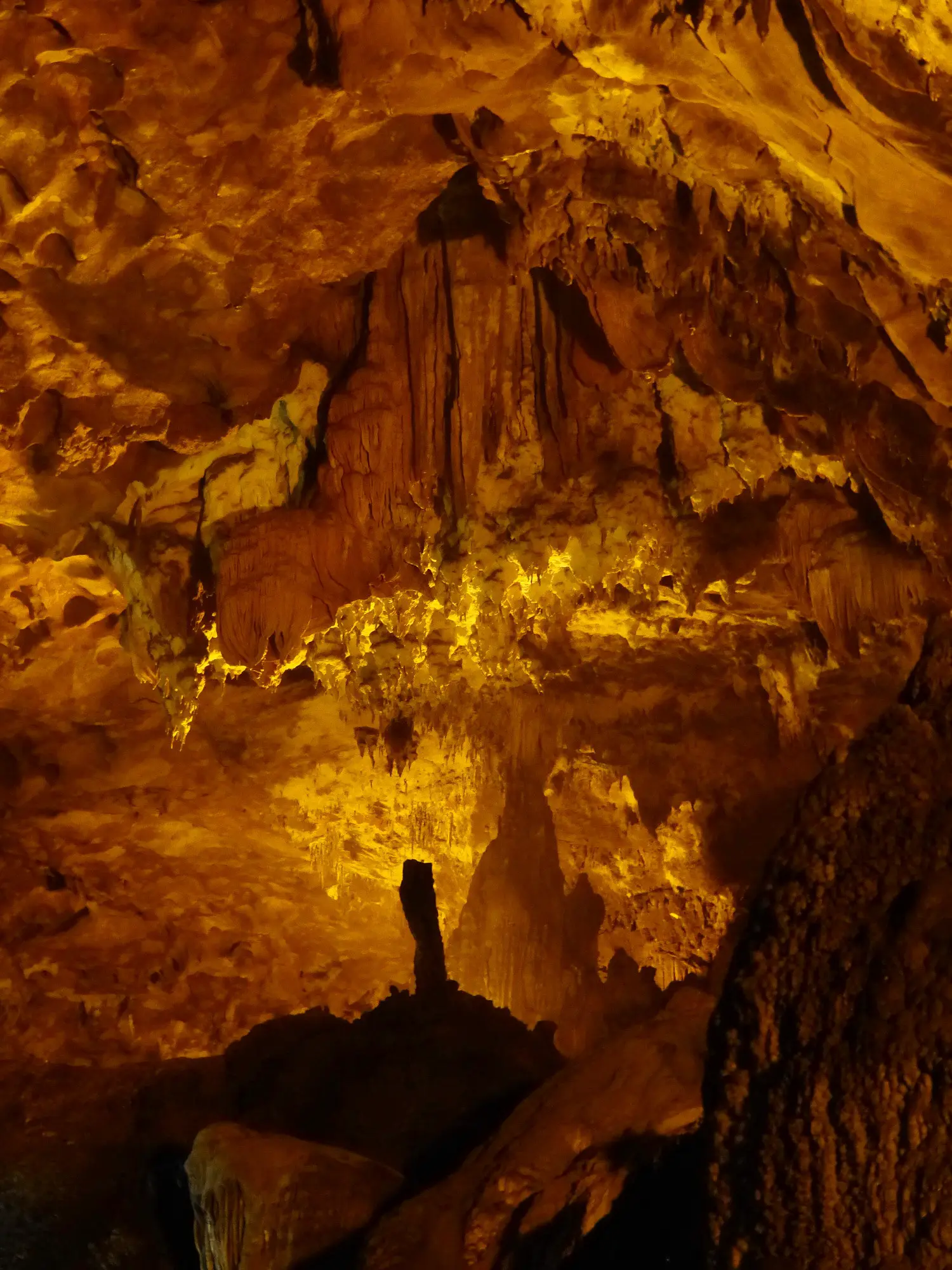
Intricate limestone formations inside Nguom Ngao Cave
Nguom Ngao cave
While Ban Gioc waterfall is wide, open, and dramatic, Nguom Ngao cave is the total opposite: cool, dark, and full of detailed limestone formations. The cave is also very close to Ban Gioc, around 3 km away, so most travelers visit both together.
The cave is known for its impressive limestone formations, with chambers that change shape and texture as you walk through. Although the full cave system stretches for more than two kilometres, only part of it is open to visitors, which helps preserve its natural beauty. Make sure to bring water and wear shoes with grip, especially if you are pairing it with other stops in one day.
RECOMMENDED TOUR
Explore the breathtaking beauty of the North with our 9-day Through the Hidden Gems of Northern Vietnam tour.
Visit local craft villages: Top things to do in Cao Bang
Cao Bang is known for its ethnic minority cultures (Tay, Nung, Dao, etc.), and many traditional craft villages are still active today. These villages are not just production sites, they’re also cultural tourism spots where you can see artisans working and even try the crafts yourself.
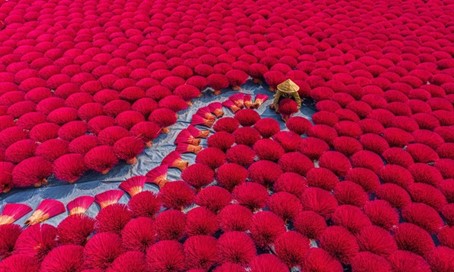
- Phia Thap Incense Village: Famous for natural incense making by the Nung people. These incense are produced using local materials like bamboo, sawdust, and forest leaves, which are then sun-dried in bright red bundles.
- Phuc Sen / Pac Rang Blacksmith Village: Over 300–500 years old forging tradition. This village produces knives, farm tools, and household items, and it is also one of the most famous craft villages in Cao Bang.

Drying traditional incense in Phia Thap Village
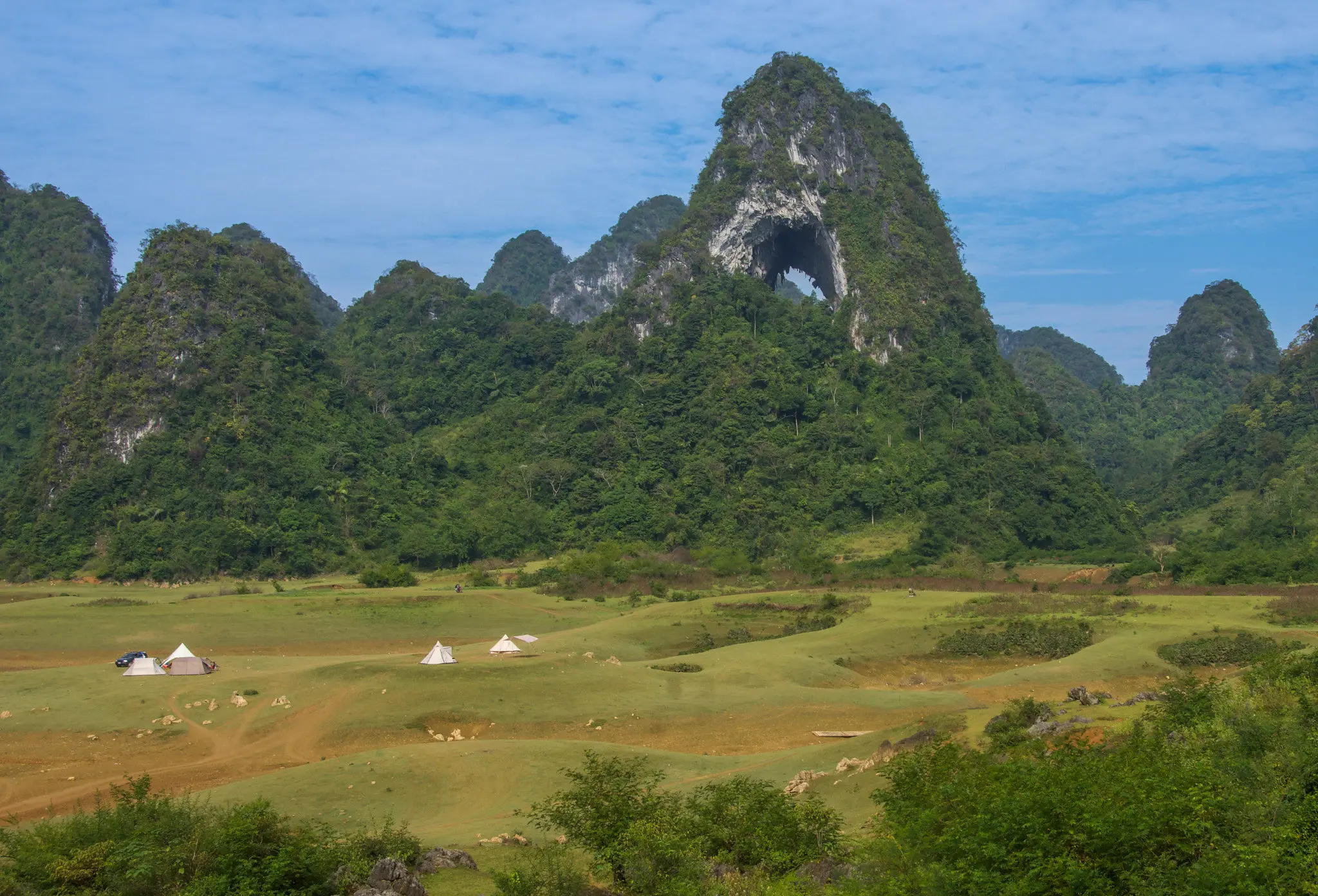
The unique landscape of Angel Eye Mountain
Cao Bang Angel Eye mountain
Angel Eye Mountain (or God’s Eye mountain) in Cao Bang is a striking limestone mountain with a large round hole through its middle, which is why it is also called “Núi Mắt Thần” in Vietnamese. The “eye” is a natural through-cave about 50 meters wide and roughly 50 meters above the water/valley floor.
For visitors, the main appeal is that it feels quieter and less built-up than Cao Bang’s headline sights. It’s less about “doing” a big activity and more about soaking in the landscape, taking photos, walking around the valley, and enjoying the drive there. That makes it a very good stop if you want a different mood from Ban Gioc Waterfall or Nguom Ngao Cave.
Khuoi Ky stone village
Khuoi Ky Stone Village is one of the most distinctive cultural stops in Cao Bang. It sits in Dam Thuy commune on the way to Nguom Ngao Cave, within the Ban Gioc area, so it’s easy to combine with the region’s main sights in one route.
What makes Khuoi Ky stand out is its stone stilt houses. There are ~14 stone houses spread across about 10,000 square metres, backed by rocky mountains and facing Khuoi Ky stream. This style is unusual in the area and closely tied to the traditions of the Tay people, for whom the stilt house is an important part of cultural and spiritual life.

The traditional stone stilt houses of Khuoi Ky

The winding bends of Ma Phuc Pass
Ma Phuc pass
Ma Phuc pass is one of the classic scenic drives in Cao Bang. It lies on National Highway 3, around 22 km northeast of Cao Bang city, and it is over 3.5 km long with seven steep levels or bends.
What makes Ma Phuc Pass memorable is the shape of the landscape. The pass runs between two limestone ranges, and its name actually comes from these mountain peaks that look like a kneeling horse, which is what “Ma Phuc” means in Vietnamese.
What to eat in Cao Bang?
Food in Cao Bang is simple, local, and very different from what you’ll find in bigger cities. The flavors are tied closely to the region’s mountainous ingredients. If this is your first time visiting, these are the dishes you should try at least once.
Phở chua (Sour pho)
This is nothing like the classic pho you might already know. Instead of a hot soup, pho chua is served as a dry noodle dish with a light, tangy sauce. It usually comes with sliced duck or pork, herbs, peanuts, and crispy fried shallots. Don’t let the “sour” in the name get you fooled, the taste actually is a mix of slightly sweet, slightly sour, and very refreshing.

A flavorful bowl of Pho Chua
CULINARY TIPS
Want to taste more? Discover the 15 Must-Try Vietnamese Dishes and where to eat them.

Cao Bang-styled rice rolls served with warm broth
Bánh cuốn cao bằng (Cao Bang-styled rice rolls)
At first glance, this looks similar to the rice rolls you find in Hanoi: thin sheets of steamed rice batter (or you can imagine it as “crepes” yet with an even more delicate texture). However, the Cao Bang version is served differently. Instead of fish sauce, it’s paired with a light, warm broth and often topped with minced meat or egg.
If Cao Bang is on your radar, planning your trip properly can make a big difference, especially since the region is more remote and less straightforward to navigate than other destinations in Vietnam.
If you’d rather skip the hassle and travel with confidence, you can explore tailored trips with Travel Sense Asia. With 15 years of accompanying our customers, we specialize in crafting personalized journeys across Vietnam, including off-the-beaten-path destinations like Cao Bang & other Northern Vietnamese regions, with flexible itineraries, local guides, and private vehicles.
FAQ – Common questions first-time visitors usually ask
Is 2 days enough for Cao Bang?
Yes, but it depends on how you travel. If you have 2 full days, you can cover the main highlights like Ban Gioc Waterfall, Nguom Ngao Cave, and a few stops along the way. This works well if you plan your route in advance or book a private driver.
However, 3 days are more recommended for a truly relaxed trip, to have quality time to explore places like Angel Eye Mountain or smaller villages.
Is Cao Bang suitable for family trips?
Yes, Cao Bang is very family-friendly, especially if you plan transport properly. Cao Bang is generally safe, quiet, and not overcrowded, which makes it a good option for families who wants to enjoy scenery, without needing intense activities.
However, there are a few things to keep in mind: Attractions are far apart (long driving times), roads are mountainous (can be tiring for kids or older travelers), and facilities outside the city are mostly basic (limited luxurious options to choose from).
Should I stay in the city or near the waterfall in Cao Bang?
It totally depends on your travel style. Here’s a quick decision guide:
| Stay in Cao Bang city if you: | Stay near Ban Gioc Waterfall if you: |
|---|---|
| – Want more food options, cafés, and convenience – Prefer a central base for day trips – Are staying multiple nights |
– Want a quieter, more scenic experience – Prefer to wake up close to nature – Are only visiting for a short time and focusing on the waterfall area |