









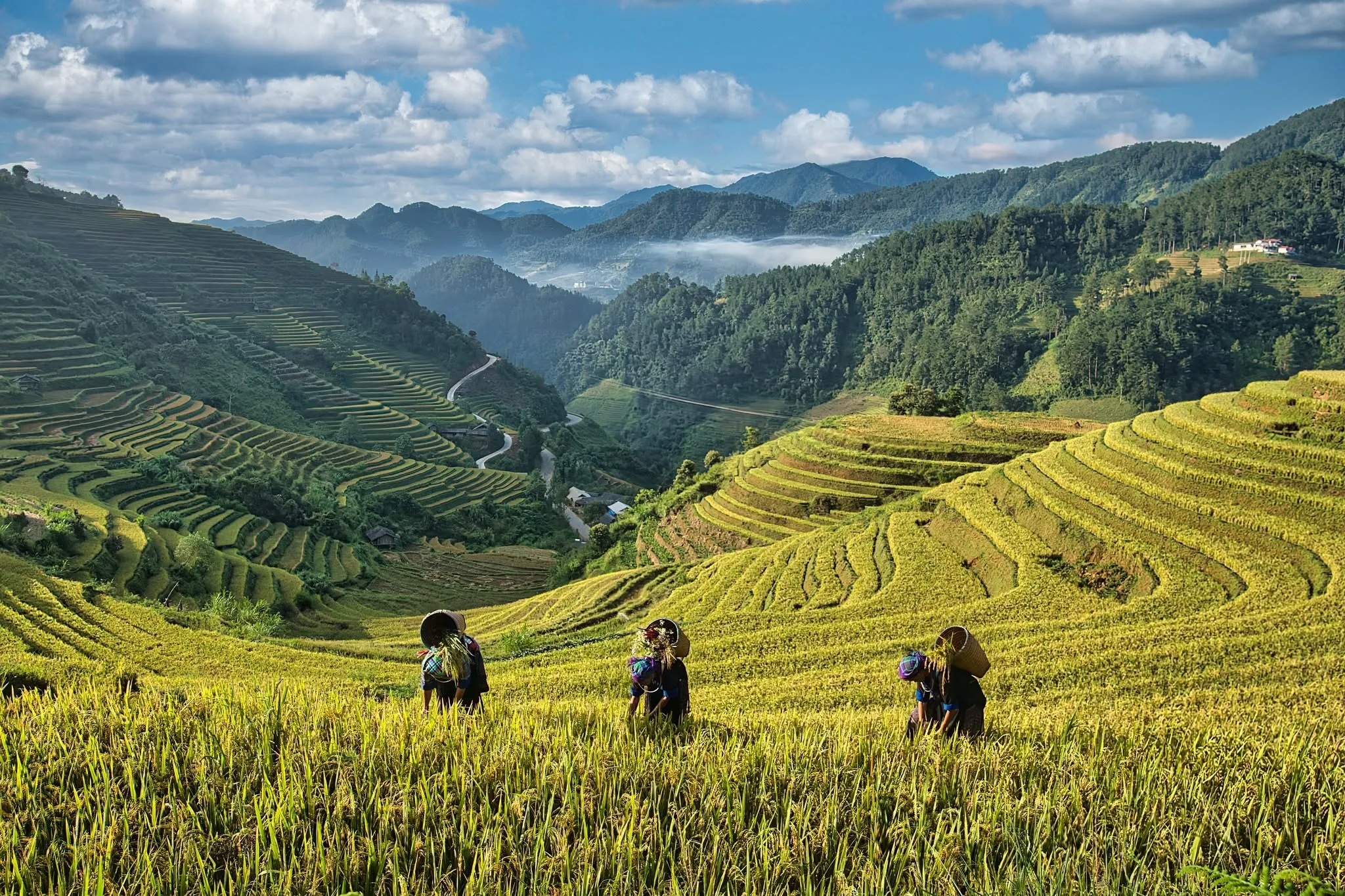
Rice terraces are one of the first images that come to mind when people think of Northwest Vietnam – and few places showcase them better than Mu Cang Chai. Every autumn, Mu Cang Chai transforms into one of Vietnam’s most spectacular landscapes as thousands of terraced rice fields turn into a golden paradise.
Knowing when to visit and where to go can make all the difference. The harvest season lasts only a few weeks, but there’s also more to Mu Cang Chai than just rice terraces. This guide covers everything you need to plan your trip, including the best time to visit, the most scenic viewpoints, photography tips, and practical travel advice to help you make the most of Mu Cang Chai’s golden season.
Where is Mu Cang Chai?
Location of Mu Cang Chai
Province: Lao Cai Province, Northwest Vietnam
Distance from Hanoi: Approximately 300 km (around 6–7 hours by road)
Nearest destinations:
- Tu Le (~15 km)
- Nghia Lo (~100 km)
- Sapa (~140 km)
Unlike Vietnam’s lowland rice fields, Mu Cang Chai sits in a rugged mountain region where flat farmland is extremely limited. To cultivate rice on these steep slopes, generations of H’Mong communities carefully carved thousands of terraces into the mountainsides, allowing water to flow naturally from one level to the next. This ingenious farming system continues to support local agriculture today while creating the dramatic layered landscape the region is known for.

Why are Mu Cang Chai’s golden rice terraces so famous?
They are the result of centuries of H’Mong farming traditions
The terraces weren’t created for tourism. They were built over generations by H’Mong farmers as a practical solution for growing rice in mountainous terrain where flat land was scarce. Each planting season, farmers maintain the terrace walls, channel mountain water through irrigation systems, and cultivate rice using techniques passed down within the community. Today, these terraces remain an important part of daily life, giving visitors the chance to witness a living agricultural landscape.
A landscape recognized for its cultural and natural significance
The rice terraces in La Pan Tan, Che Cu Nha, and De Xu Phinh have been designated as a National Special Relic by the Vietnamese government in recognition of their outstanding cultural, historical, and landscape value. This designation reflects not only their visual beauty but also their importance as an enduring example of traditional mountain agriculture and the close relationship between local communities and the natural environment.

AUTUMN TRAVEL INSPIRATION
Discover why autumn is widely considered the absolute best time to explore the breathtaking landscapes of Northern Vietnam.
Understanding Mu Cang Chai’s best terrace seasons
Mu Cang Chai’s rice terraces undergo a remarkable transformation throughout the year, with each stage of the growing cycle creating a completely different landscape. Understanding these seasonal changes will help you choose the best time for your visit.
| Season | What makes this season special | Best for |
|---|---|---|
| Water-pouring season (Late May-June) | The rice-growing cycle begins when H’Mong farmers divert mountain water into the terraces before transplanting young rice seedlings. The flooded fields act like thousands of natural mirrors, reflecting the sky, clouds, and surrounding mountains. | Travelers looking for fewer crowds, ones that truly want to watch farmers prepare the fields. |
| Green rice season (July-August) | As the rice plants mature, the terraces gradually turn into layers of vibrant green that blanket the mountainsides. The fields appear at their fullest during this stage, creating a lush landscape that contrasts beautifully with the surrounding forests. | Nature lovers. |
| The ultimate golden rice season (Late Sept-Early Oct) | The golden season marks the final stage of the rice-growing cycle, when mature rice plants change from green to rich shades of yellow before harvest. Sunlight enhances the layered contours of the terraces, creating the iconic scenery. Keep in mind that the harvest doesn’t happen everywhere at the same time. | First-time visitors or anyone who seeks to experience Mu Cang Chai’s most iconic scenery. |

BEST RICE TERRACES IN VIETNAM
Mu Cang Chai is not the only place. Explore our guide to the most breathtaking rice terraces across Northern Vietnam.
Best places to admire the golden rice terraces of Mu Cang Chai
The golden rice terraces stretch across much of Mu Cang Chai, but each viewpoint offers a different perspective. Here’s where to find the most memorable views during the harvest season.
Mam Xoi Hill (Doi Mam Xoi)
Best for: First-time visitors, photographers, and sunrise enthusiasts
No viewpoint is more closely associated with Mu Cang Chai than Mam Xoi Hill. Named after its distinctive round shape resembling a traditional Vietnamese sticky rice tray (mam xoi), this terrace has become one of the country’s most photographed agricultural landscapes.
From the viewing platform, visitors can admire perfectly layered terraces cascading down the surrounding hillsides. During the golden season, the ripened rice creates a striking contrast against the deep green mountains, making it one of the most recognizable images of Northwest Vietnam.
Good to know: Expect larger crowds during weekends and peak harvest season.


La Pan Tan
Best for: Exploring Mu Cang Chai’s most famous rice terraces
Beyond Mam Xoi Hill, La Pan Tan Commune is home to some of Vietnam’s most celebrated terraced landscapes. Together with Che Cu Nha and De Xu Phinh, its terraces are recognized as a National Special Relic, highlighting their cultural, historical, and agricultural significance.
Driving through La Pan Tan reveals an ever-changing landscape of terraced fields, mountain streams, and H’Mong villages. During harvest season, the golden terraces extend across entire hillsides, offering spectacular views at nearly every turn.
Good to know: Allow at least half a day to explore multiple viewpoints. Many scenic stops are located along the main road.
Che Cu Nha
Best for: Authentic rural landscapes and fewer crowds
Located south of La Pan Tan, Che Cu Nha offers a quieter side of Mu Cang Chai while showcasing equally impressive rice terraces. The fields here blend naturally with traditional H’Mong villages, providing a glimpse into everyday agricultural life.
Because it receives fewer visitors than Mam Xoi Hill, Che Cu Nha is ideal for travelers who prefer a slower pace and more intimate photography opportunities.
Good to know: Best explored by car or motorbike with multiple roadside photo stops.


De Xu Phinh
Best for: Off-the-beaten-path experiences
De Xu Phinh is known for its broad mountain valleys covered with terraced rice fields that stretch toward the horizon. While less famous internationally, the commune offers a peaceful atmosphere and impressive scenery without the crowds found at more popular viewpoints.
Its combination of rolling mountains, traditional farming, and scattered H’Mong settlements makes it a rewarding destination for travelers seeking a deeper appreciation of Mu Cang Chai’s cultural landscape.
Good to know: Roads can be narrow and winding, so allow extra travel time.
Khau Pha Pass
Best for: Panoramic mountain views
As one of Vietnam’s Four Great Mountain Passes, Khau Pha Pass offers some of the broadest views of the surrounding valleys and terraced hillsides. While it isn’t located within the rice terraces themselves, its high elevation provides a spectacular vantage point overlooking the harvest landscape below.
Visitors coming to this place can join a tour of the sky: Paragliding over the golden rice terraces over the Cao Pha valley. And if you’re into cloud hunting, this is also a great spot. Due to its 1,200-meter altitude, the summit is often blanketed in thick mist, when sunrise and early mornings offer a magical “sea of clouds” above the mountains.
Good to know: Multiple roadside viewpoints are available along the pass.


Tu Le Valley
Best for: Scenic stopovers before driving to Mu Cang Chai
Located at the foot of Khau Pha Pass, Tu Le Valley is often the first introduction to the landscapes of western Yen Bai. Although technically outside Mu Cang Chai District, its rice fields become beautifully golden during harvest season and provide a picturesque gateway to the region.
Tu Le is also known for its sticky rice, hot springs, and relaxed village atmosphere, making it an excellent stop before heading deeper into the mountains.
Good to know: Visit local markets during harvest season for regional specialties.
SAPA GOLDEN RICE SEASON
Looking to extend your harvest journey? Dive into our detailed guide on Sapa’s ripe rice season.
Photography tips for capturing the golden terraces
The golden rice terraces are one of Vietnam’s most photographed landscapes, but timing, light, and composition can dramatically influence the final result. A little planning can help you capture not only the terraces themselves but also the scale, texture, and daily life that make Mu Cang Chai so unique.
| Photography Tip | Key Advice | Recommended Locations | Why It Matters |
|---|---|---|---|
| Visit during the golden hours | Arrive at sunrise (6:00–8:30 AM) or late afternoon (3:30–5:30 PM). Avoid midday when harsh sunlight reduces texture and contrast. | All viewpoints, especially Mam Xoi Hill and Horseshoe Hill | Low-angle sunlight enhances the golden rice, creates depth, and defines the layered terraces. |
| Choose elevated viewpoints | Shoot from higher ground to showcase the terraces’ distinctive curves and layered patterns. | Mam Xoi Hill, Horseshoe Hill, Khau Pha Pass, roadside viewpoints in La Pan Tan | Higher viewpoints better capture the scale and geometry that make Mu Cang Chai famous. |
| Include local life in your composition | Incorporate H’Mong farmers, traditional houses, buffaloes, or harvesting activities into your frame. | Villages such as La Pan Tan, Che Cu Nha, and De Xu Phinh | Human elements add context, scale, and showcase the terraces as a living cultural landscape. |
Essential tips for visiting during the golden season
The golden harvest season is indeed Mu Cang Chai’s busiest and most photogenic time of year. A little preparation can help you avoid crowds and ensure your visit is both enjoyable and respectful of the local communities whose livelihoods depend on these working rice terraces.
- Plan your trip for late September to early October, when the rice terraces are typically at their golden peak. Keep in mind that harvest dates can vary slightly each year depending on weather and local farming schedules.
- Start sightseeing early in the morning to enjoy softer light for photography, cooler temperatures, and fewer visitors at popular viewpoints such as Mam Xoi Hill.
- Book your accommodation well in advance, especially if you’re visiting on weekends or during the harvest festival, as homestays and hotels often fill up quickly.
- Respect the rice terraces as working farmland. Stay on designated paths, avoid stepping into planted or harvesting fields, and follow any instructions from local residents.
- Drive carefully on mountain roads. Routes around Mu Cang Chai feature steep gradients, sharp bends, and occasional fog, particularly in the early morning or after rainfall.
- Carry cash for small purchases. Many local restaurants, cafes, markets, and roadside vendors do not accept card payments.
- Pack for changing mountain weather. Bring comfortable walking shoes, a light jacket for cool mornings, rain protection, and sun protection for daytime exploration.

TRUSTED BY THE VIETNAM NATIONAL AUTHORITY OF TOURISM
Travel Sense Asia is incredibly proud to be featured on the official Vietnam Tourism board as a premium travel partner.
FAQs about Mu Cang Chai’s harvest season
How many days should you spend in Mu Cang Chai?
A 3- to 4-day trip is ideal for most visitors. This allows enough time to visit famous viewpoints such as Mam Xoi Hill and Khau Pha Pass, explore H’Mong villages, sample local cuisine, and enjoy a more relaxed pace without rushing between attractions.
Can I combine Mu Cang Chai with other destinations in Northern Vietnam?
Absolutely. Mu Cang Chai is often combined with destinations such as Tu Le, Nghia Lo, Sapa, or Y Ty as part of a Northwest Vietnam itinerary. Travelers with more time may also continue to Ha Giang or Dien Bien, depending on their route and interests.
Can you fly a drone in Mu Cang Chai?
Aerial photography offers a breathtaking top-down perspective of the terraces, but you must strictly navigate Vietnam’s aviation laws. The Vietnamese government maintains highly strict regulations regarding airspace security. Legally, all drone operations in Vietnam require a specific flight permit issued in advance by the Ministry of Defense. Flying a drone without proper authorization, especially near restricted military zones or provincial borders, can result in heavy administrative fines and the permanent confiscation of your expensive equipment. Before packing your drone, you must check the official active no-fly zones map at https://cambay.mod.gov.vn/. Furthermore, even if you fly legally, always respect the privacy of the local Hmong communities. Never fly drones directly over their traditional wooden houses, close to their faces, or in a way that disrupts their daily farming activities.
Where should I stay in Mu Cang Chai?
Most visitors stay in Mu Cang Chai Town for convenient access to restaurants and attractions, or choose a family-run homestay in villages such as La Pan Tan or Lao Chai for a more immersive cultural experience with views overlooking the rice terraces.
How to tailor the right Mu Cang Chai’s trip?
Ready to experience Mu Cang Chai beyond the guidebooks? Let Travel Sense Asia design a journey that matches your interests and helps you discover the beauty of Vietnam’s Northwest Highlands in your own way.
With over 15 years of experience crafting tailor-made journeys across Vietnam, Travel Sense Asia creates personalized itineraries based on your interests, pace, and preferred travel style. Our local specialists carefully plan every detail, from selecting the ideal travel dates to recommending authentic accommodations, scenic routes, and meaningful cultural experiences, so you can enjoy Mu Cang Chai at its very best.