







Southern Province Sri Lanka is the most diverse destination in the country, bringing together golden beaches, world-class safari parks, UNESCO World Heritage Sites, rich cultural traditions, and luxury coastal retreats in one region. It appeals to every type of traveller, whether you’re looking for adventure, wildlife encounters, history, surfing, or a relaxing beach escape.
This ultimate guide covers everything you need to plan your itinerary in Southern Province Sri Lanka, including the best places to visit, top experiences, the ideal time to go, and practical travel tips.
Where is the Southern Province and how to get there?
One of the biggest reasons Southern Province is so popular is how easy it is to explore. Getting here is straightforward from Colombo, the capital city. There are 3 main ways to reach the south from Colombo, each suited to a different travel style and budget when you travel to Sri Lanka.
Express bus: Fast, comfortable, and budget-friendly
If speed matters more than scenery, take the EX001 Express Bus from Makumbura Multimodal Centre via the Southern Expressway. The journey to Galle takes just over one hour, with buses departing every 20 minutes between 5:00 am and 9:00 pm.
Private transfer: The easiest door-to-door option
A private transfer is ideal for families, groups, or anyone arriving with lots of luggage. The drive from Colombo or Bandaranaike International Airport to Galle takes around 2 – 2.5 hours via the expressway.

Coastal train: The most scenic journey from Colombo
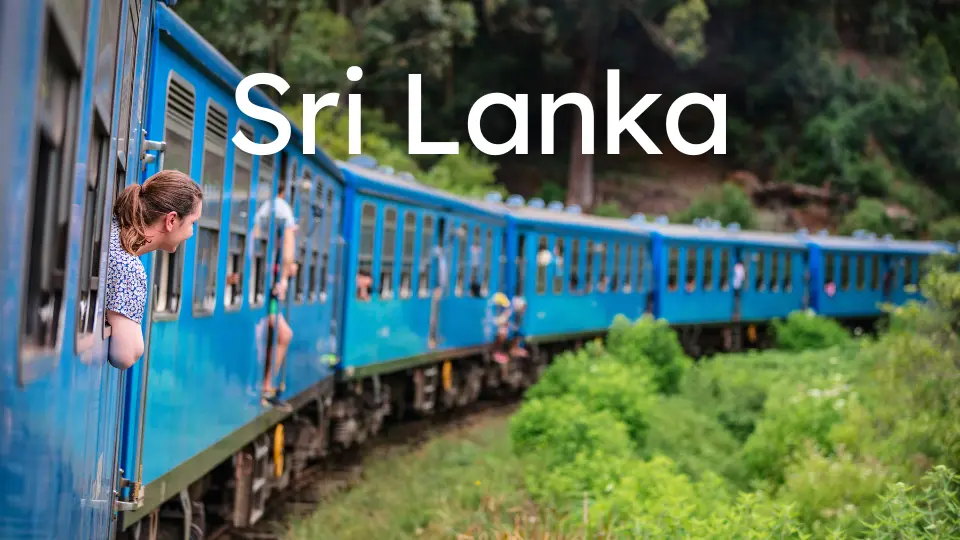
The train from Colombo Fort to Galle is one of Sri Lanka’s most iconic journeys, with tracks running alongside the Indian Ocean for much of the route. The trip takes 2.5 – 3.5 hours. Second Class offers the best balance of comfort and views. First Class has air conditioning but sealed windows. Book reserved seats early, especially during peak season, and avoid Colombo’s rush hours if possible.

Coastal train from Colombo to Galle
Best beach towns in Southern Province Sri Lanka
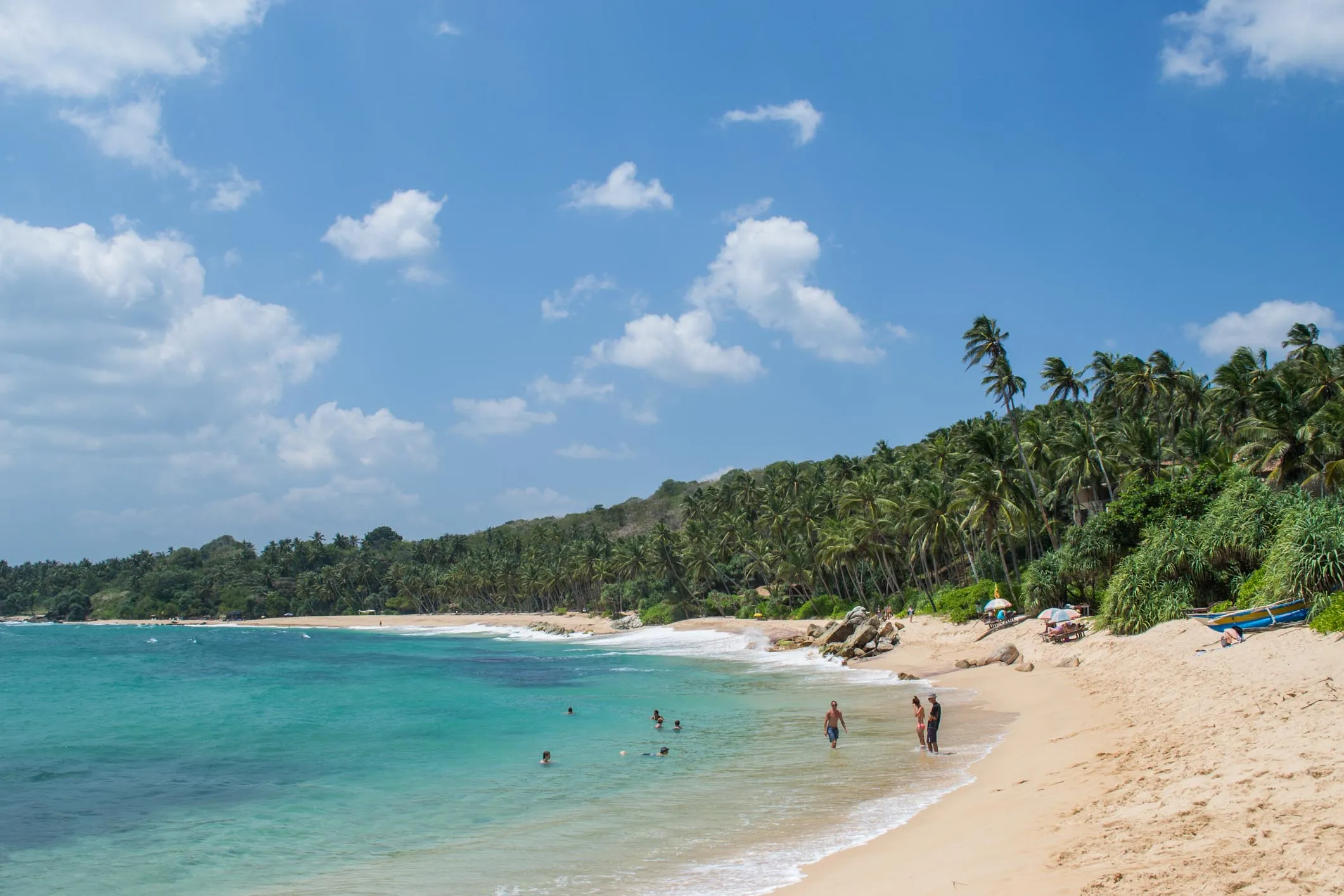
One of the biggest reasons travellers visit Southern Province Sri Lanka is its incredible coastline. Every beach town has its own personality, so it’s easy to find one that matches your travel style.
Weligama: The best place to learn surfing
If you’re new to surfing, Weligama is the best place to start. Its 3.2-km crescent-shaped bay has a soft sandy bottom, no dangerous reef, warm water averaging 27 – 29°C, and slow, forgiving waves that are perfect for beginners.
Surf schools line the beach, with board rentals costing just €3 – 5 per day. Group lessons usually cost €10 – 15 for 90 minutes, while a private two-hour lesson is around US$25.

Unawatuna and Dalawella: Calm water and Instagram-famous views
Only 10 – 15 minutes by tuk-tuk from Galle, Unawatuna offers a quieter atmosphere with calm water that’s ideal for relaxing. Nearby Wijaya Beach is protected by a coral reef that forms a natural seawater lagoon, making it one of the safest swimming spots for families with children.
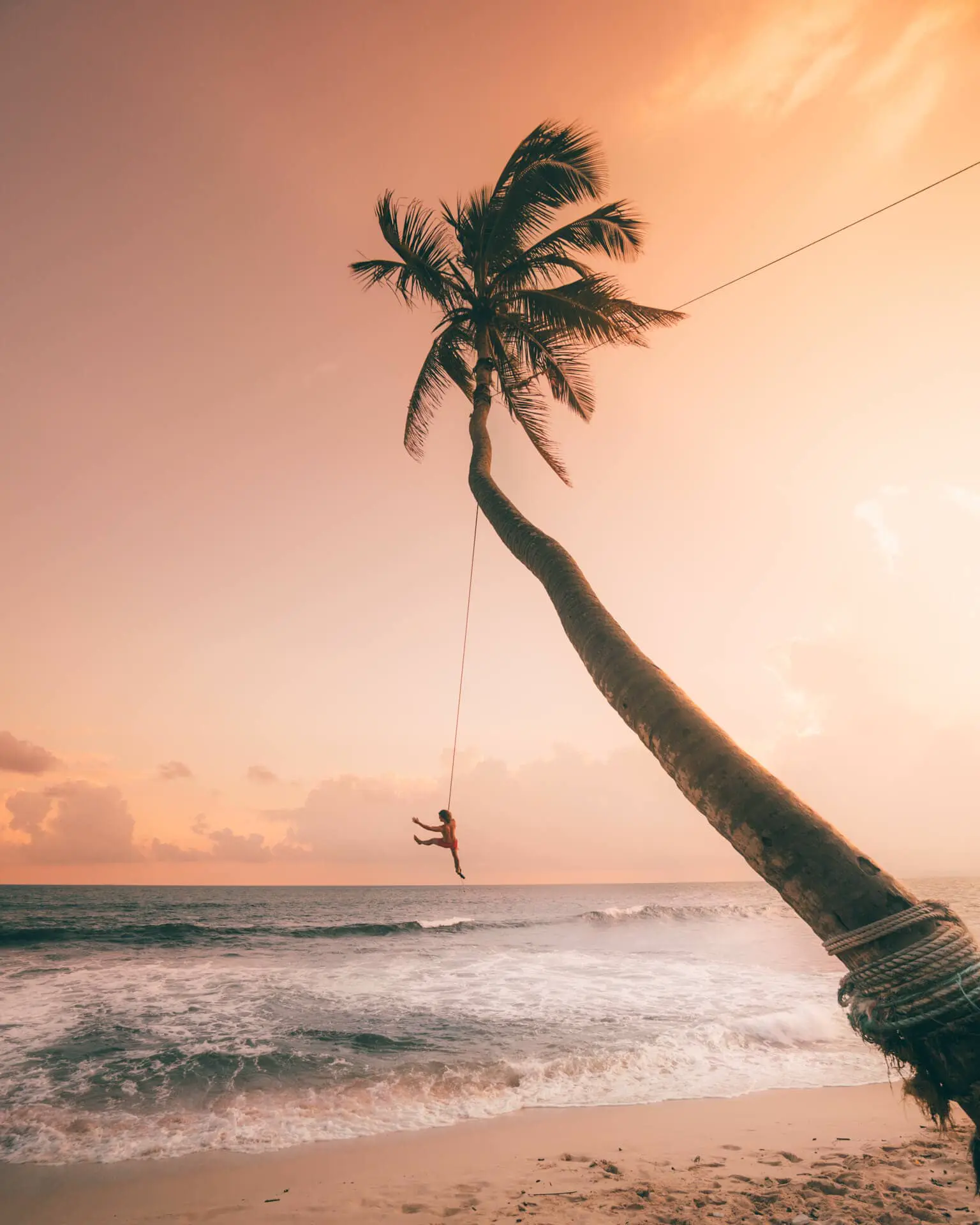
Just down the coast at Dalawella Beach, you’ll find Sri Lanka’s famous rope swing. It costs just 500 LKR (~US$1.50) for three swings and remains one of the area’s most popular photo spots.
BEST BEACHES IN SRI LANKA
Looking for more coastal escapes? Discover our full guide to the most stunning beaches across Sri Lanka.
Mirissa: Whale watching and beach life
With its 2-km sandy beach divided by the iconic Parrot Rock, Mirissa combines tropical scenery with a lively social atmosphere. During the day, visitors relax on the beach or head out to sea, while evenings are filled with seafood BBQs, beach bars, and happy hour specials.
Mirissa is Sri Lanka’s best base for whale watching between November and April. Near Coconut Tree Hill, you’ll also find a small beach where sea turtles regularly swim close to shore.


Hikkaduwa: Coral reefs and giant sea turtles
Hikkaduwa is one of Sri Lanka’s original beach destinations and still has a laid-back surf-town atmosphere. Its biggest attraction is the giant sea turtles that regularly swim in the shallow water near Hikka Tranz Hotel, often just a few metres from the beach. Hikkaduwa is also one of the country’s top spots for snorkelling, with boat trips taking visitors to nearby coral reefs.
Hiriketiya, Tangalle, and Midigama: Hidden bays and luxury escapes
Further east, the coastline becomes quieter and more varied. Hiriketiya is a beautiful horseshoe-shaped bay popular with surfers and digital nomads. Beginners can learn on the sandy inside section, while experienced surfers head to the left-hand reef break.
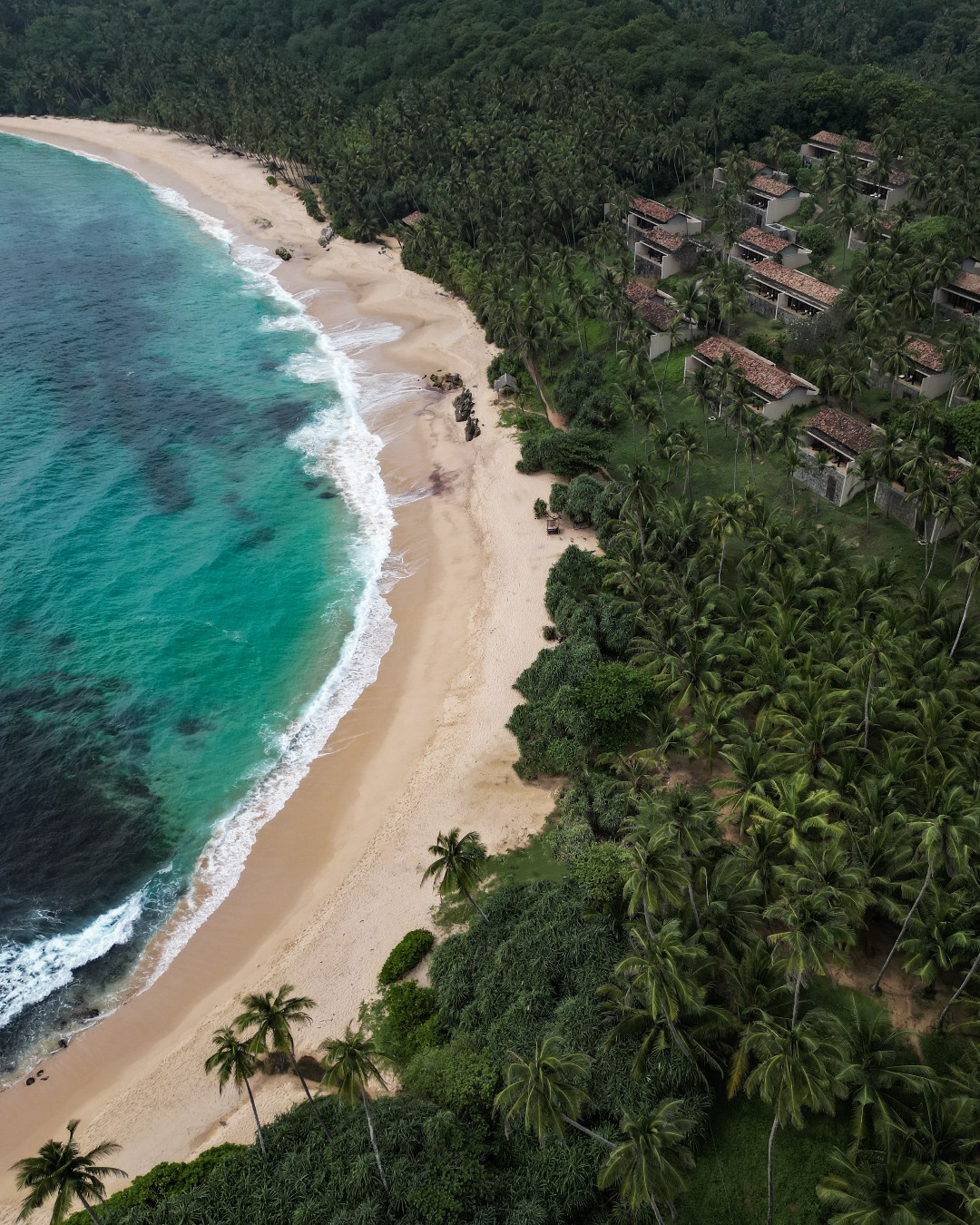
Tangalle and Hambantota are known for luxury resorts and long, uncrowded beaches in Southern Province. Although the scenery is spectacular, the waves and strong currents make many beaches unsuitable for swimming. This is a destination for relaxing by the pool rather than spending hours in the ocean.
Just west of Weligama, Midigama and Madiha attract intermediate and advanced surfers with reef breaks such as Lazy Left, Lazy Right, and Coconuts. These breaks offer longer rides and fewer crowds than the beginner beaches nearby.
Tangalle
EXPERIENCE SOUTHERN SRI LANKA
Embark on a crafted itinerary that includes the best waves and relaxation in beautiful Mirissa.
Nature and wildlife experiences in Southern Province Sri Lanka
One of the reasons Southern Province Sri Lanka stands out is its incredible biodiversity. Within a few hours’ drive, you can track leopards, watch rescued elephant calves, and spot the world’s largest animal in the wild. Better still, many of these experiences can be enjoyed through responsible, ethical tourism.
Go on a leopard safari in Yala National Park
If you’re looking for the best wildlife experience in Southern Province Sri Lanka, Yala National Park should be at the top of your list. Covering 979 sq km, it’s the country’s most visited national park and one of the best places in the world to see wild leopards.
Yala is famous for having one of the highest leopard densities on Earth, with Block 1 estimated to be home to dozens of these elusive cats. Beyond leopards, the park protects Asian elephants, sloth bears, crocodiles, water buffalo, and more than 215 bird species, including six endemic birds found only in Sri Lanka.
The best time to visit is March to June, when vegetation becomes thinner and wildlife gathers around waterholes, making animals easier to spot. For the highest chance of seeing a leopard, choose an early morning or late afternoon jeep safari, when temperatures are cooler and animals are most active.


Visit Elephant Transit Home
If seeing elephants is on your Sri Lanka bucket list, skip the commercial elephant camps and head to the Elephant Transit Home (ETH) near Udawalawe National Park instead. Established in 1995 by Sri Lanka’s Department of Wildlife Conservation, ETH rescues orphaned elephant calves with one goal: returning them to the wild.
The centre does not allow elephant riding, bathing, feeding by visitors, or any physical interaction. Instead, rescued calves are cared for until they are strong enough to be released. To date, more than 100 elephants have successfully returned to the 308-sq-km Udawalawe National Park.
Go whale watching in Mirissa
Another unforgettable Southern Province Sri Lanka experience is whale watching. Between November and April, the waters off Mirissa become one of the best places in the world to see blue whales, the largest animals on Earth, reaching 30 metres in length and weighing up to 200 tonnes.
February and March usually offer the highest success rates, often reaching 90%, as whales gather to feed. It’s also common to see sperm whales, spinner dolphins, and occasionally even orcas. Most whale-watching tours depart around 6:30 am, last 3 – 5 hours.
Look for operators certified by the Whale Conservation Association (WCA), such as Raja & the Whales, which follow responsible practices like maintaining a 100-metre minimum distance and never chasing whales.

SAFARI IN SRI LANKA
Uncover the ultimate wildlife encounters with our comprehensive guide to Sri Lanka’s best national parks.
Culture and heritage in Southern Province Sri Lanka
While the beaches and wildlife attract most visitors, the cultural heritage of Southern Province Sri Lanka is just as rewarding. From centuries-old colonial architecture to unique fishing traditions and regional cuisine, the south tells the story of Sri Lanka’s diverse history.
Step back in time at Galle Fort
The highlight of Galle Sri Lanka is undoubtedly Galle Fort, a UNESCO World Heritage Site inscribed in 1988. Covering 52 hectares (130 acres), it is considered one of the finest examples of a fortified colonial city in Asia. The Portuguese first built the fort in 1588 using mud and palm timber before the Dutch rebuilt it in stone and coral in 1649, adding 14 defensive bastions. The British later took control in 1796, leaving behind many administrative buildings that still stand today.
Allow at least half a day to explore the fort. As evening approaches, stroll along Pedlar Street before climbing the old ramparts to Flag Rock Bastion, where locals gather to watch the sunset and young cliff jumpers dive into the sea below.


Watch the traditional way of stilt fishing
One of Sri Lanka’s most iconic images is stilt fishing, a tradition dating back more than 70 years to the period after World War II. Today, the best places to see it are around Koggala, Ahangama, Weligama, and Kataluwa.
It’s worth knowing that stilt fishing is no longer the primary livelihood for most fishermen. Many now perform the practice for visitors, and it’s customary to pay around 1,000 LKR (~US$3.00) if you want to photograph them or climb onto a stilt yourself.
Taste the flavours of Southern Sri Lanka
Food is another reason to visit Southern Province Sri Lanka. Influenced by fresh seafood, aromatic spices, and Dutch colonial heritage, the region offers some of Sri Lanka’s most distinctive dishes. Don’t miss these local favourites:
- Matara Fish Ambul Thiyal: A signature sour fish curry made with tuna, black pepper, and dried goraka fruit. The curry is slowly reduced until almost all the liquid evaporates, creating rich, intensely flavoured pieces of fish.
- Meekiri with Kithul Treacle: Sri Lanka’s famous buffalo curd served in traditional clay pots and topped with sweet Kithul palm treacle. It’s one of the country’s most popular desserts and can be found at roadside stalls throughout the south.
- Lamprais: A speciality in Galle with Dutch Burgher roots. It combines rice cooked in meat stock, several curries, sweet brinjal, and a frikadeller meatball, all wrapped in a banana leaf and baked until fragrant.
- Fresh Seafood: Coastal towns like Mirissa, Tangalle, and Unawatuna are excellent places to enjoy freshly caught giant prawns, tuna, crab, squid, and grilled fish, often served at beachfront restaurants just hours after being landed by local fishermen.

Best time to visit Southern Province Sri Lanka
| Season | Details |
|---|---|
| Dry Season (Dec – Apr) | The best time to visit Southern Province. The region enjoys sunny skies, calm seas, and warm temperatures. This is the perfect time to relax on beaches like Unawatuna, learn to surf in Weligama, or join a whale-watching tour from Mirissa. |
| Wet Season (May – Sep) | Southern Province experiences the Southwest Monsoon, bringing heavier rainfall, rougher seas, and stronger currents. While sightseeing is still possible, beach activities and boat trips may be affected by weather and sea conditions. |
WILDLIFE & LEOPARD ENCOUNTERS
Join a professionally guided tour to Yala National Park to witness the majestic leopards in their natural habitat.
Practical tips for your travel to Sri Lanka
- Safety for solo travellers: Southern Province is generally considered one of the safest regions in Sri Lanka for solo travellers, including women. Stick to well-lit areas after dark and use PickMe or Uber instead of hailing tuk-tuks on quiet streets.
- Tuk-tuk fares: Not every tuk-tuk uses a meter. If yours doesn’t, agree on the fare before the journey begins to avoid unexpected charges at your destination.
- Coastal train safety: Sri Lanka’s coastal railway offers some of the country’s best scenery, but avoid leaning out of open train doors for photos. Several serious accidents have occurred over the years. If you stand near the doorway, always hold the handrail and stay inside the carriage.
- Visa requirements: Most travellers need to apply for a Sri Lanka Electronic Travel Authorisation (ETA) online before arrival. Check the latest visa requirements before booking your trip.
- Travel insurance: Comprehensive travel insurance is strongly recommended. It should cover medical emergencies, trip cancellations, flight delays, and lost or delayed baggage.
- Cash and payments: Credit cards are widely accepted in hotels and larger restaurants, but keep some Sri Lankan Rupees (LKR) for tuk-tuks, local cafés, markets, and small family-run businesses, where cash is still preferred.
Plan your Sri Lankan adventure
Southern Province is a destination that rewards every kind of traveller, combining spectacular beaches, unforgettable wildlife encounters, centuries of history, and vibrant local culture in one journey.
We hope this ultimate guide to Southern Province has given you all the information you need to plan a memorable trip with confidence. When you’re ready to explore Sri Lanka, Travel Sense Asia is here to help you design a personalised itinerary, share local expertise, and create a seamless travel experience tailored just for you.
Frequently Asked Questions (FAQs)
Is Southern Province Sri Lanka safe to visit?
Yes. Southern Province is one of Sri Lanka’s safest regions for tourists, including solo travellers. Use PickMe or Uber when possible, agree on tuk-tuk fares in advance, and stay aware of common tourist scams.
How do I get from Colombo to Galle?
The coastal train takes 2.5 – 3.5 hours and offers the best views. The EX001 Express Bus is the fastest public option, while a private transfer takes around 2 hours.
Which beach is best for beginner surfers?
Weligama is the best choice. Its 3.2-km sandy bay, gentle waves, and affordable surf schools make it ideal for first-time surfers.
When is the best time to go whale watching in Mirissa?
The best season is December to April, with February and March offering the highest chance of spotting blue whales, sperm whales, and dolphins.
Should I choose Yala or Udawalawe?
Choose Yala if you want the best chance of seeing leopards. Choose Udawalawe if your priority is wild elephants and visiting the ethical Elephant Transit Home.