










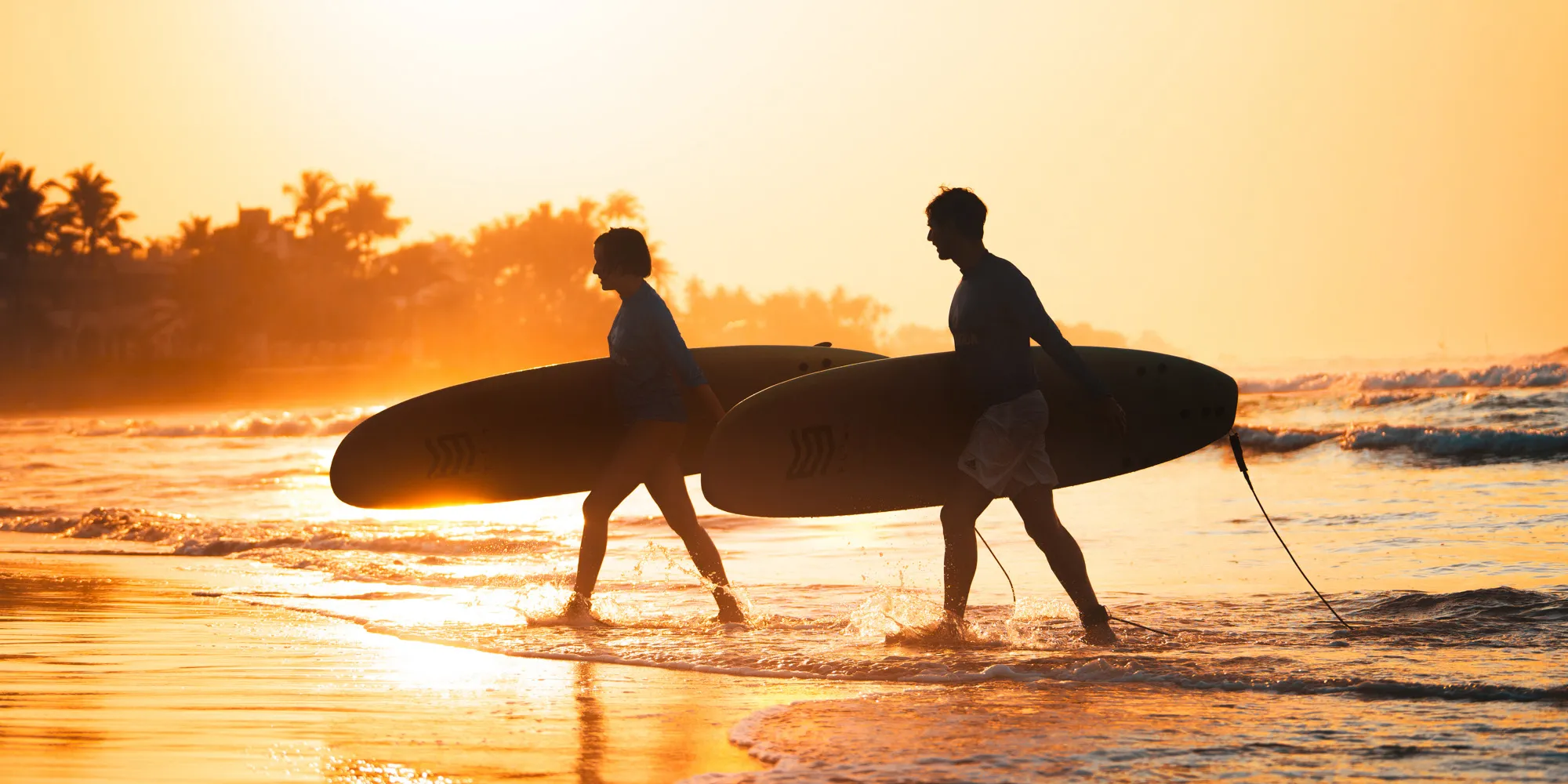
Not too famous towards many, Sri Lanka is an ideal surfing destination for both first-time learners and experienced surfers seeking challenging reef breaks and point breaks.
This guide from Travel Sense Asia will help you find the best time to visit, choose a surf spot that matches your ability and plan a well-rounded coastal journey. Read on to turn your surf trip to Sri Lanka into an unforgettable beach holiday!
Why is Sri Lanka one of Asia’s leading surfing destinations?
Sri Lanka’s appeal is not limited to the quality of its waves. What makes the island particularly enjoyable is the way surfing in Sri Lanka fits naturally into a wider travel experience.
Along the south coast, towns such as Weligama, Ahangama, Kabalana and Midigama sit within relatively easy reach of one another. You might begin the morning at a sandy-bottomed beach break, stop for breakfast at a café shaded by coconut palms and spend the afternoon exploring a quieter stretch of coastline.
The east coast offers a very different atmosphere. During the main season, Arugam Bay Sri Lanka seems to move according to the ocean. Tuk-tuks loaded with surfboards leave town at sunrise, cafés open early for returning surfers and conversations throughout the day revolve around swell, wind and the next session.
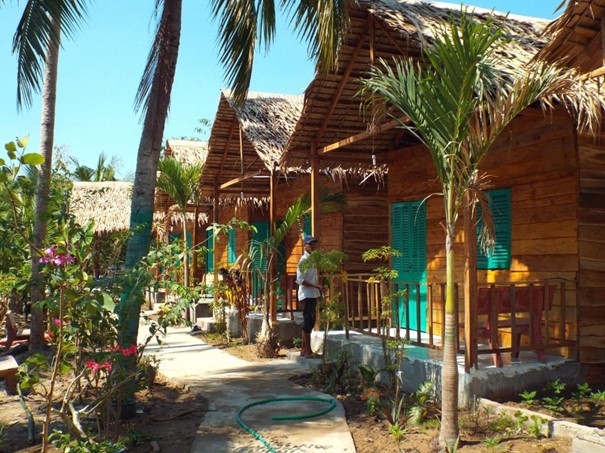
Sri Lanka also works well for different budgets and travel styles. Backpackers can stay in guesthouses, or choose boutique hotels, private villas or surf retreats. As a result, a dedicated surf trip can easily become a complete beach holiday in Sri Lanka with attractive activities.

Surfing in Weligama
ICONIC JOURNEY IN SRI LANKA
Looking to explore beyond the surf towns? You should see this itinerary combines coastal scenery with wildlife, highland landscapes and cultural landmarks.
Surf map Sri Lanka: Choosing the right coast for the season
The island is influenced by two monsoon systems, which cause the main surf season to alternate between the south and southwest coasts and the east coast. This is the key to understanding any surf map Sri Lanka: decide when you are travelling first, then choose the coast and surf break.
South and southwest coasts: November to April
From late in the year through early spring, surfing activity is concentrated along the south and southwest coasts. Popular destinations include Hikkaduwa, Weligama, Midigama, Ahangama, Kabalana and Hiriketiya.
The exact season varies slightly from one area to another. Hikkaduwa usually enjoys its most favourable conditions during the drier months from around November to March. Breaks near Ahangama, Kabalana and Midigama may continue working into April when swell and wind conditions remain favourable.
East coast: April or May to October
As the monsoon begins to affect the south, the main surfing season moves to the east coast. This is when Arugam Bay becomes one of Sri Lanka’s most important surf destinations.
The season generally runs from around April or May until October. The middle months, usually May to September, are often easier to plan around because conditions tend to be more consistent than during the transitional periods.
The east coast is known for its right-hand point breaks, which follow the shape of the coastline, often creating a longer and more defined ride. This makes Arugam Bay especially attractive to surfers who want to practise maintaining speed, choosing a line and linking several manoeuvres on one wave.
Kalpitiya: Two wind seasons for kitesurfing
Kalpitiya lies on the northwestern coast and offers a different watersports experience. The two main seasons for kitesurfing Sri Lanka generally run from May to October and from December to February or early March.
The summer season normally brings stronger, more consistent winds, while the winter season tends to be gentler but can also be more variable.

SOUTHERN PROVINCE TRAVEL GUIDE
Explore the best coastal attractions, wildlife, and surfing spots along Sri Lanka’s beautiful southern shores.
Top surfing destinations in Sri Lanka
The south coast combines accessible beaches with lively seaside towns. Arugam Bay is built around long point breaks and a strong surfing culture. Kalpitiya replaces waves with wind, opening up a different kind of journey across lagoons and offshore waters.
The table below offers a quick comparison:
| Area | Typical season | Suitable level | Main characteristics |
|---|---|---|---|
| Weligama | November–March/April | Beginners | Wide bay and several sandy-bottomed sections |
| Ahangama–Kabalana | November–April | All levels, depending on the break | Beach breaks and an A-frame reef break |
| Midigama | November–April | Intermediate and advanced | Several reef breaks |
| Hikkaduwa | November–March | All levels, depending on the break | Beach breaks and reef breaks |
| Hiriketiya | South-coast season | Beginner to intermediate | Small bay and a relaxed holiday atmosphere |
| Arugam Bay | Around April/May–October | All levels, depending on the break | Right-hand point breaks |
| Kalpitiya | May–October and December–February/March | Kitesurfers | Lagoon conditions and offshore wind spots |
Weligama: An accessible starting point for beginners
Address: Matara District, Southern Province, Sri Lanka.
Weligama is often the first stop for travellers trying surfing in Sri Lanka. Its wide bay, predominantly sandy bottom and numerous areas of broken waves close to shore provide a suitable setting for beginners to practise paddling, popping up and balancing on a board.
The atmosphere becomes especially lively during the surf season. Surf schools, board-rental shops, juice stalls and small restaurants line the beach, making it easy to begin without bringing much equipment from home. The first-time surfers should work with an instructor to choose an appropriate section of the beach and reduce the risk of collisions.

Weligama

Ahangama
Ahangama & Kabalana Beach: A new rhythm on Sri Lanka’s southern coast
Address: Galle District, Southern Province, Sri Lanka.
Ahangama has developed into one of the most distinctive coastal towns in southern Sri Lanka. It is an ideal setting for travellers seeking a harmonious balance between surfing, relaxation, and the authentic everyday character of the southern coast. From central Ahangama, travellers can easily access Midigama and several surrounding surf breaks. After an invigorating morning on the water, the pace naturally slows down with a late breakfast, a refreshing yoga class, or a relaxed afternoon by the pool.
The centerpiece of Ahangama’s surfing scene is Kabalana Beach Sri Lanka, located just a short distance from the town center. Kabalana stands out because it offers two distinctly different surfing experiences on a single beach:
- Kabalana Beach Break (Closer to shore): Forms over a sandy bottom and is generally accessible to beginners or intermediate surfers learning to catch unbroken green waves.
- The Rock (Offshore Reef Break): A famous A-frame reef break further out that opens in both left and right directions. It is tailored for experienced surfers who can comfortably read waves, control their boards, and navigate a reef break safely.
Midigama: Moving on to more challenging reef breaks
Address: Midigama Beach, Matara District, Southern Province, Sri Lanka.
Continuing east from Kabalana, Midigama offers a more technical surfing experience. This area contains several reef breaks, each with its own wave direction, entry route and level of difficulty.
Breaks such as Lazy Left and Rams generally attract surfers who can already catch green waves independently and control their direction. When conditions align, the waves can hold a defined shape, providing room to develop speed, practise turns and refine technique. The reef below the surface, means surfers must pay close attention to the tide, the position of the peak and the safest route back to shore.

Midigama
LUXURY BOUTIQUE RESORTS IN SRI LANKA
Unwind after a long surf session in the finest boutique accommodations across the island.
Hiriketiya
Hiriketiya: A small bay for slower days
Address: Hiriketiya Beach, near Dikwella, Matara District, Southern Province, Sri Lanka.
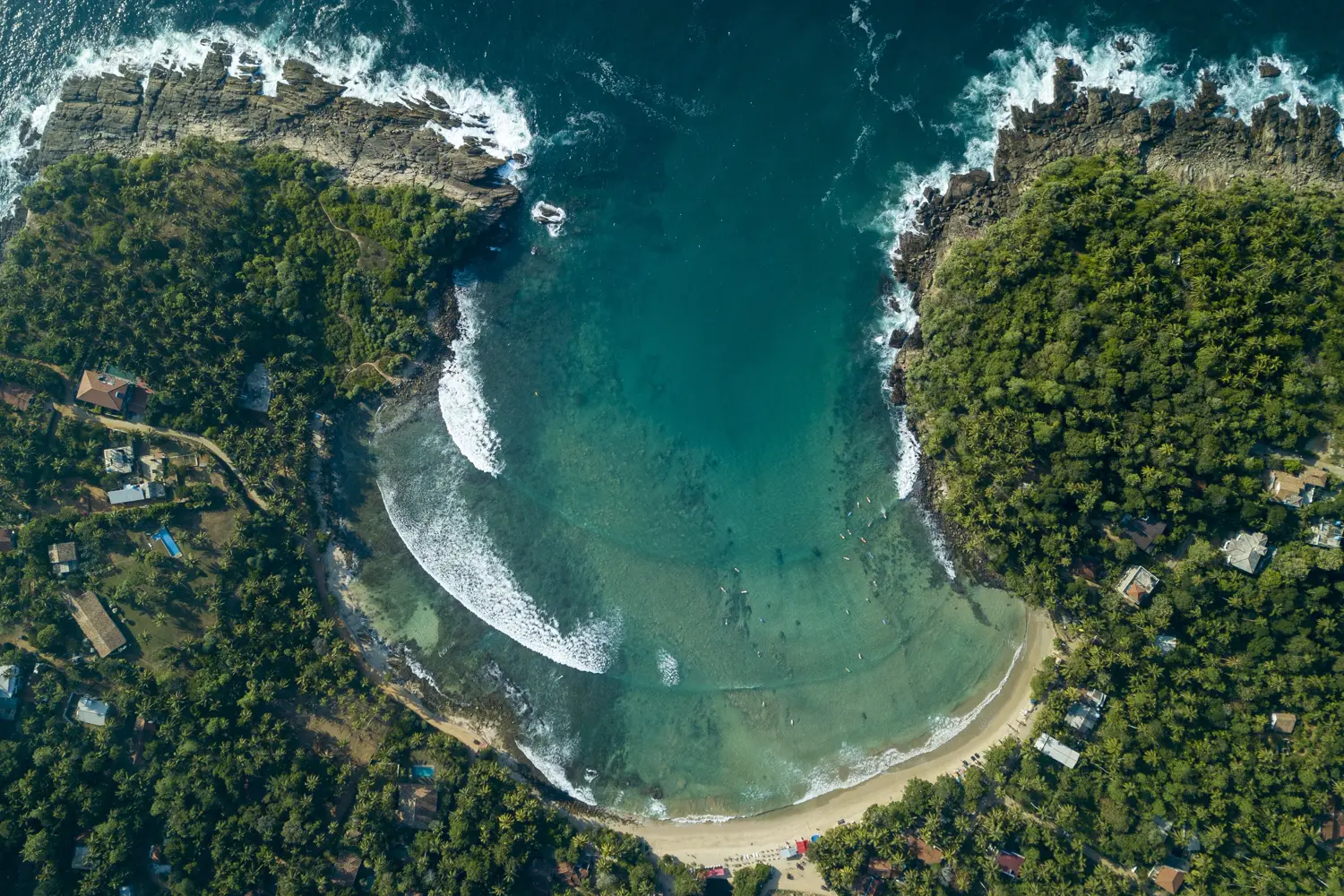
Hiriketiya sits inside a horseshoe-shaped bay surrounded by coconut palms. On smaller days, the inside section of the bay may suit learners. Closer to the point, the waves tend to have a more defined shape and require better judgement when choosing a line. When the swell increases or large numbers of surfers enter the water, the bay’s limited space can make the line-up considerably more challenging.
Hiriketiya is best enjoyed without the pressure to surf every session. Its compact beach, relaxed restaurants and slower rhythm make it an appealing place to spend time between days on the water.
Arugam Bay: Premier surf spots in Sri Lanka
Address: Ampara District, Eastern Province, Sri Lanka.
Arugam Bay Sri Lanka is the east coast surfing paradise, offering distinct breaks tailored for every skill level:
- Main Point (Intermediate to Advanced): The iconic break of Arugam Bay, famous for its long, high-quality right-hand wave. Located close to the town center, the line-up can be competitive during the peak season.
- Baby Point (Beginners): Tucked inside the main bay with a sandy bottom and gentler waves. It serves as the ideal stepping stone for learners transitioning from white water to green waves.
- Elephant Rock (Beginner–Intermediate): Located south of town, combining fun, accessible waves with a scenic coastal landscape. The nearby rock outcrop is also a favorite spot for sunset views.
- Peanut Farm (Multi-Level): A quieter beach featuring multiple take-off zones. The inner section suits developing surfers, while the outer break demands stronger wave-reading and board control.
- Pottuvil Point (Experienced Surfers): Situated north of Arugam Bay, famous for producing exceptionally long right-hand rides. Due to submerged rocks and point break entry, it is best reserved for experienced surfers. Easily combined with visits to Pottuvil Lagoon or Kumana National Park.
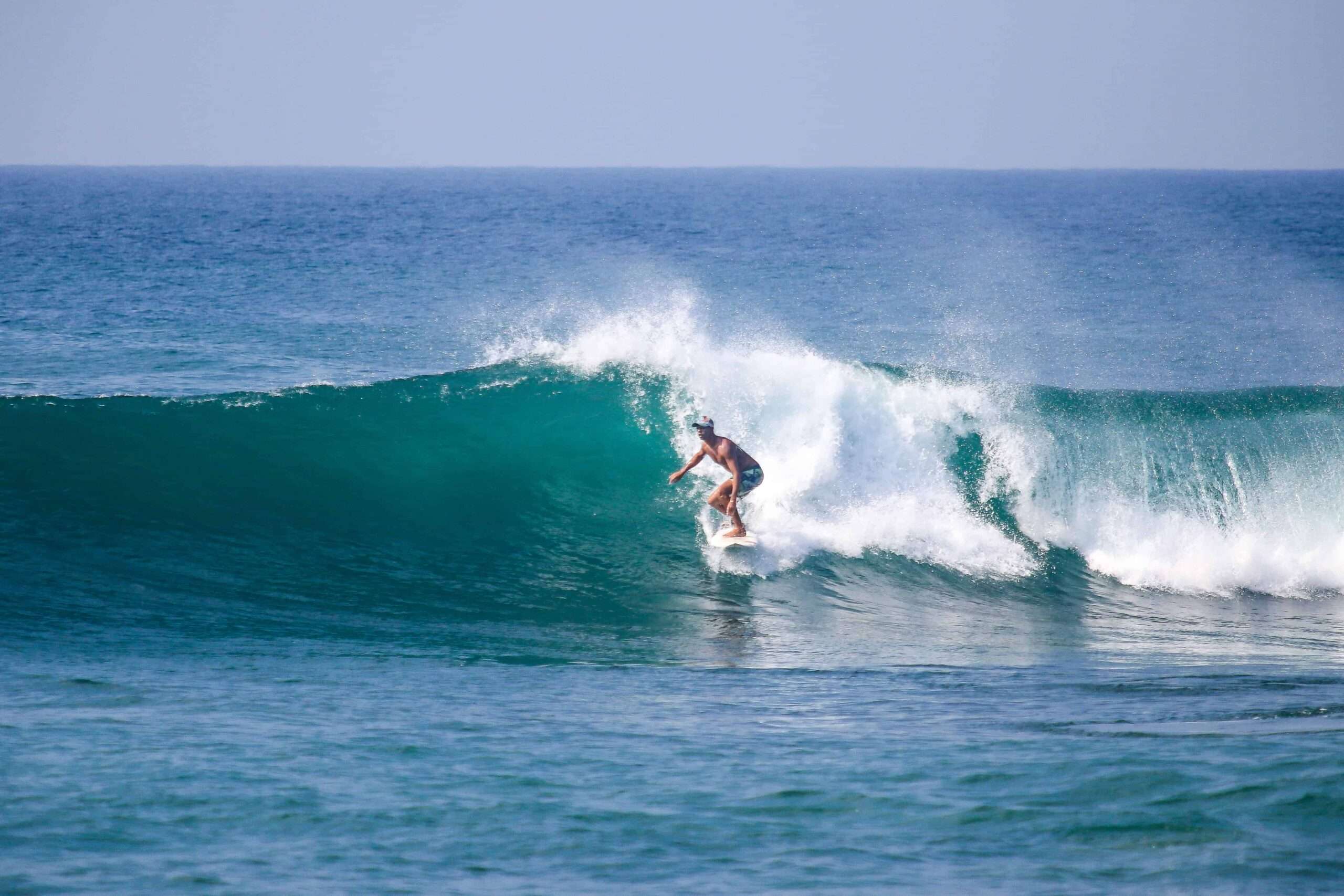
Arugam Bay

Kalpitiya Lagoon
Kalpitiya Lagoon: Beginning a kitesurfing journey
Address: Puttalam District, North Western Province, Sri Lanka.
Kalpitiya Lagoon is one of the leading destinations for kitesurfing Sri Lanka, particularly for beginners. The lagoon is generally flatter than the open sea, allowing learners to become familiar with controlling the kite, practise body dragging and work towards standing on the board in a more manageable setting.
Kitesurfing still requires proper instruction, even in relatively calm water. The pulling force of the kite, its lines and sudden changes in wind can become dangerous when a learner has not mastered the necessary techniques. Beginners should therefore complete lessons with a qualified instructor before practising independently.
What should you pack for a Sri Lanka surf trip?
Extra preparation is still useful when bringing your own board, surfing for several days or visiting breaks with rocks and shallow reef before you travel to Sri lanka.
- Surf clothing: A rash guard or surf top is useful for protects the skin from strong sunlight and reduces irritation caused by the board.
- A suitable board: Beginners can rent a soft-top or a larger board with greater buoyancy. Experienced surfers may prefer to bring a familiar board with the right volume, shape and fin set-up.
- A spare leash: Bring a replacement if you plan to surf for several days or visit places with few equipment shops.
- Warm-water surf wax: Choose wax made for tropical water, as cold-water wax can become too soft and slippery in Sri Lanka’s heat.
- Water-resistant sunscreen: Choose broad-spectrum protection and reapply it according to the product instructions, especially after long sessions.
- Reef booties: These are unnecessary at sandy-bottomed breaks such as Weligama but may be helpful where there are rocks, shallow reef or sea urchins.
- Appropriate travel insurance: Check whether surfing, kitesurfing, rescue services and related medical expenses are covered.
Travellers flying with surfboards should read the airline’s sports-equipment policy before booking. The size and weight limits, the number of boards allowed and any additional fees vary by airline.
SRI LANKA VISA LATEST UPDATES
Ensure a smooth entry for your surf trip by checking the latest Sri Lanka tourist visa requirements and updates.
Practical advice when you travel to Sri Lanka for a surf trip
A smooth surf trip depends on more than good waves. Plan your entry documents, transport and daily schedule in advance so you can spend less time dealing with logistics and more time enjoying the coast.
- Limit the number of regions: The south coast, Arugam Bay and Kalpitiya are far apart. Choose one or two areas to avoid spending too much of the holiday in transit.
- Carry some cash: Larger hotels and restaurants often accept cards, but tuk-tuks, small cafés and local rental shops may prefer Sri Lankan rupees.
- Observe the sea first: Watch several waves from shore to identify the break, currents and the safest entry and exit points. Use weather forecast apps if necessary.
- Respect local customs: Wear swimwear around the beach, avoid entering private property and take all rubbish with you.
If you are caught in a rip current, stay calm and do not swim directly against it. Remain afloat, signal for help and move parallel to the shore until you are clear of the strongest current, then swim back towards the beach.

From Weligama’s beginner-friendly waves to the long point breaks of Arugam Bay, Sri Lanka offers rewarding experiences for surfers of every level. Choosing the right coast for the season also leaves plenty of room for yoga, wildlife, local culture and relaxed days by the sea.
With thoughtful planning, surfing in Sri Lanka can become the highlight of your holiday while opening the door to the island’s coastal communities, natural landscapes and cultural heritage. Travel Sense Asia can help create a Sri Lanka itinerary tailored to your travel dates, surfing ability and preferred holiday style. Contact us today for a personalised Sri Lanka itinerary suits your travel style!
FAQs about surfing in Sri Lanka
What is the best time for surfing in Sri Lanka?
The south and southwest coasts are generally best from November to March or April. Arugam Bay on the east coast usually has its main surf season from around April or May to October. Conditions can still vary by break, swell, wind and tide.
Which destination is best for beginner surfers?
Weligama is usually the easiest place to start, thanks to its wide bay, sandy bottom and large number of surf schools. Kabalana Beach Break and Baby Point may also suit beginners with some experience when conditions are gentle.
Which surf spots suit intermediate and advanced surfers?
The Rock at Kabalana, Main Point at Arugam Bay and the reef breaks around Midigama are popular choices for more experienced surfers. Their difficulty changes with the swell, tide and crowd levels, so always assess the conditions before paddling out.
Is surfing in Sri Lanka safe?
Surfing in Sri Lanka can be safe when you choose a break that matches your ability and check the conditions before entering the water. Currents, rocks, shallow reef and crowded line-ups can still present risks, so seek local advice whenever a break is unfamiliar.
Can surfing be combined with a beach holiday in Sri Lanka?
Yes. Along the south coast, you can combine surfing with yoga, cafés, boutique stays, Galle Fort and wildlife safaris. Around Arugam Bay, Kumana National Park and Pottuvil Lagoon add nature-based experiences, while Kalpitiya offers kitesurfing and quieter lagoon scenery.