









Tonle Sap Lake is the largest freshwater lake in Southeast Asia and one of the most fascinating places to explore near Siem Reap. Travelers can cruise past waterside communities, see the towering stilt houses of Kampong Phluk, venture into seasonally flooded forests and observe a way of life that changes with the rise and fall of the water.
Read on with Travel Sense Asia to discover the best experiences around Tonle Sap Lake and find the right time to include them in your Cambodia journey!
An overview of Tonle Sap Lake and life along the water
Tonle Sap lies in central Cambodia and is connected to the Mekong River by the Tonle Sap River. What makes the lake remarkable is the dramatic seasonal change in both its water level and surrounding landscape.
During the rainy season, rising water in the Mekong reverses the flow of the Tonle Sap River, pushing water back into the lake and flooding surrounding plains and forests. As the dry season arrives, the current changes direction again, the lake retreats and previously submerged areas begin to reappear.

Communities around the lake include both floating houses, which sit directly on the water, and stilt houses, which are raised high above the ground to stay above seasonal floods. Chong Kneas is known for its floating homes, Kampong Khleang is larger in scale, and Prek Toal is often associated with nature and wildlife excursions. Kampong Phluk, meanwhile, stands out for its long rows of tall stilt houses lining the waterways.
In Kampong Phluk, houses, shops, pagodas and community buildings all respond to the changing seasons. When the water is high, boats move between the houses; when it recedes, the tall stilts, paths and stretches of land beneath the village gradually come back into view.
A Kampong Phluk stilt houses tour normally takes travellers through the village by boat before continuing towards the flooded forest and the wider lake. Along the way, fishing boats, small docks and daily activities provide a closer look at life in one of the best-known communities around Tonle Sap.
TRANS-BORDERS SENSES AWAKENING
Travellers who want to experience Tonle Sap as part of a broader Southeast Asia journey can explore our 22-day itinerary through Cambodia, Laos and Thailand.
Top 4 experiences to try at Tonle Sap Lake
A Siem Reap to Tonle Sap boat trip brings together several distinct experiences in one journey, from cruising through the stilt houses of Kampong Phluk and exploring flooded forests to watching daily life along the water and heading out onto the open lake. Each stage reveals a different side of Tonle Sap, combining natural scenery with the communities whose lives remain closely connected to the seasonal movement of the water.
Cruise through Kampong Phluk stilt houses
Cruising through Kampong Phluk is one of the signature experiences at Tonle Sap Lake. From the boat, travellers pass rows of elevated wooden houses, small landing points and community buildings stretching along both sides of the waterway.
The village looks noticeably different depending on the season. During the high-water period, the lake rises close to the main living areas of many houses, and boats become an important way to move around. In the dry season, the water retreats and exposes the tall supporting stilts underneath, making the unusual architecture of Kampong Phluk much easier to appreciate.
Daily life continues around the boat throughout the journey. Fishing vessels move between small docks, residents travel along the waterway and local activities unfold between houses, shops and community spaces. These scenes give travellers a clear sense of how the village has adapted to Tonle Sap’s changing water levels.


Explore the flooded forest
Beyond the stilt-house village, the journey can continue into the flooded forest between Kampong Phluk and the open lake. When water levels are high enough, smaller boats navigate narrow channels between trees rising directly from the water, creating a much greener and quieter setting than the village behind.
As the boat moves farther into the forest, houses and docks gradually disappear. In their place are winding waterways, submerged vegetation and dense clusters of trees that form natural passages through the water.
The slower pace makes this one of the most peaceful parts of the trip. Access depends on the actual water level, however, so the route through the flooded forest can vary from one season to another.
ESSENCE OF INDOCHINA
Travellers looking to explore Tonle Sap as part of a longer regional journey can discover our 16-day itinerary combining Vietnam and Cambodia.
Observe everyday life along Tonle Sap
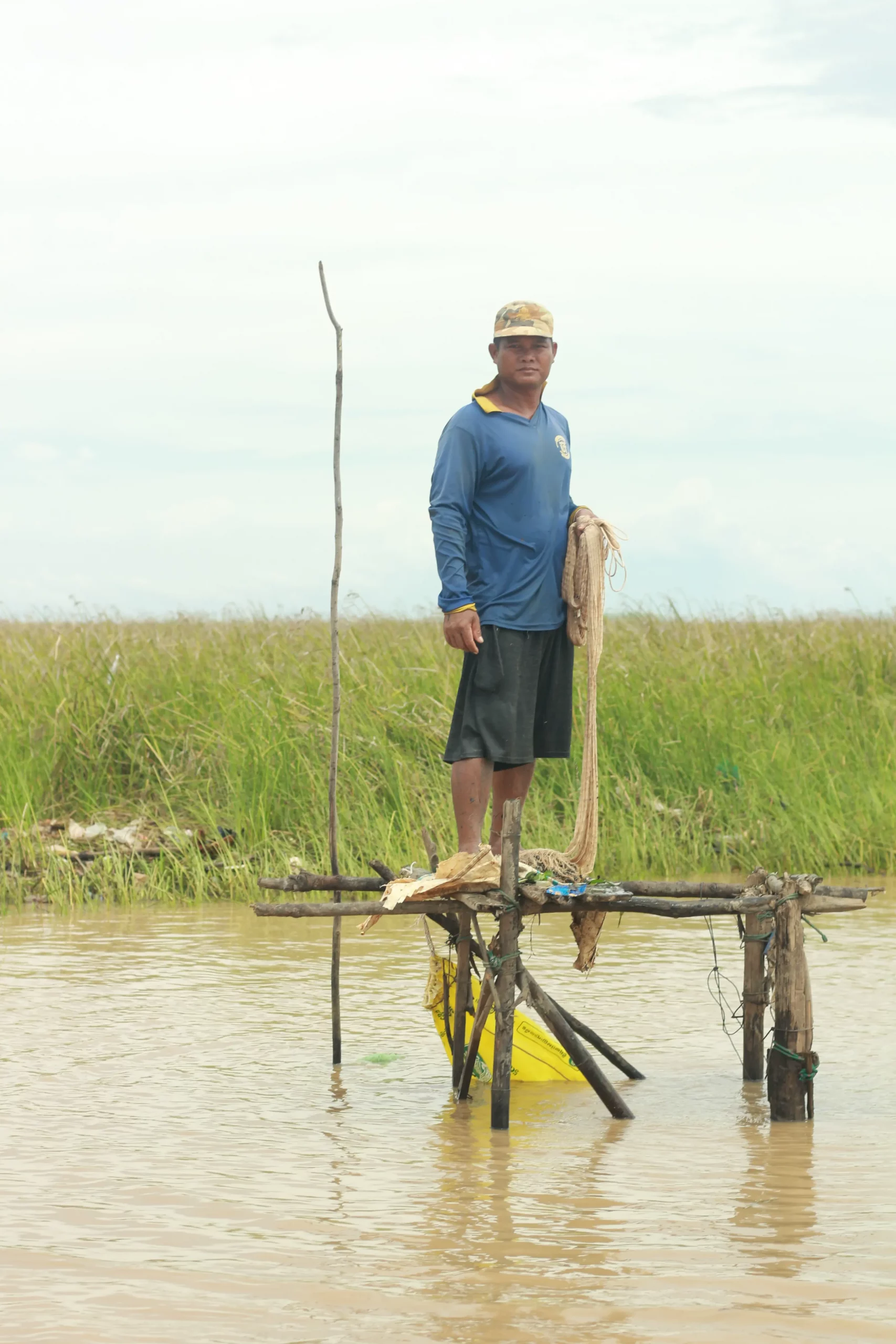
Some of the most interesting moments on Tonle Sap come from simply watching daily life unfold along the water. Travellers may pass fishing boats, small cargo vessels, landing points in front of homes and local trading activity taking place beside the lake.
In Kampong Phluk, homes sit alongside shops, pagodas and community buildings. The way people move around also changes with the seasons: boats become more important as the water rises, while paths and dry ground gradually return when the lake recedes.
These everyday scenes show Tonle Sap as more than a natural attraction. The lake remains closely connected to transport, fishing, trade and community life, giving visitors a more grounded view of how people live around the water.


Cruise onto the open waters of Tonle Sap
After passing through Kampong Phluk and the flooded forest, the boat gradually leaves the village behind and heads towards the open waters of Tonle Sap. Houses and small docks fade into the distance, while the horizon opens across a much wider stretch of water.
The change in scenery makes the scale of the lake easier to appreciate. Compared with the narrow channels around the village, the open water feels broader, quieter and more spacious.
Afternoon departures often include time on the lake around sunset. When the weather is clear, the late-day light reflects softly across the water, creating a calm final stretch before the boat returns to shore.
When is the best time to visit Tonle Sap Lake?
The best time to visit Tonle Sap Lake is during the high-water season, especially from around September to October. This is when the wet season in Tonle Sap is most visible, with higher water levels, easier access to the flooded forest and Kampong Phluk surrounded by the lake at its most expansive.
Travellers who want to focus on boat journeys, flooded landscapes and the water-based character of Kampong Phluk should prioritise this period. The dry season offers a different experience, with lower water levels revealing the full height of the stilt houses and more of the land beneath the village.
| Period | What to Expect |
|---|---|
| September – October | Best for travellers who want to experience the wet season in Tonle Sap at its most distinctive, with high water levels, easier access to the flooded forest and a stronger sense of Kampong Phluk as a waterside community. |
| November – February | Best for travellers who want to combine Tonle Sap with Angkor in generally more comfortable weather while still enjoying a boat journey around the lake. |
| March – April | Best for travellers interested in the structure of the stilt houses, as lower water levels reveal the tall supports beneath the homes and the changing landscape around the village. |
| May – August | Best for travellers visiting as Tonle Sap begins its transition into the high-water season, when rainfall increases, water levels start to rise and the surrounding scenery becomes greener. |

OFFICIAL VIETNAM TOURISM PARTNER
Travel Sense Asia is incredibly proud to be featured on the official Vietnam Tourism board as a premium travel partner.
How to choose ethical tours to Tonle Sap Lake?
Tonle Sap is home to communities that continue to live, fish and travel on the lake every day, so a responsible visit should respect local privacy while limiting unnecessary disruption. When looking for ethical tours to Tonle Sap lake, travellers should also consider whether local residents are meaningfully involved in and benefit from tourism.
- Prioritise local services: Choose tours that work with local guides, boat drivers and community-based services.
- Choose smaller groups: Smaller or moderately sized groups create less disruption in residential areas and often allow for a more detailed introduction to the destination.
- Respect private spaces: Ask before taking close-up photographs of residents, and never enter homes or private areas without permission.
- Do not treat children as attractions: Schools, orphanages and local children should not be included as entertainment or sightseeing stops.
- Avoid giving gifts directly to children: Money, sweets and other gifts can create unintended problems and should not be handed out casually during a village visit.
- Consider animal welfare: Avoid stops involving captive wildlife when operators cannot clearly explain their conservation purpose or welfare standards.
- Reduce environmental impact: Limit single-use plastics and never leave rubbish on the lake or in the flooded forest.
- Check how the community benefits: Responsible operators should be able to explain how local residents participate in or receive income from tourism.
MEKONG RIVER CRUISES
Discover the best luxury and boutique river cruises connecting Vietnam and Cambodia.
FAQs about Tonle Sap Lake
How long does a Siem Reap to Tonle Sap boat trip take?
A Siem Reap to Tonle Sap boat trip to Kampong Phluk is usually organised as a half-day excursion, including the road transfer from Siem Reap and the boat journey itself. The exact duration can vary depending on water levels and the activities included.
Is it better to visit Tonle Sap in the morning or at sunset?
Morning trips work well for travellers who want to keep the afternoon free for Angkor or other attractions around Siem Reap. Afternoon departures are often chosen for the opportunity to spend sunset on the open waters of Tonle Sap. As sunset conditions depend on the weather, it is better to choose the departure time according to your overall itinerary rather than planning the trip around sunset alone.
Is the wet season or dry season better for Tonle Sap?
The wet season is better for travellers who want to see flooded landscapes, travel farther by boat and explore the flooded forest. The dry season provides a clearer view of the stilt-house structures and the dramatic change in water level around Kampong Phluk. Both seasons show a different side of Tonle Sap, so the better choice depends on the scenery and experience you want to prioritise.
How can you visit Tonle Sap responsibly?
Choose tours that use local services, respect residents’ privacy and avoid disrupting everyday community life. Travellers should ask permission before taking close-up photographs and avoid tours that present children or schools as tourist attractions.
Explore Tonle Sap with Travel Sense Asia
Tonle Sap Lake offers a very different experience from the historic landmarks that make Siem Reap famous. From the stilt houses of Kampong Phluk and the flooded forest to the vast open lake, the journey shows how both the landscape and everyday life change with the rise and fall of the water.
For travellers planning to travel to Cambodia, Travel Sense Asia can help combine Tonle Sap with Angkor, Siem Reap and other destinations in an itinerary that balances heritage, nature and local experiences. Contact Travel Sense Asia to find a journey that suits your available time and travel style.