















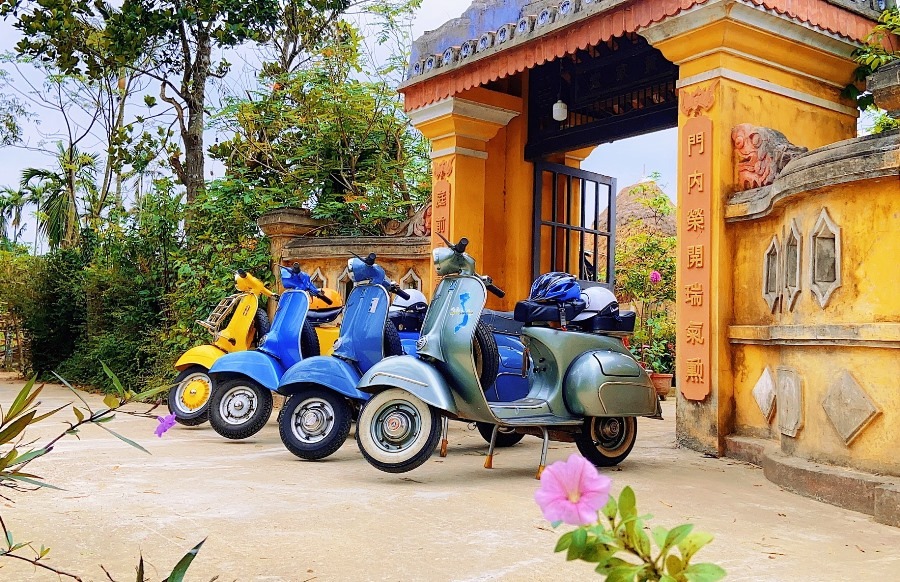


Step into Hoi An’s Ancient Town and you’ll find some of its most striking landmarks: the Chinese Assembly Halls. Built by merchant communities centuries ago, these ornate temples are not only places of worship but also living symbols of heritage, with dragon statues, incense-filled altars, and serene courtyards perfect for cultural check-ins.
In this guide, we’ll take you through the Fujian, Cantonese, Hainan, and Chaozhou Assembly Halls in Hoi An, each with its own story and unique highlights. You’ll also find practical tips, including opening hours, entrance fees, dress codes, and the best times to visit.
When you wander the Ancient Town of Hoi An in Vietnam, the first impressions are often the ochre-yellow walls, lantern-lit alleys, tailor shops, and riverside cafés. Yet beyond these eye-catching signatures lie the cultural gems of Hoi An: the Chinese Assembly Halls (Hội quán).
From the 16th to 17th centuries, when Hoi An was a thriving international port, Chinese merchants from Canton, Fujian, Hainan, and Chaozhou settled here. They built assembly halls not only for worship but also as centers of trade and community life where decisions were made, festivals held, and ancestral ties preserved.
After Vietnam’s reunification in 1975, Hoi An faced campaigns to demolish temples and guild halls seen as “superstitious.” Yet, Mr. Ho Nghinh, then Party Secretary of Quang Nam – Da Nang, intervened in time. Thanks to his action, many heritage sites were preserved, forming today’s Ancient Town.
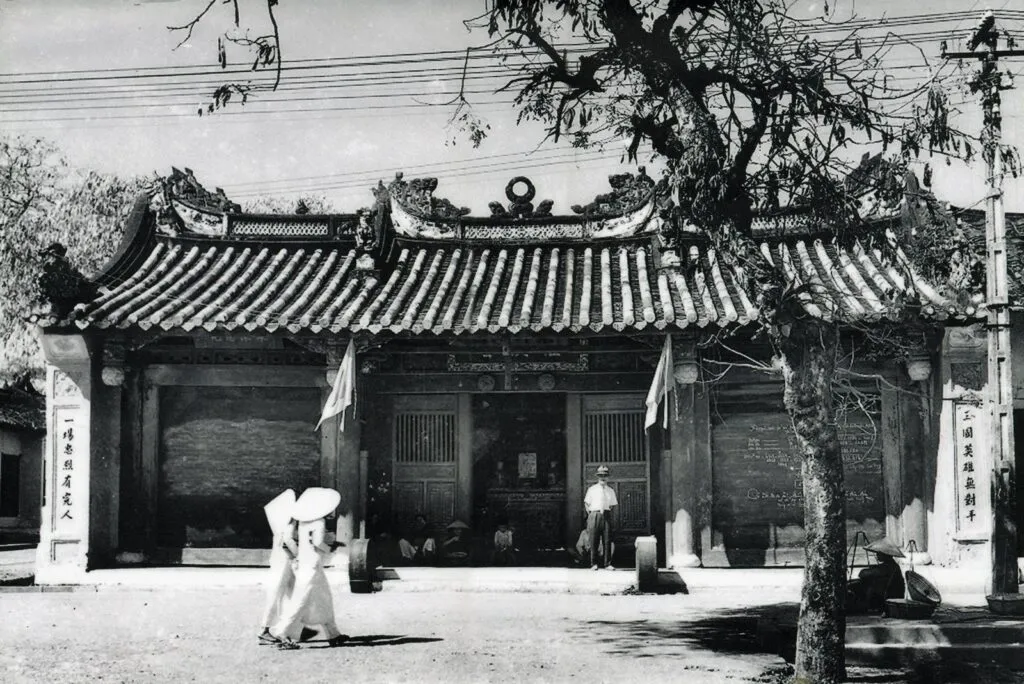
Source: Internet
Walking through an Assembly Hall now feels like opening a living history book. For travelers from Singapore and Malaysia, the connection feels surprisingly close. The architecture of these Hoi An sightseeings reflects Southern Chinese styles familiar from temples in Penang, Malacca, or Singapore’s Chinatown, but with a Vietnamese twist-blending local artistry with Chinese heritage.
Beyond their beauty, the Assembly Halls also give insight into Hoi An’s multicultural roots. They highlight how trade brought people together, how communities preserved identity, and how the town evolved into the heritage site it is today. Whether you are looking for stunning photography spots or a deeper cultural experience, these Assembly Halls are must-visit Hoi An attractions.
The most famous Chinese Assembly Halls in Hoi An Ancient Town
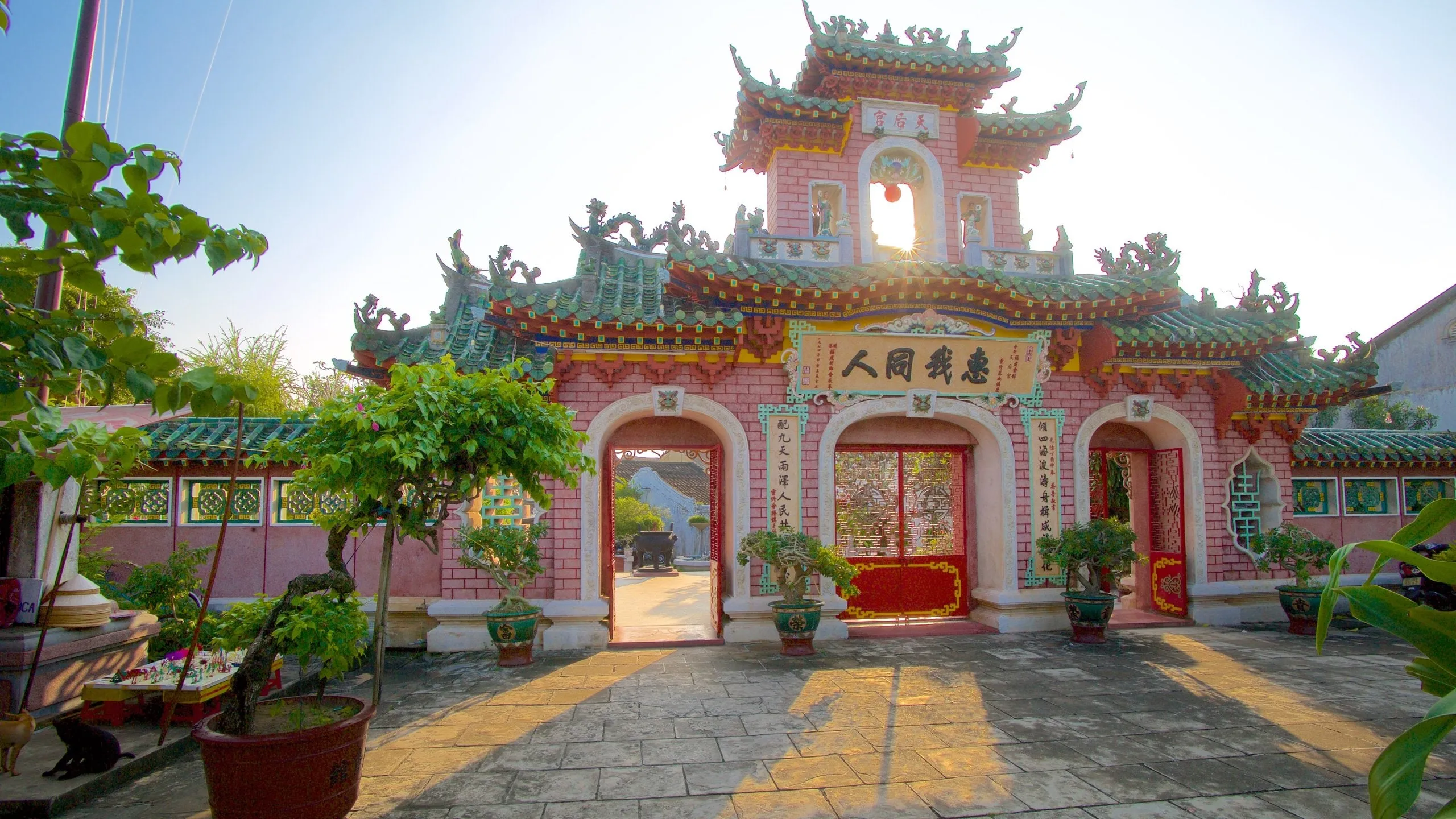
1. Fujian Assembly Hall (Hoi Quan Phuc Kien)
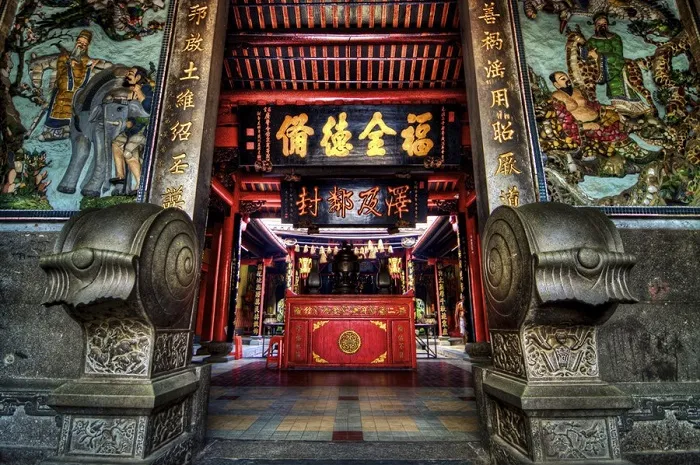
The Fujian Assembly Hall is considered the grandest and most impressive of all Chinese Assembly Halls in Hoi An in Vietnam. Originally built in the 17th century, it was established by the Fujian community and dedicated to Thien Hau, the goddess who protects sailors and merchants on their sea journeys. Walking through its imposing gate adorned with dragons, visitors enter a spacious courtyard filled with bonsai trees, colorful lanterns, and stone statues. Inside, massive incense coils dangle from the ceiling, casting a mystical haze that enhances the sacred atmosphere. The main altar glows in red and gold, surrounded by finely carved wooden panels that tell tales of protection and prosperity.
- Address: 46 Tran Phu Street, Hoi An
- Opening hours: 08:00 – 17:00
Source: Internet
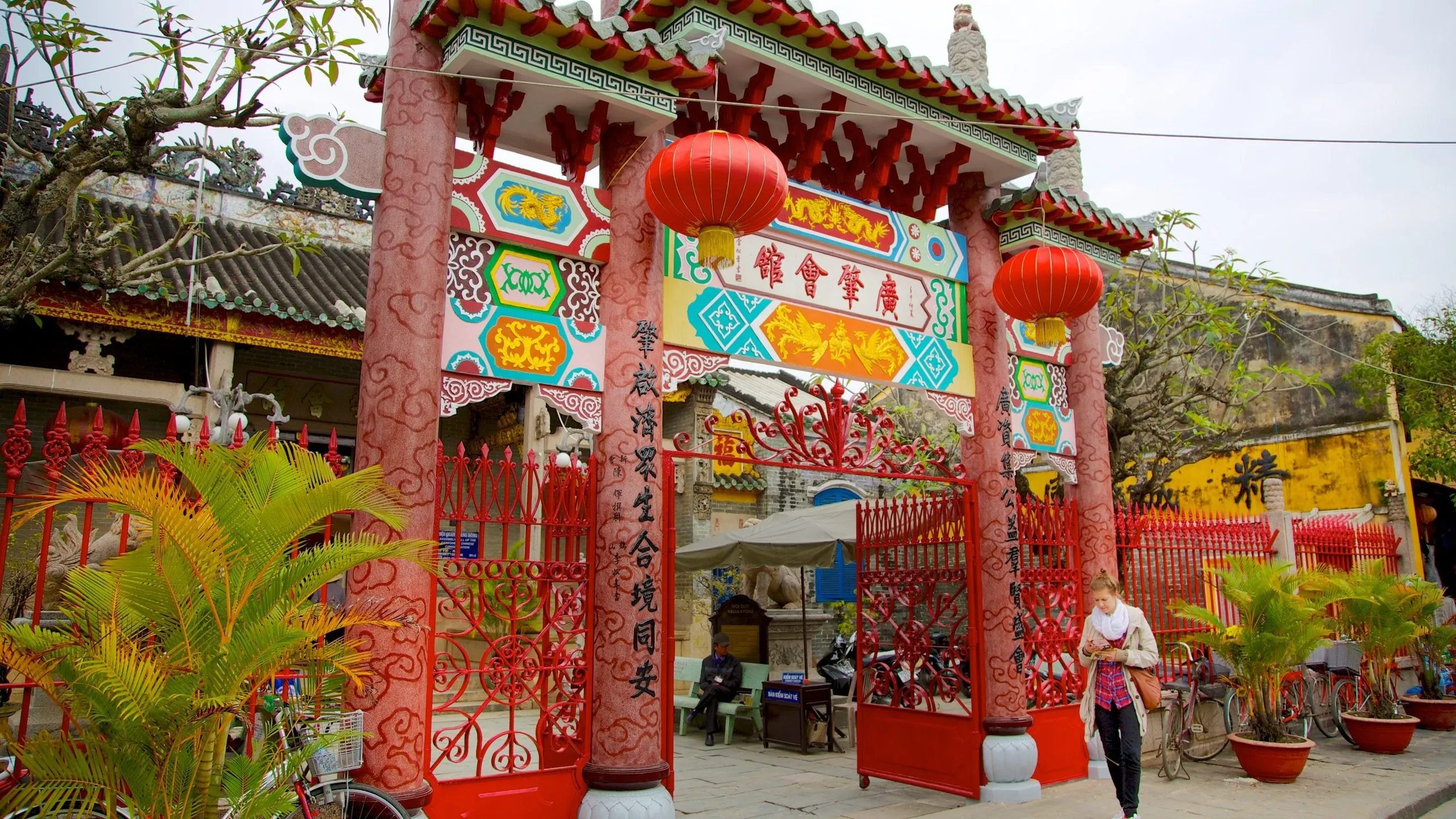
2. Cantonese Assembly Hall (Hoi Quan Quang Dong)
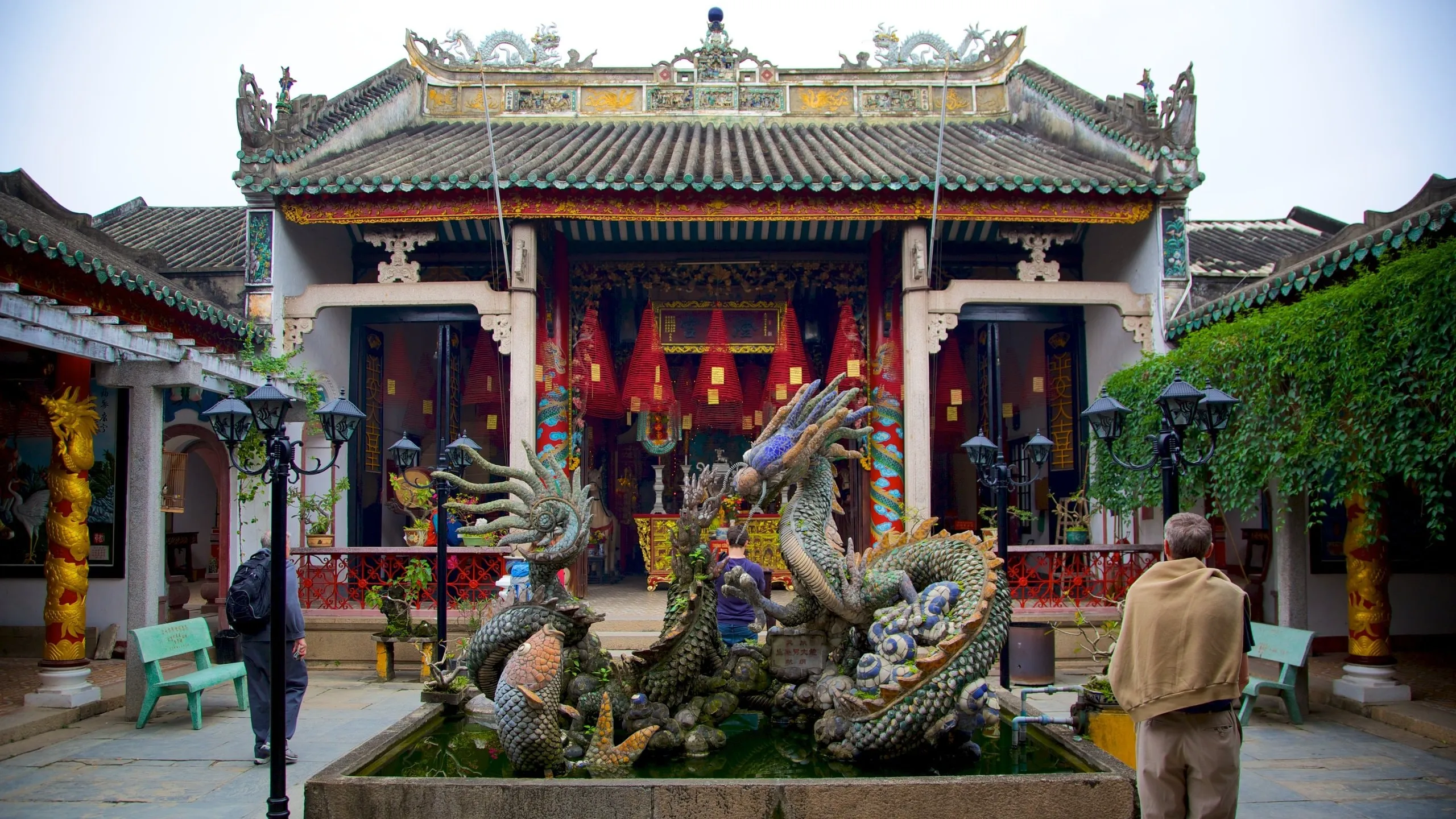
Built in 1885, the Cantonese Assembly Hall was the cultural and spiritual center of the Cantonese community. Dedicated to Quan Cong, a legendary Chinese general representing loyalty, justice, and integrity, the hall blends both wood and stone in its design. The entrance gate is decorated with lively dragon motifs, while the inner courtyard features a stunning dragon-and-carp fountain crafted from colorful ceramics. Inside, intricate wooden altars glow softly under lantern light, and the aroma of sandalwood incense fills the air. This hall may be smaller than the Fujian one, but its charm lies in the perfect balance of intimacy and grandeur.
- Address: 176 Tran Phu Street, Hoi An
- Opening hours: 08:00 – 17:00
Source: Internet
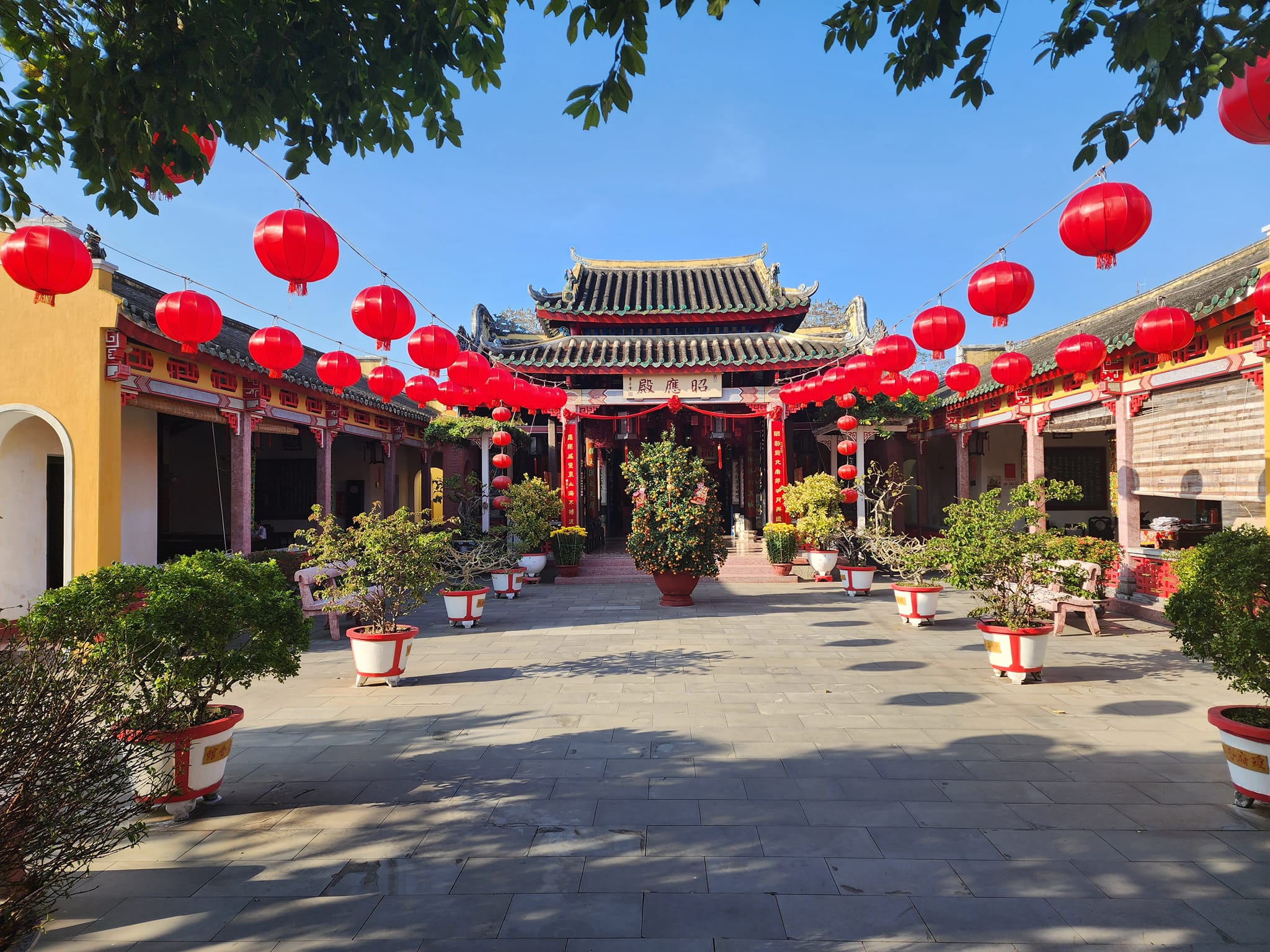
3. Hainan Assembly Hall (Hoi Quan Hai Nam)
Built in 1851, the Hainan Assembly Hall holds deep historical and emotional significance. It was erected to honor 108 Hainanese merchants who were wrongfully executed by a Vietnamese ruler during a period of political turmoil. Today, the hall functions both as a temple and as a solemn memorial. Inside, the main altar honors these men, while large wooden plaques inscribed with Chinese characters recount the tragic story. The hall’s architecture is more understated compared to others, yet it radiates a quiet dignity. Visitors will find murals depicting sea voyages, ancestral tablets, and lantern-lit altars that preserve the memory of those lost.
- Address: 10 Tran Phu Street, Hoi An
- Opening hours: 08:00 – 17:00
Source: Internet
4. Chaozhou Assembly Hall (Hoi Quan Trieu Chau)
The Chaozhou Assembly Hall may be smaller in scale, but it is a true masterpiece of craftsmanship. Dedicated to the god of wind and sea, this hall was where sailors prayed for safe voyages before embarking on long journeys. What makes it remarkable are the incredibly detailed wooden carvings covering the altars, beams, and doors. Scenes of mythological creatures, flowers, and traditional motifs are carved with such precision that visitors often stop in awe. The tiled roof and decorative arches bring a splash of color and artistry that stand out in the Ancient Town.
- Address: 157 Tran Phu Street, Hoi An
- Opening hours: 08:00 – 17:00
Source: Internet
What to expect when visiting Chinese Assembly Halls in Hoi An?
Tickets: Entry to the assembly halls is included in the Hoi An Ancient Town ticket (120,000 VND per any 5 attractions).
Dress code: Modest clothing is recommended as these are active places of worship.
Photography: Allowed, but always be respectful of worshippers.
Best time: Early morning or late afternoon for soft light and fewer crowds.
Language: Most signage in Hoi An has English translations.
Cash: Bring small notes for incense or offerings.
Combine visits: All halls are located along Tran Phu Street; you can visit them on one walk.
Weather: Summers are hot; bring water and a hat. The rainy season (Oct–Dec) may affect lighting for photos.
Source: Internet
Suggested half-day itinerary in Hoi An
Because all four halls are located along Tran Phu Street in the Ancient Town, visiting them can take less than two hours at a relaxed pace. Here’s a practical plan for a half-day trip: Morning arrival: Transfer from Da Nang Airport to Hoi An (about 45 minutes).
- 10:00 – 11:30: Visit the four Assembly Halls in sequence along Tran Phu Street.
- 11:30 – 12:30: Explore the Hoi An Japanese Bridge and nearby alleys.
- 12:30 – 13:30: Enjoy lunch with local specialties such as cao lau or white rose dumplings.
Afternoon options: Continue with Hoi An Sightseeing – stroll through the market, shop for lanterns, or take a short boat ride on the Thu Bon River. This itinerary ensures the Assembly Halls are appreciated fully, while leaving time to experience other Hoi An attractions.
Frequently Asked Questions (FAQ) about Chinese Assembly Halls in Hoi An
1. What is the closest airport to Hoi An?
The closest airport to Hoi An is Da Nang International Airport, located around 30 km away. However, many travelers still search online for Hoi An airport or Hoi An Vietnam airport, because Da Nang is the main hub serving visitors to Hoi An.
2. How long is the ride from the airport to Hoi An in Vietnam?
The ride from Da Nang International Airport to Hoi An in Vietnam typically takes 40–60 minutes by car. Travel time depends on traffic and the type of transfer you choose. A private car is the fastest and most comfortable option, while shuttle buses are budget-friendly. Many Singaporean and Malaysian travelers prefer pre-booking an airport transfer to save time and avoid waiting in queues. With Travel Sense Asia, you can enjoy a seamless airport pick-up/drop-off with a driver and tour guide, along with full transfers when booking any Hoi An tour with us.
3. Do I need a ticket to enter the Chinese Assembly Halls?
Yes, visiting the Assembly Halls in Hoi An requires an entrance ticket (120,000 VND and you can visit any 5 attractions within the Ancient Town). If you choose Travel Sense Asia for a Hoi An tour, we will help you explore all of the highlights in the Hoi An Ancient Town with our English-speaking guide.
4. What makes the Assembly Halls special for visitors?
The Chinese Assembly Halls combine Southern Chinese heritage with Vietnamese artistry, making them both cultural landmarks and top photography spots in Hoi An in Vietnam. Each hall has a different story – Fujian dedicated to Thien Hau, Cantonese with its dragon fountain, Hainan as a solemn memorial, and Chaozhou showcasing exquisite wood carvings. The Chinese Assembly Halls are more than temples – they are living museums that showcase the multicultural roots of Hoi An in Vietnam. Each hall tells a story of migration, community, and resilience. Step through their ornate gates, light a stick of incense, and take a photo that connects you not just to a place, but to centuries of history.