







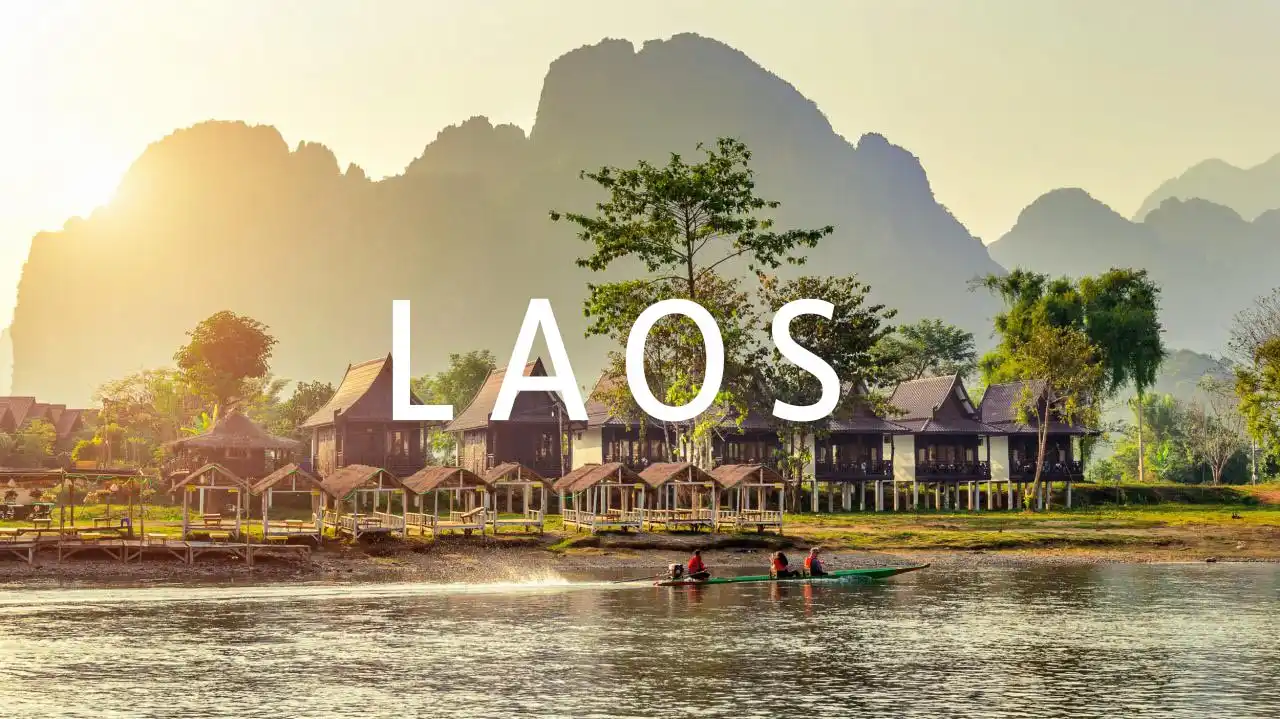
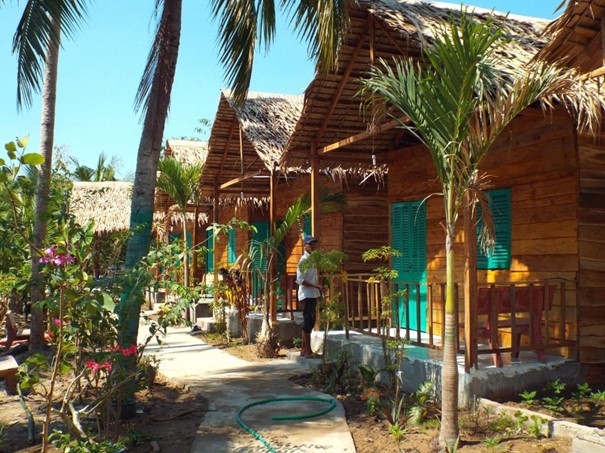
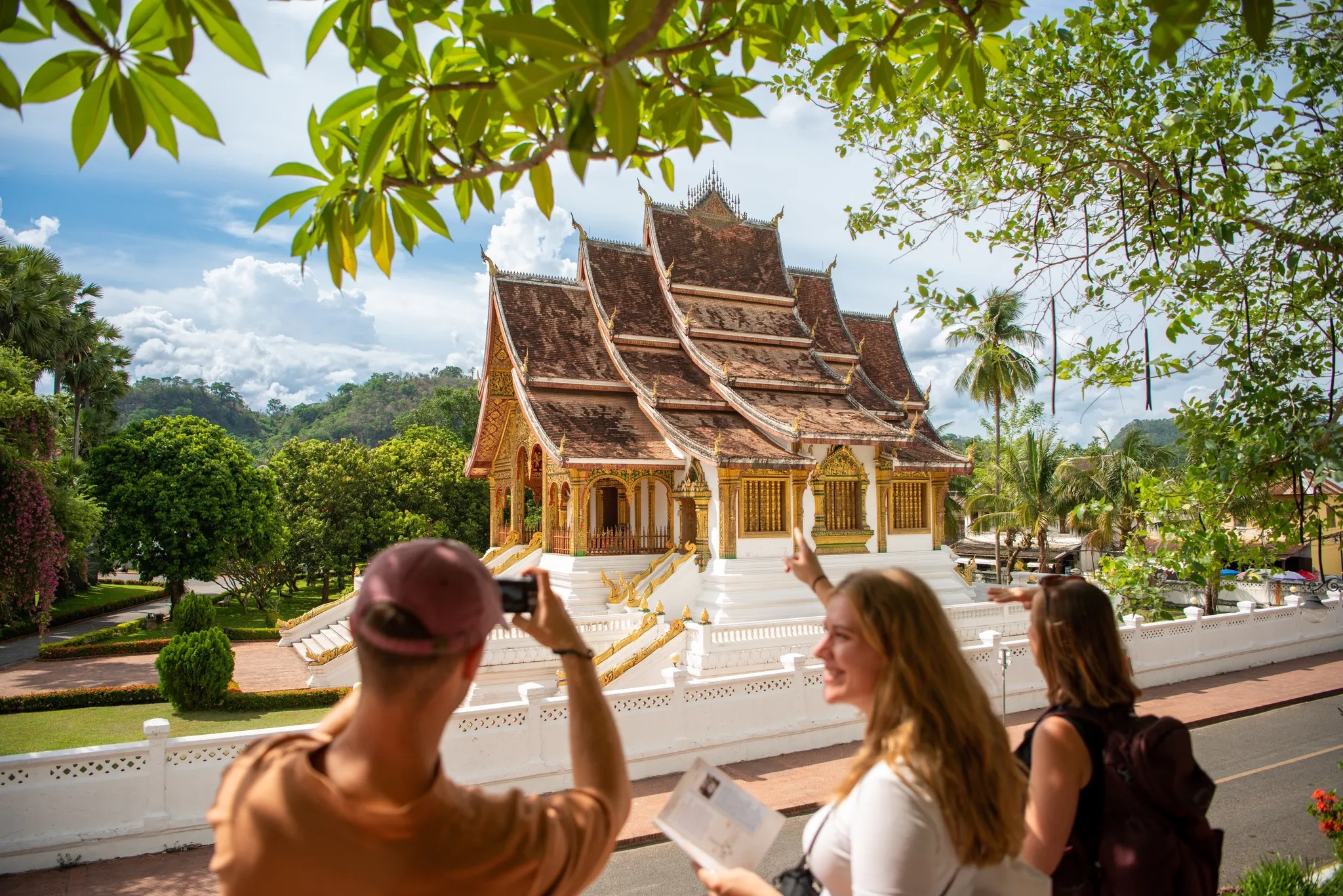
For many international travelers, a trip to Laos remains Southeast Asia’s quietest secret. Located between the bustling energy of Thailand and Vietnam, Laos offers a different rhythm, one of patience, silence, and serene beauty. At the heart of this experience is Luang Prabang, nestled at the confluence of the Mekong and Nam Khan rivers. This UNESCO-listed city blends ancient Buddhist heritage with French colonial charm in a way that feels effortlessly authentic.
Whether you are a first-time visitor or a seasoned explorer returning to the atmosphere, this comprehensive guide covers the essential places in Luang Prabang, logistical advice, and expert insights to help you craft the perfect journey.
6 must-visit places in Luang Prabang for your itinerary
1. Wat Xieng Thong
No trip to Laos is complete without stepping into Wat Xieng Thong. Built in the 16th century, Wat Xieng Thong is widely considered the most important temple in Luang Prabang and one of the finest examples of traditional Lao architecture in the country. This historic monastery once served as a royal temple and coronation site for Lao kings, giving it a central role in the religious and political history of Laos.
Despite being the most visited temple in the city, Wat Xieng Thong feels remarkably calm. The temple’s decorative details also tell stories beyond beauty. The famous “Tree of Life” mosaic represents the connection between humanity, nature, and the spiritual world, while smaller shrines and murals reflect Buddhist teachings and local beliefs.
Travel tips
Visit Wat Xieng Thong early in the morning (around 7:00 AM) when the sunlight hits the gold stenciling and the temple grounds are silent, allowing you to feel the true spiritual pulse of the city.

The famous window at Wat Xieng Thong
2. Royal Palace Museum
Located in the heart of Luang Prabang’s historic center, the Royal Palace Museum offers a fascinating contrast to the ancient temples. The palace was built in the early 20th century as the residence of King Sisavang Vong and later transformed into a museum after the end of the monarchy.
Architecturally, it reflects a graceful fusion of Lao design elements and French colonial style, with elegant halls, arched windows, and carefully preserved interiors that remain largely unchanged since royal times. Inside, exhibits include royal regalia, ceremonial objects, diplomatic gifts from foreign governments, and personal items belonging to the royal family.
Travel tips
Right on the palace grounds is the Royal Ballet Theatre. Here, you can watch the Phra Lak Phra Lam, the Lao adaptation of the Ramayana epic. Seeing dancers in elaborate golden costumes perform to a live traditional orchestra is one of the most culturally immersive places in Luang Prabang.

Royal Palace Museum
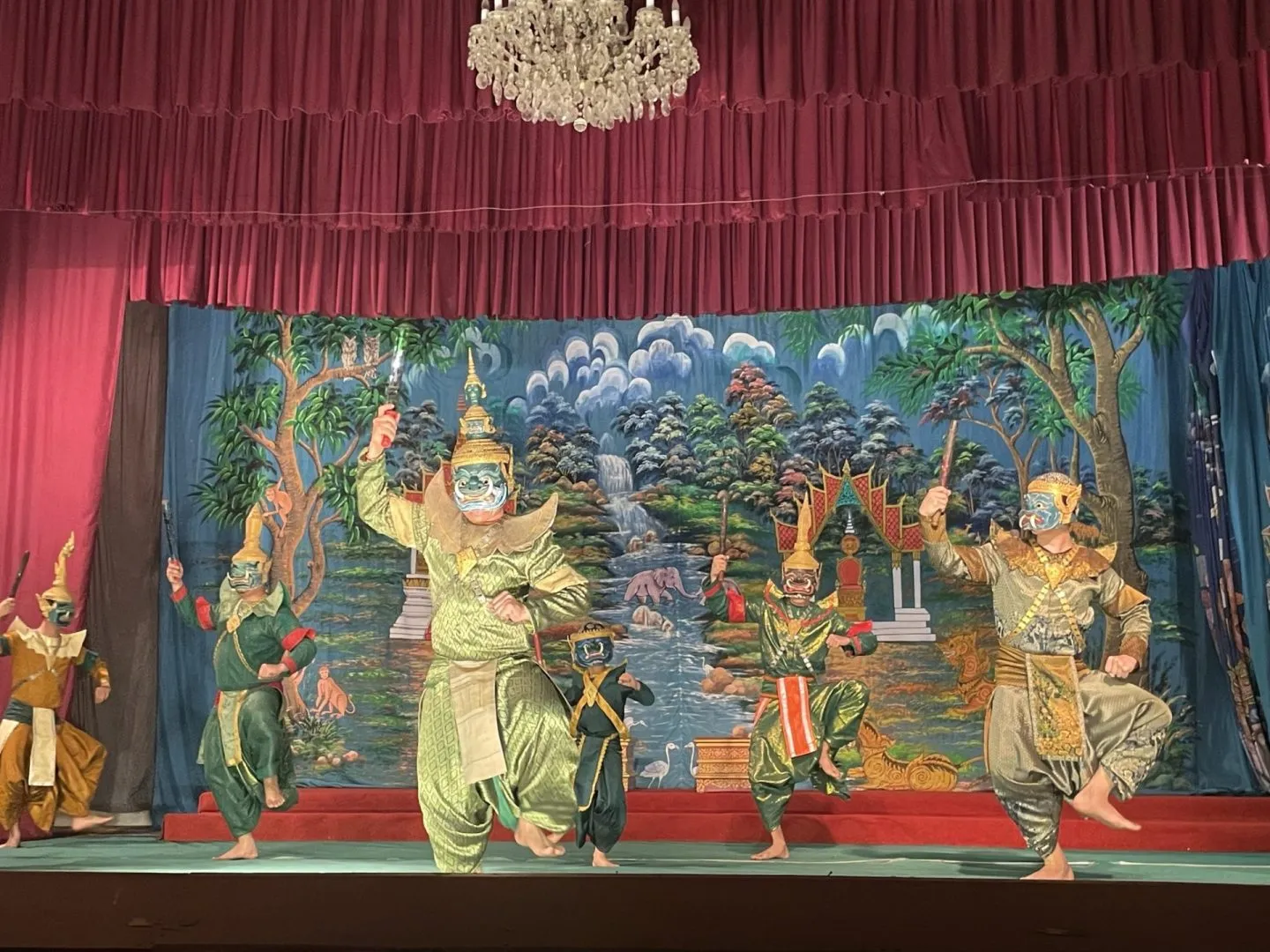
Phra Lak Phra Lam
3. Kuang Si Waterfalls: #1 of the most favourite places in Luang Prabang
When travelers list their favorite places in Luang Prabang, Kuang Si Waterfalls is almost always at the top. Located about 30km from the city, Kuang Si is a multi-tiered cascade flowing through dense jungle, with striking turquoise pools formed by limestone deposits. These natural pools are calm, shallow in places, and ideal for swimming. Wooden walkways and forest trails allow visitors to explore different levels of the falls at their own pace.
One of the highlights near the entrance is the Kuang Si Bear Rescue Centre, home to Asiatic black bears saved from illegal wildlife trade. The center adds an educational and ethical dimension to the visit.
Travel tips
Kuang Si Waterfalls is easily reached by private car, or guided tour, the journey takes roughly 45-60 minutes. It is best visited in the morning or early afternoon, when the light enhances the vivid color of the water and crowds are lighter.

Kuang Si Waterfalls
4. Mount Phousi
Rising gently from the center of Luang Prabang, Mount Phousi is the city’s most popular viewpoint and a must-visit for travelers who want to see Luang Prabang from above. The climb to the summit involves approximately 300 steps and usually takes 10-15 minutes, making it manageable for most visitors with average fitness levels.
Along the way, travelers will pass small shrines, statues, and the sacred Wat Chom Si at the top, adding a spiritual element to the experience. From the summit, you can see the Mekong and Nam Khan rivers, the rooftops of Luang Prabang’s old town, and the surrounding green hills stretching into the distance.
Travel tips
- Sunset is the most popular time to visit Phousi Hill. Yet, it can get crowded on the summit. If you prefer solitude, climb up for sunrise instead.
- Mount Phousi is conveniently located near several major attractions like the Royal Palace Museum and the Night Market. This makes it easy to combine the climb with an afternoon of sightseeing and an evening of local food and shopping.

Mount Phousi
5. Luang Prabang Night Market
As evening falls, Sisavangvong Road transforms into one of the most pleasant places in Luang Prabang for shopping. Distinct from the chaotic markets in Bangkok, the atmosphere in Luang Prabang Night Market is incredibly relaxed. Vendors sell a wide range of handmade textiles, silver jewelry, wood carvings, and souvenirs, many produced by ethnic minority communities from northern Laos.
At the food section, travelers can sample a variety of Lao street food and international options, including grilled meats, noodle soups, fresh spring rolls, and vegetarian-friendly dishes. Communal seating encourages a casual, social dining experience, and hygiene standards are generally good, especially in the more established stalls.
Travel tips
- Luang Prabang Night Market is best visited between 6:00 PM and 9:30 PM.
- For the most authentic Lao dishes, head to the food alley (right next to the Ori Bakery, Indigo House). It actually connects to the morning market.

Luang Prabang Night Market, in front of the Royal Museum
6. Pak Ou Caves
Located about 25 kilometers (15 miles) north, the Pak Ou Caves are one of the most spiritually significant places in Luang Prabang. Reaching the caves is an experience in itself, typically involving a scenic boat trip along the Mekong River, passing limestone cliffs, riverside villages, and fishing communities.
The Pak Ou complex consists of two main caves: Tham Ting (Lower Cave) and Tham Theung (Upper Cave). Inside, visitors will find thousands of Buddha statues of varying sizes, styles, and ages, left by local worshippers over centuries as acts of devotion. The atmosphere inside the caves is quiet and contemplative, offering a stark contrast to the open river journey outside.
Travel tips
The lower cave is easily accessible and filled with natural light, while the upper cave requires a short climb and is darker. A flashlight or phone light is useful when exploring the upper chamber.

Inside Pak Ou Cave
When is the best time to visit Luang Prabang?
The cool dry season (November – February)
This is the peak season in Luang Prabang. The weather is delightful, with cool mornings, sunny days, and low humidity (avg. 20-25°C). The rivers are blue, and the skies are clear.
However, during this period of time, accommodation prices are highest, and popular places in Luang Prabang like Kuang Si can be crowded. You need to book months in advance.
The green season (May – September)
For the discerning traveler who dislikes crowds, the green season in Luang Prabang is a hidden gem. The countryside is lush and vibrant green, the waterfalls are at their most powerful, and the air is fresh after short bursts of rain. Luxury resorts often offer better rates.
However, in places like Kuang Si Waterfall, you are unlikely to be allowed to swim in the pool below the falls because the water level is rising.
The hot season (March – April)
This period can be very hot and smoky due to the agricultural burning season in Northern Laos. Visibility can be poor. We generally advise discerning travelers to check conditions carefully if traveling during these months.

Kuang Si Waterfall during the rainy season
How to travel to Luang Prabang?
Luang Prabang feels remote, but it is surprisingly well-connected, making it an easy addition to any Southeast Asia itinerary.
Travel to Luang Prabang by air
There are direct flights connecting Luang Prabang (LPQ) with Bangkok, Hanoi, Siem Reap, and Chiang Mai. This makes it easy to combine Laos with Thailand, Vietnam, or Cambodia. Beside, frequent domestic flights run from Vientiane and Pakse.
Travel to Luang Prabang by high-speed train
The Laos-China Railway (LCR) has revolutionized travel in Laos as you can now travel from Vientiane to Luang Prabang in under 2 hours (compared to 6-8 hours by bus) and from Vang Vieng in just 1 hour. The trains are modern, air-conditioned, and smooth. It offers a scenic journey through the mountains without the motion sickness of the winding roads.
Travel tips: Tickets are now in high demand. We strongly recommend booking your train tickets in advance through a travel agent to secure your seat.
Travel to Luang Prabang by slow boat
For those with time, the 2-day slow boat journey from Huay Xai (Thai border) down the Mekong to Luang Prabang is a legendary experience. It is the ultimate “slow travel” introduction to the country.
Travel tip: These boat trips may be cancelled during the rainy season due to high water levels and strong currents on the Mekong River.

A flight to Laos

LCR High Speed Train

Slow boat to Luang Prabang
Frequently Asked Questions about Luang Prabang
We go beyond the basics to answer the real questions travelers have about their trip to Laos.
Q1: Is Luang Prabang becoming “too touristy” and losing its charm?
While it has grown in popularity, Luang Prabang has managed tourism remarkably well thanks to UNESCO regulations. Large buses are banned from the old town, and there are no high-rise hotels. To avoid the crowds, we recommend waking up early and visiting popular sites like Kuang Si at opening time. The town still retains a profound sense of peace that is hard to find elsewhere.
Q2: What is the dress code for visiting temples?
Lao culture is conservative. When visiting sacred places in Luang Prabang like Wat Xieng Thong, both men and women must cover their shoulders and knees. A sarong or a light scarf is a perfect travel accessory. Please remove your shoes and hat before entering any temple building.
Q3: Can I use US Dollars everywhere?
While US Dollars are widely accepted for larger purchases (hotels, high-end souvenirs), the local currency (Lao Kip) is preferred for everyday transactions like tuk-tuks, cafes, and night market stalls. We recommend carrying a mix of both. Note that credit cards are accepted in hotels and upscale restaurants but rarely in local shops.
Q4: Is the almsgiving ceremony ethical to watch?
Yes, if done respectfully. It is a living religious ceremony, not a show. The most respectful way to observe is to stand quietly across the street, zoom in with your camera (no flash), and keep a distance. If you wish to participate, buy sticky rice from the morning market (not street vendors preying on tourists) or ask your guide to prepare it, and sit humbly on a low stool.
Discover Luang Prabang with Travel Sense Asia
Luang Prabang is a place that invites you to slow down, breathe, and reconnect with what matters. It is a destination where the journey is just as important as the sights. Whether you want to witness the sunrise from Mount Phousi without the crowds, secure hard-to-get train tickets, or find a private boat for a sunset cruise, local expertise makes all the difference.
Travel Sense Asia specializes in crafting bespoke itineraries in Laos and other Asian countries for discerning travelers. We handle the logistics so you can focus on the experience. Contact Travel Sense Asia todayto start planning your unforgettable escape to Luang Prabang and beyond.