







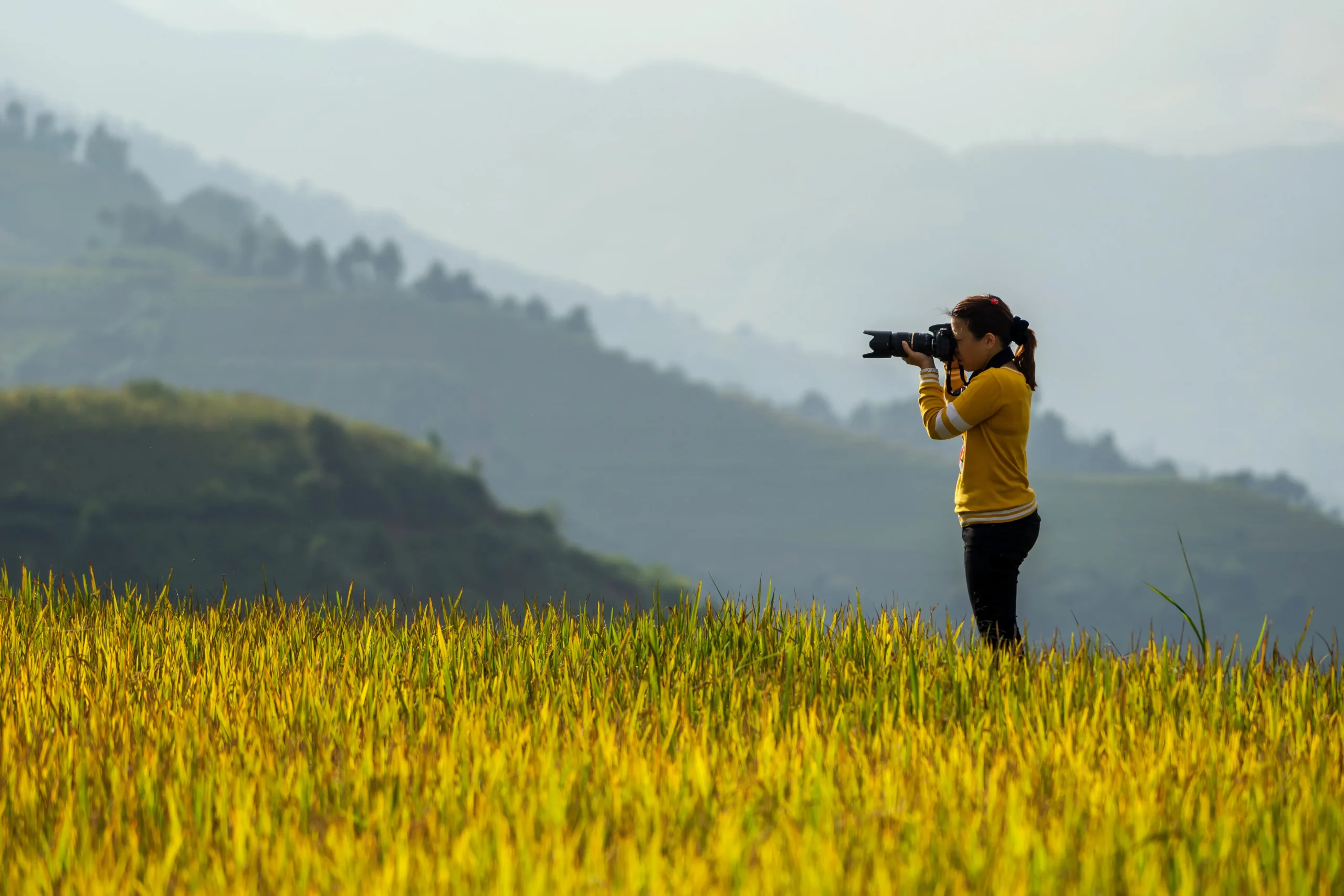
Northern Vietnam’s spectacular agricultural landscapes attract countless photographers from around the globe every year. There are many fantastic itineraries available to explore this region: from multi-week expeditions to quick highlight tours.
If your primary goal is to photograph the rice terraces in their full, uninterrupted glory, we introduce a carefully curated 8-day Vietnam photography tour. This schedule provides just the right amount of time to adjust to the mountain weather, connect with the local culture, and most importantly, patiently wait for the one-of-a-lifetime moments.
Why Vietnam’s golden rice terraces are a photographer’s dream?
It is not hard to understand why these specific rice fields attract professional and amateur photographers from all over the globe. The terraces are not just standard farms. They represent centuries of human survival, agricultural engineering, and cultural perseverance.
Ethnic minority groups carved these fields out of solid rock and steep dirt slopes using simple hand tools over multiple generations. They built incredibly complex irrigation systems using hollowed-out bamboo pipes to channel water from the highest mountain streams down into the lowest valleys. They sculpted the earth so that water is utilized efficiently.
The visual appeal of the terraces changes dramatically depending on the time of day, the specific angle of the sun, and the location. The layers of the built-up mud walls create natural contour lines. These continuous lines guide the eye through the photograph, providing deep perspective and a strong sense of three-dimensional space. When the rice turns golden in September and October, the color contrast against the dark, forested green mountains and the deep blue sky becomes spectacular.

It is not hard to understand why these specific rice fields attract professional and amateur photographers from all over the globe. The terraces are not just standard farms. They represent centuries of human survival, agricultural engineering, and cultural perseverance.
Furthermore, the rice fields define the local way of life. The harvest season is the busiest, most chaotic, and most joyful time of the year. The golden fields serve as a beautiful, active background for the diverse daily lives of the ethnic minority communities. Every region features different traditional clothing, different methods of harvesting, and different architectural styles for their homes. Capturing the rice fields means capturing the enduring spirit and daily rhythms of the people who live and work there.
AUTUMN TRAVEL INSPIRATION
Discover why autumn is the absolute best time to explore the golden landscapes of Northern Vietnam.
Our 8-day travel loop around Northern Vietnam

The rice harvest across the northern mountains varies significantly over several weeks, depending on the specific altitude and local weather conditions of each region. Instead of trying to chase an unpredictable timeline, this specific 8-day loop is designed as the most convenient and logical route.
- Day 1: Hanoi to Hoang Su Phi
- Day 2: Hoang Su Phi
- Day 3: Hoang Su Phi to Bac Ha
- Day 4: Bac Ha to Ta Van (Sapa Valley)
- Day 5: Ta Van
- Day 6: Ta Van to Mu Cang Chai
- Day 7: Mu Cang Chai to Tu Le
- Day 8: Tu Le to Hanoi
Stage 1: Hoang Su Phi (Days 1 to 2)
The Landscape: Stairways to the sky
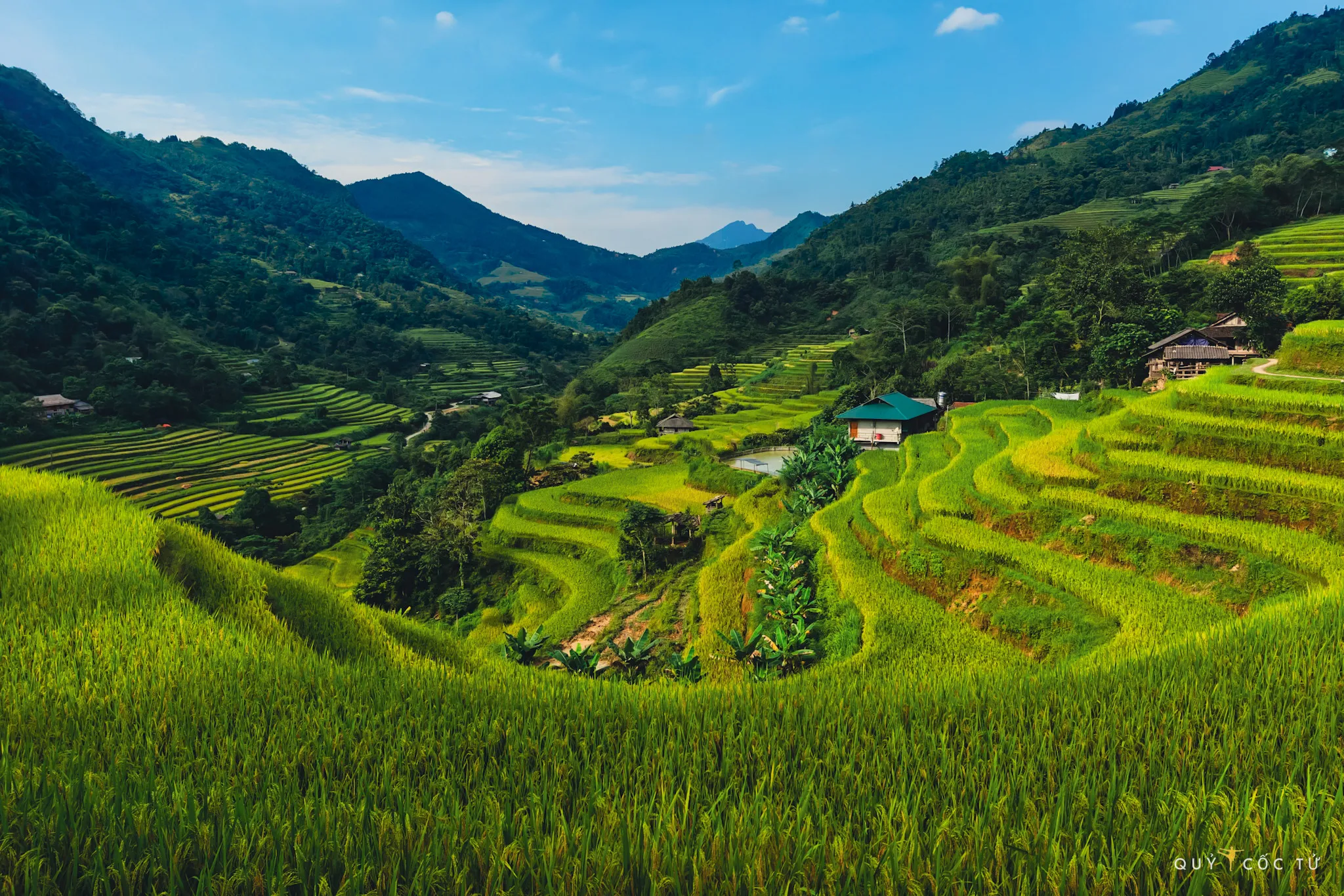
Your journey starts with a drive from Hanoi directly to the remote town of Hoang Su Phi (Ha Giang). Hoang Su Phi holds the title for the steepest, highest, and most dramatic rice terraces in Vietnam. The landscape here is entirely different from the flat river valleys you will see later on the trip.
The terraces at Ban Luoc and Ban Phung are carved into massive mountainsides that drop sharply into deep, fast-flowing river gorges. The fields literally look like giant stairways reaching up to touch the clouds. Because the slopes are so extreme, the terraces themselves are very narrow. This creates hundreds of tight, overlapping, curving lines in a single camera view.
Local Life: The Dao and La Chi People
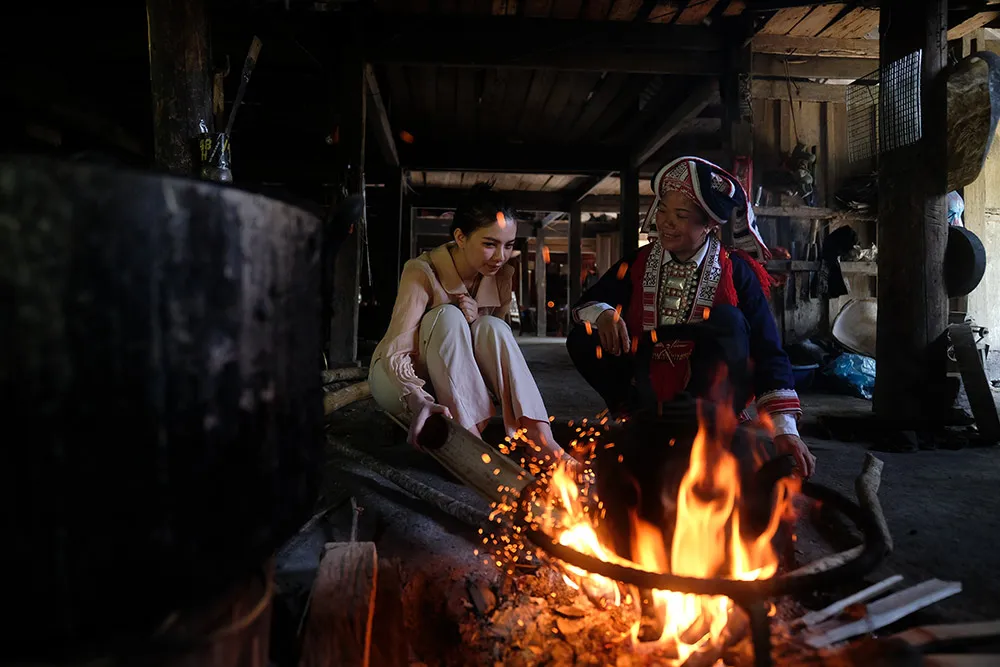
The people of Hoang Su Phi have adapted their entire lifestyle to this extreme vertical environment. The Red Dao and La Chi ethnic groups have lived here for centuries. During the harvest, whole families work together on the steep slopes. Due to the severe angle of the mountains, they cannot use modern tractors or harvesting machines. Every single stalk of rice must be cut by hand using small, curved iron sickles.
The visual contrast is striking and offers endless photography opportunities. The Red Dao women wear bright red headscarves, heavy silver jewelry, and intricately embroidered dark clothes. Seeing them move against the glowing golden yellow of the high terraces creates a perfect color combination for your photography.
FEATURED PHOTOGRAPHY ROUTE
Experience the majestic landscapes and vibrant ethnic cultures on our curated Ha Giang tour.
Beyond the lens: Herbal baths and local traditions
Hoang Su Phi offers wonderful experiences after you put the camera away for the evening. After a long day of walking the steep dirt paths, you can soak in a traditional herbal bath. The Red Dao people are famous across Vietnam for their deep knowledge of medicinal plants. They spend hours boiling different leaves, roots, and tree barks in large, round wooden tubs. Soaking in this dark, warm, fragrant water relaxes your muscles, improves your circulation instantly, and helps you sleep deeply.
You can also visit the local village centers. Sitting down to drink a cup of strong, bitter local green tea with the village elders offers a great way to show respect and learn about their history, even if you do not speak the local language. Sharing a meal cooked over an open wood fire in a local homestay connects you to the region in a way that simply looking through a lens cannot achieve.

Photography tips for Hoang Su Phi
- Lens choice: You absolutely must bring a wide-angle lens (such as a 16-35mm or 14-24mm). The vertical drop of the valleys is massive. A wide lens is the only way to capture the highest mountain peak and the lowest river gorge in the same frame without cutting off the most important elements of the landscape.
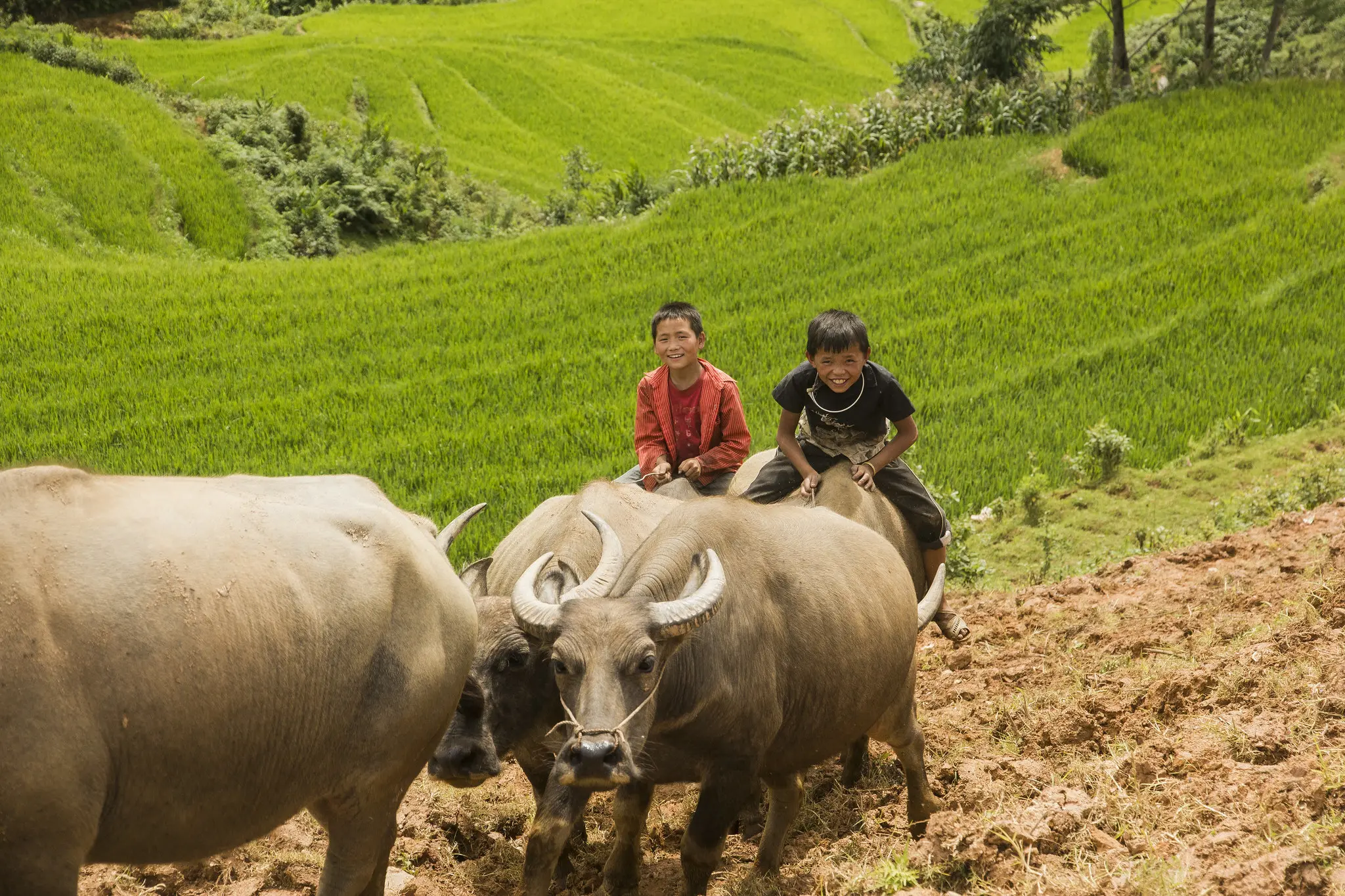
- Composition and perspective: Try to find a high vantage point to shoot downwards. Top-down perspectives emphasize the sharp, repeating contour lines of the narrow terraces. Look for a small wooden house or a single water buffalo to include in the frame; this provides a crucial point of reference and gives your viewer a true sense of the massive scale.
- Time of day and weather: The mountains here are very tall, which means the sun drops behind the peaks very early in the afternoon. Shoot in the early morning when the thick white fog sits heavy in the deep valleys, or between 3:00 PM and 4:30 PM for the best evening light. Do not wait until 5:30 PM, as the entire valley will be covered in dark shadows.

DEEPER INTO HOANG SU PHI
Explore the hidden cultural gems and authentic experiences of Hoang Su Phi beyond the standard trekking trails.
Stage 2: Bac Ha and the Sapa Valley (Days 3 to 5)
The landscape: From highland markets to river valleys
Moving from Hoang Su Phi to Bac Ha and then to Sapa introduces a completely new type of landscape. Bac Ha is a high, windy plateau famous for its open spaces and cool temperatures. After exploring the plateau and its famous markets, your route descends sharply into the Sapa valley, specifically targeting the Ta Van and Lao Chai areas.
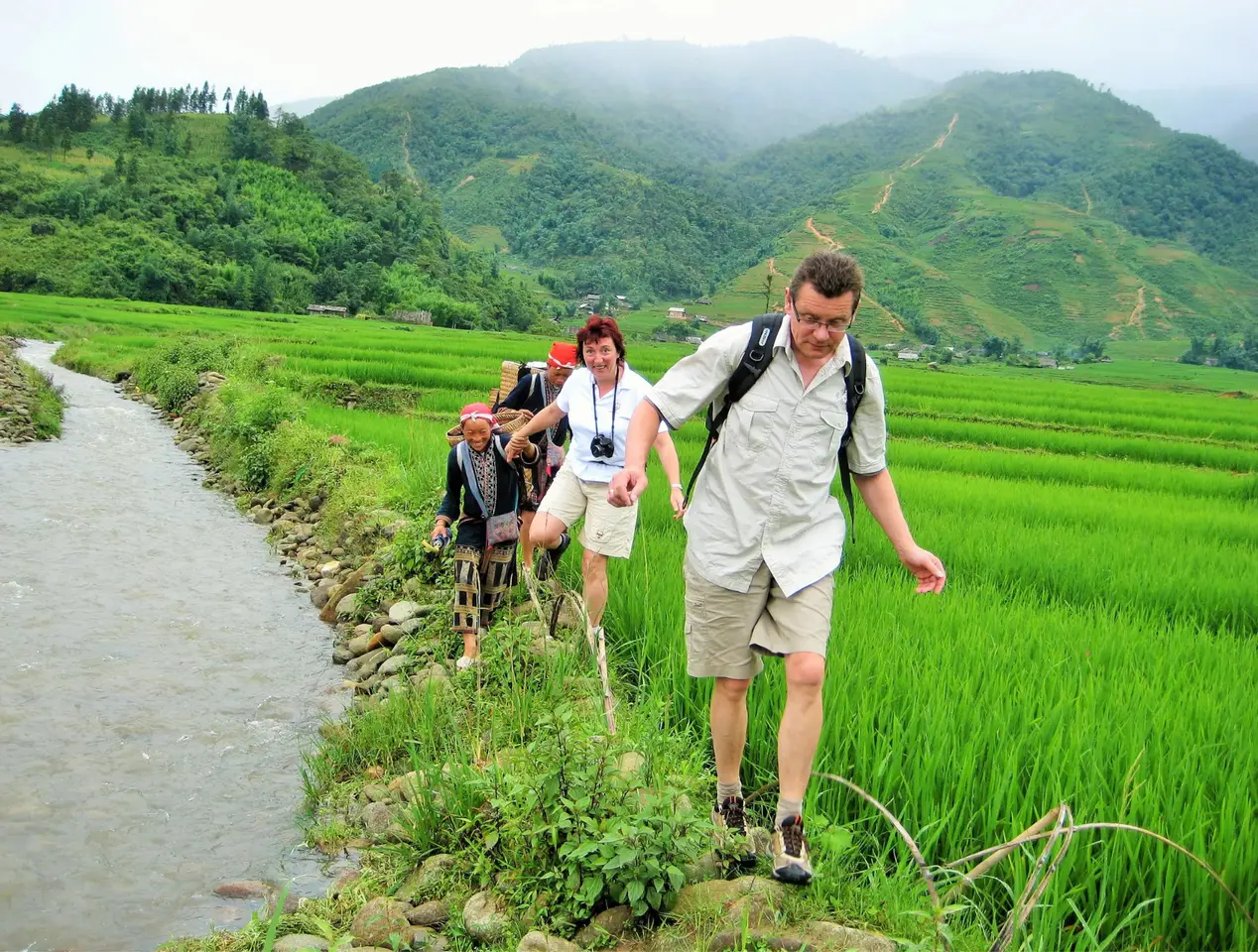
Unlike the extreme vertical drops of Hoang Su Phi, the Ta Van valley is wide and heavily fed by the rushing waters of the Muong Hoa stream. The rice fields here flow gently down the slopes and spread out flat across the riverbanks.
Local life: The vibrant markets of ethnic minorities
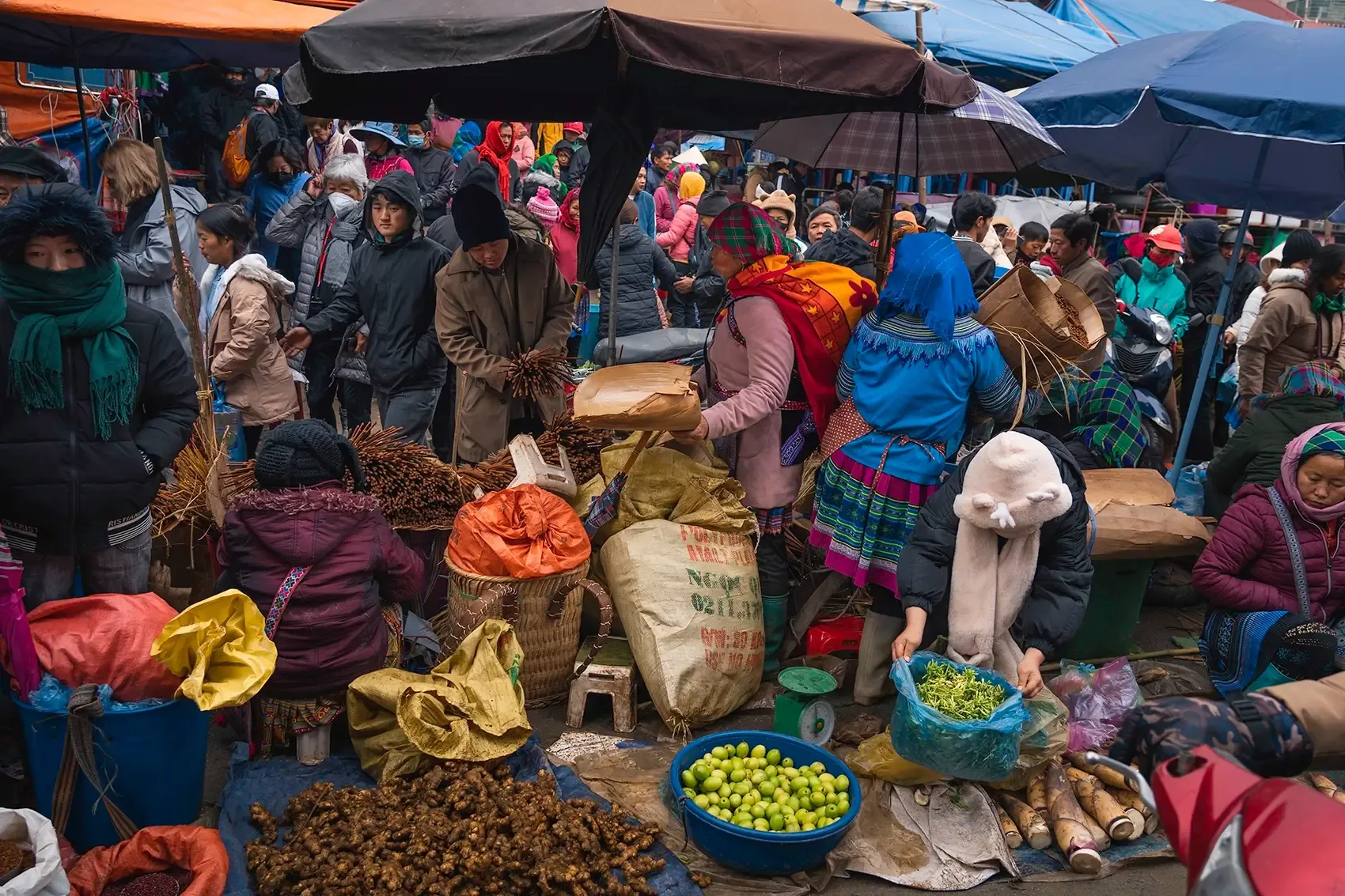
If your schedule allows you to visit on a Sunday, Bac Ha hosts one of the most colorful ethnic markets. The Flower Hmong people dominate this trading area. The women wear complex, multi-colored skirts that take many months to embroider and dye by hand. The market is a real, functional trading place for water buffaloes, mountain horses, fresh vegetables, and farming tools.
ETHNIC MARKET GUIDE
Dive into the vibrant colors and authentic trading culture at the spectacular highland markets.
Beyond the lens: Indigo dye and corn wine
At the Bac Ha market, you should try the local corn wine, an extremely strong, clear traditional drink made by the Hmong men. Tasting the local food, such as “Thang Co” (a traditional, heavy soup cooked in a massive iron pot), is a true cultural adventure that tests your culinary boundaries.
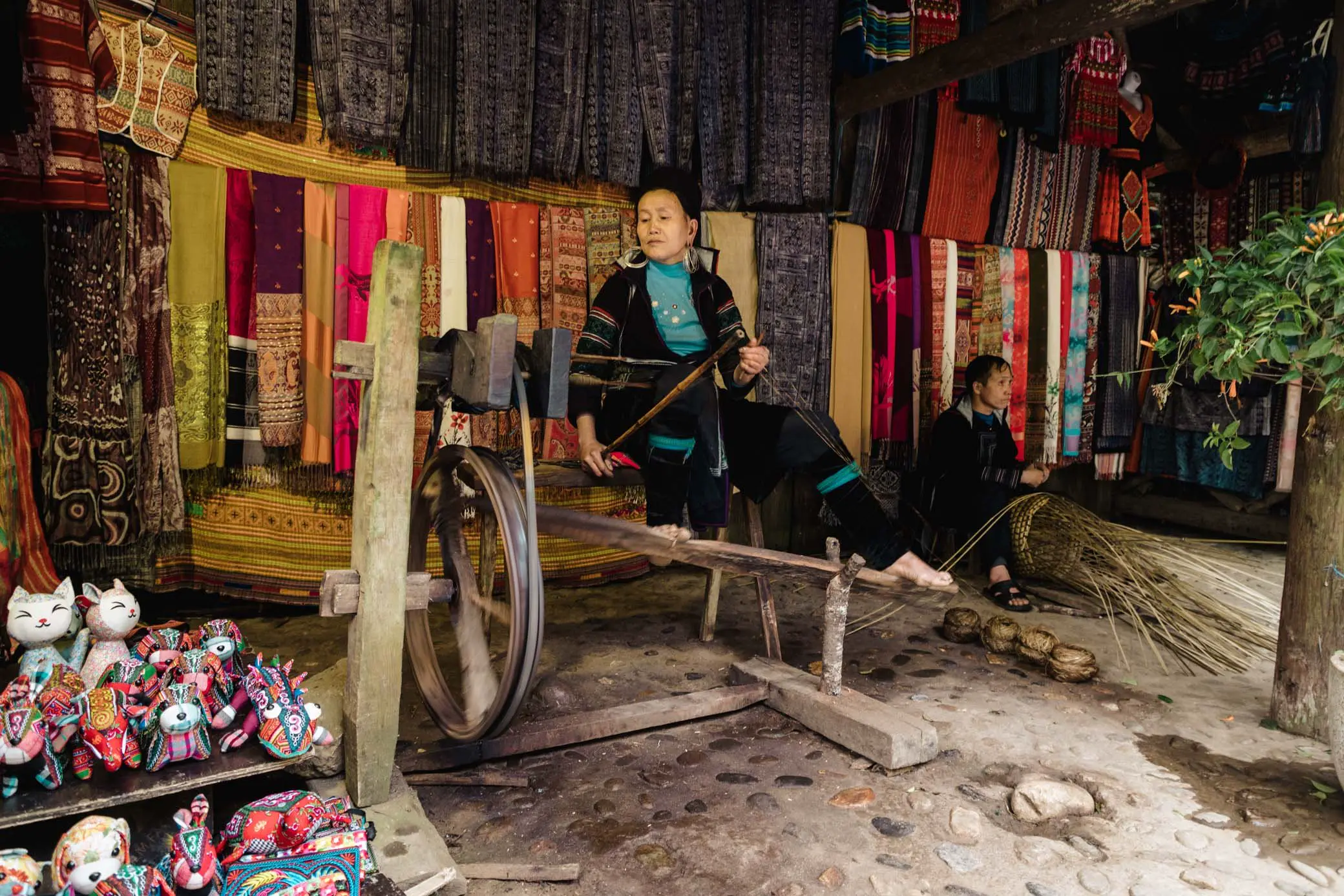
In Ta Van, you can learn about the local textile industry. Many families grow raw hemp, dye it with natural indigo plants, and weave it into thick, durable fabric. If you look closely at the hands of the older women, you will see their fingers are stained permanently blue from years of working with the dark indigo dye.
The area also offers gentle, highly rewarding trekking. Walking along the flat, paved paths next to the Muong Hoa stream provides a relaxing alternative to the tough, sweaty mountain climbing required in other regions.
Photography Tips for Bac Ha and Ta Van
- Market Portraits (Bac Ha): The market is incredibly chaotic and crowded. Use a telephoto lens (70-200mm) or a fast prime lens (50mm f/1.4 or 85mm f/1.8). Open your aperture wide (f/2.8 or lower) to completely blur the busy background. This technique isolates the brightly colored Flower Hmong clothing and makes your subject pop out from the crowd.
- Action Shots (Ta Van): When photographing farmers threshing rice, you need to freeze the action. Use a fast shutter speed (1/500s, 1/1000s, or even faster). This freezes the flying rice grains, the dust, and the water droplets in mid-air, showing the high energy and intense physical exertion of the work.
- Ethics and Interaction: Always ask for permission before taking a close-up portrait. Never stick a large lens in someone’s face without warning. A simple smile, a polite gesture, pointing to your camera, or buying a small handmade item creates a friendly, respectful connection. This respect leads to much more natural, beautiful, and authentic photographs.
Stage 3: Mu Cang Chai and Tu Le (Days 6 to 8)
The landscape: The golden masterpieces of rice fields
The final major stage of the trip crosses the spectacular O Quy Ho mountain pass to reach the districts of Mu Cang Chai and Tu Le. This area provides the ultimate visual variety for your photography portfolio. Driving over the pass itself is an event. The road twists and turns, offering panoramic views of deep valleys.
Mu Cang Chai is famous worldwide for its perfect, sculptural hills. Locations like Raspberry Hill (Mam Xoi) and Horseshoe Hill (Mong Ngua) feature terraces that wrap around the hills in complete, unbroken 360-degree circles. The mathematical symmetry of these hills is unmatched anywhere else in Vietnam.
Just a short drive down the mountain lies the Tu Le valley. The landscape changes completely once again. Tu Le is a massive, incredibly flat valley floor surrounded by high, dark mountains. The rice fields here look like an endless golden ocean stretching all the way to the horizon. This provides a brilliant contrast to the sharp, circular hills of Mu Cang Chai.


Local Life: The Hmong and the Thai people
In Mu Cang Chai, the Hmong people are the primary residents. You will see them carrying incredibly heavy bamboo baskets of harvested rice on their backs, walking single-file along the extremely narrow, muddy edges of the circular hills. Their balance and strength are remarkable.
Down in the Tu Le valley, the Thai ethnic group lives in large, spacious wooden houses built on sturdy, high stilts. Tu Le is famous throughout the entire country for “Com”, a special type of young, sweet green rice. The Thai people harvest this specific rice very early, while it is still green, soft, and full of moisture. They spend their mornings indoors, roasting the green rice over hot, smoky wood fires in large cast-iron pans, and then pounding it with heavy wooden pestles to create a sweet, chewy local delicacy.
UNIQUE RICE FIELDS GUIDE
Beyond trekking and photography, this article helps you find better ways to help you absorb the most unique beauty of Northern Vietnam agriculture.
Beyond the lens: Hot springs and green tice
In Tu Le, eating the fresh green rice directly from the source is mandatory. It is completely different from regular boiled white rice. It has a sweet, nutty flavor, a distinct floral aroma, and a soft, sticky texture.
You can also visit the natural hot springs in the area. The local Thai people have a long-standing tradition of bathing in the natural hot mineral water that flows from the ground. Relaxing your tired muscles in a hot spring after a long week of intensive photography is the absolute perfect way to end the journey before heading back to the busy city.
Photography tips for Mu Cang Chai and Tu Le
- Backlighting at sunset (Mu Cang Chai): The circular hills look absolute best during the golden hour just before sunset. The sun drops directly behind the hills, creating a strong, dramatic backlight. This makes the yellow rice glow intensely, almost as if it has a light source inside it. However, backlighting tricks your camera’s light meter. Use exposure compensation (+1 or +2 stops) or switch to manual mode to prevent your camera from underexposing the dark hillsides. You want the details of the terraces to be visible, not just a black silhouette.
- High ISO and indoor smoke (Tu Le): To photograph the Thai people making green rice, you must go inside their dark wooden kitchens. There is very little available light. Increase your camera’s ISO significantly (1600, 3200, or even 6400 depending on your camera’s sensor). Early in the morning, strong beams of sunlight shine through the cracks in the wooden walls and hit the thick smoke rising from the roasting fires. This creates thick, highly visible beams of light. Position your subject directly inside these light beams for a highly dramatic, cinematic, and moody photograph.

Essential gear and travel logistics for rice field photographs in Vietnam
A specialized photography trip requires careful, intelligent preparation. You do not need to bring everything you own, but selecting the right equipment makes a huge difference in the quality of your trip and your physical comfort.
Recommended camera gear
A versatile camera setup is the absolute key to success. A wide-angle lens (16-35mm) captures the massive scale of the deep valleys and the high skies. A telephoto lens (70-200mm) is excellent for taking market portraits and shooting farming action from a distance without interfering with the workers.
A Circular Polarizer (CPL) filter is a highly recommended tool. The mud and water in the rice fields reflect a lot of harsh, white glare from the sky. A CPL filter cuts right through that glare, revealing the rich colors underneath, and deepens the blue color of the sky. This inexpensive filter saves a massive amount of time in photo editing software later.
Extra batteries are also strictly essential. The temperature in the mountains drops significantly at night and early in the morning, which drains lithium camera batteries much faster than usual. Keep your spare batteries in a warm pocket close to your body heat.
A crucial note on flying drones in Vietnam
Aerial photography provides a completely new, breathtaking perspective on the rice terraces. Top-down shots reveal the complex geometry, the perfect circles, and the sharp lines of the fields perfectly. However, the Vietnamese government maintains very strict regulations regarding airspace security.
Flying a drone without proper permits or flying into restricted military or border areas can result in heavy fines and the permanent confiscation of your expensive equipment. Always check the official Vietnams’s Ministry of Defense map for active no-fly zones at https://cambay.mod.gov.vn/ before you even think about launching your drone.
The regulations for bringing a drone into the country through airport customs, registering it with the relevant authorities, and getting a specific flight permit change frequently. Planning ahead is vital for a smooth experience.
DRONE REGULATIONS IN VIETNAM
Stay updated on the latest legal requirements and permits for flying your drone safely in Vietnam.
The reality of affordable luxury in the moutains of Northern Vietnam
Traveling to remote mountain regions means adjusting your expectations regarding accommodation. The concept of affordable luxury on this route means choosing the absolute best, most comfortable options available in each specific location, without sacrificing cultural authenticity.
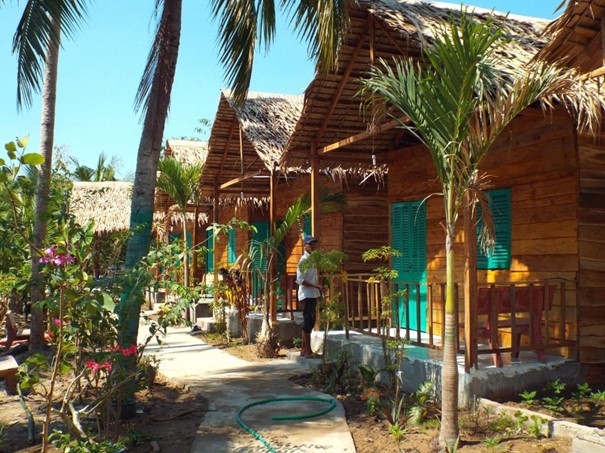
In developed areas like Sapa, Hoang Su Phi, and Mu Cang Chai, you can easily stay in premium ecolodges. These properties offer large, comfortable beds, private balconies with spectacular views, excellent food, and modern bathrooms.
However, in more remote transit stops, a high-end resort simply might not exist. In these specific cases, staying in a carefully selected, clean, and welcoming local homestay is necessary. This is not a downgrade; it is a cultural feature. Sleeping in a traditional wooden house provides true cultural authenticity and often puts you right in the middle of the best scenery. It allows you to wake up, step outside, and immediately start taking photos of the morning mist without needing to drive for an hour.

Start your photographic journey in Vietnam
Creating stunning photography of Northern Vietnam requires time, patience, and a deep respect for the environment. The 8-day slow travel route partially eliminates the exhaustion of constant, daily driving. It provides enough time to observe the dramatic differences between the steep, sharp peaks of Hoang Su Phi and the flat, golden oceans of Tu Le. It allows you to engage with the ethnic people naturally and respectfully.
By combining comfortable travel logistics with expert timing and local knowledge, this journey ensures that every traveler returns home with incredible stories and a beautiful, professional-quality collection of photographs. Contact Travel Sense Asia to start planning a customized photography expedition tailored to the upcoming harvest season.
FAQ of photography tours in Northern Vietnam
1. When is the exact best time to photograph the golden rice in Northern Vietnam?
The harvest happens between late August and early October. It starts in the north (Y Ty, Sapa) in late August to early September, moves to Mu Cang Chai in mid-to-late September, and finishes in Hoang Su Phi in October. Booking your trip in the second half of September usually offers the best overall balance for seeing the highest concentration of golden fields.
2. Is this 8-day route physically difficult or exhausting?
No. This route is specifically designed for slow travel and comfort. While there is some walking required to reach the best viewpoints in the rice fields, it does not involve heavy jungle trekking or intense mountain climbing. The private vehicle handles all the long distances. This makes the trip highly suitable for older travelers, families, or anyone who wants to enjoy the scenery without extreme physical exertion.
3. What is the weather like during the golden harvest season?
September and October generally offer wonderful weather for a mountain getaway. The days are usually clear, dry, and sunny, providing beautiful natural light for photography. However, because this period transitions away from summer, the region can sometimes be affected by occasional late-season rains. Additionally, the mornings and evenings in the high mountains get quite cold. To stay comfortable, you should pack multiple layers of clothing, including a warm jacket and a light rain shell, as mountain weather can change very quickly.
4. Can I buy camera equipment, memory cards, or accessories in the mountains?
No. Areas like Hoang Su Phi and Mu Cang Chai are remote agricultural regions. There are no professional camera stores, and finding even basic SD cards is difficult. You must bring all necessary memory cards, extra batteries, lens cleaning kits, and heavy-duty chargers from Hanoi or your home country before the trip begins.
5. How much travel time is required each day on this specific Northern Vietnam photography loop?
This itinerary limits driving time to an average of 3 to 4 hours on the major transit days. The longest drive is on Day 1 (Hanoi to Hoang Su Phi), which takes about 6-7 hours. After that initial drive, the distances between the key locations are short, allowing you to spend the vast majority of your valuable time outdoors taking photos rather than sitting inside a moving car.