






















In light of the recent Middle East Crisis that escalated on February 28, 2026, Travel Sense Asia is providing this essential travel advisory. As regional tensions continue to impact global airspace, international flight cancellations and severe disruptions are expected in the coming days.
Whether you are preparing to fly, currently in transit, or already at your destination, staying informed is your best defense. Below is a comprehensive guide to navigating this situation safely and effectively.
For travelers planning outbound flights
If your upcoming trip involves flying over, transiting through, or traveling to the Middle East, immediate adjustments to your itinerary may be necessary.
Identify high-risk zones and airspace closures in Middle East
The conflict in the Middle East in February/March 2026 has led to strict airspace restrictions. Currently, the airspace over the UAE, Kuwait, Israel, Bahrain, and Iran has been completely suspended due to the direct impact of drone and missile activities.
Additionally, neighboring regions are experiencing partial closures or flight cancellations. Travelers should exercise extreme caution or avoid travel entirely to Lebanon, Jordan, Iraq, Oman, and Syria until further notice.

Dubai Airport got hit by minor drone strikes

The Jewel (Changi International Airport)
Navigate flight disruptions and choose alternative transit hubs
Major Middle Eastern carriers (including Emirates, Qatar Airways, and Etihad) have announced temporary flight suspensions as their primary hubs in the UAE and Qatar face operational halts.
What to do: If you have not yet booked your flight, or if you need to rebook, avoid Middle Eastern transit hubs entirely.
Alternative routes: Look for airlines that route through alternative global hubs. Excellent transit options currently operating normally include Taiwan (TPE), Singapore (SIN), China (PEK/PVG), Turkey (IST), and France (CDG).
Pivot to Level 1 & 2 safe destinations
If you are reconsidering your travel plans, we strongly recommend prioritizing destinations ranked as Level 1 (Exercise Normal Precautions) or Level 2 (Exercise Increased Caution) by the US Department of State.
Choosing politically stable regions drastically minimizes your risk of unexpected disruptions. Countries like Vietnam, Japan, Malaysia and Australia remain excellent, peaceful, and highly secure Level 1 destinations for your upcoming holidays.

Hoi An, Vietnam
Travel insurance is still essential (Despite “Act of War” exclusions)
It is crucial to understand that war, invasions, and military conflicts generally fall under travel insurers’ “force majeure” (unforeseeable and unavoidable events) clauses. This means acts of war are usually explicitly excluded from coverage in almost all standard travel insurance policies.
- Flights: Unfortunately, if airspace closes due to conflict, your travel insurance is highly unlikely to come to your rescue to cover the hefty costs of booking new, last-minute flights via alternative routes.
- Emergency accommodation: Insurers typically will not cover the costs of securing a hotel or meals while you wait for the situation to resolve. (Note: In some of these cases, your airline may assist with basic accommodation depending on their specific carriage policies, so always check with them first).

Why you ABSOLUTELY need travel insurance?
Even with the above exclusions, traveling without insurance right now is a major risk. Your policy remains a vital safety net for several other critical factors:
- Unexpected medical emergencies: This is the most important factor. If you fall ill, get food poisoning, or suffer an accident while traveling, your insurance is there to cover exorbitant foreign hospital bills.
- Standard airline delays and lost baggage: Airports will be chaotic, and operational hiccups will skyrocket. If your flight experiences standard delays (e.g., technical issues, crew shortages, weather) or if your luggage gets lost in the frenzy of rerouted transit hubs, you can still claim coverage for these specific inconveniences according to your policy’s standard limits.
For travelers currently in the Middle East or affected by the crisis
Whether you are on the ground in a region experiencing unrest, stranded in a transit hub, or unable to reach your destination (or fly home) due to sudden airspace closures, navigating this global disruption requires swift action and patience.
Coordinate with local authorities and embassies (If in a volatile zone)
If you are in an area directly experiencing unrest, your immediate safety is the absolute top priority.
- Stay calm, remain in a secure location, and closely monitor local news.
- Strictly follow the instructions of local government authorities.
- We highly recommend registering your presence with your home country’s embassy or consulate immediately so they can locate you and provide timely evacuation or safety updates.

Emergency alert sent to phone users in Dubai

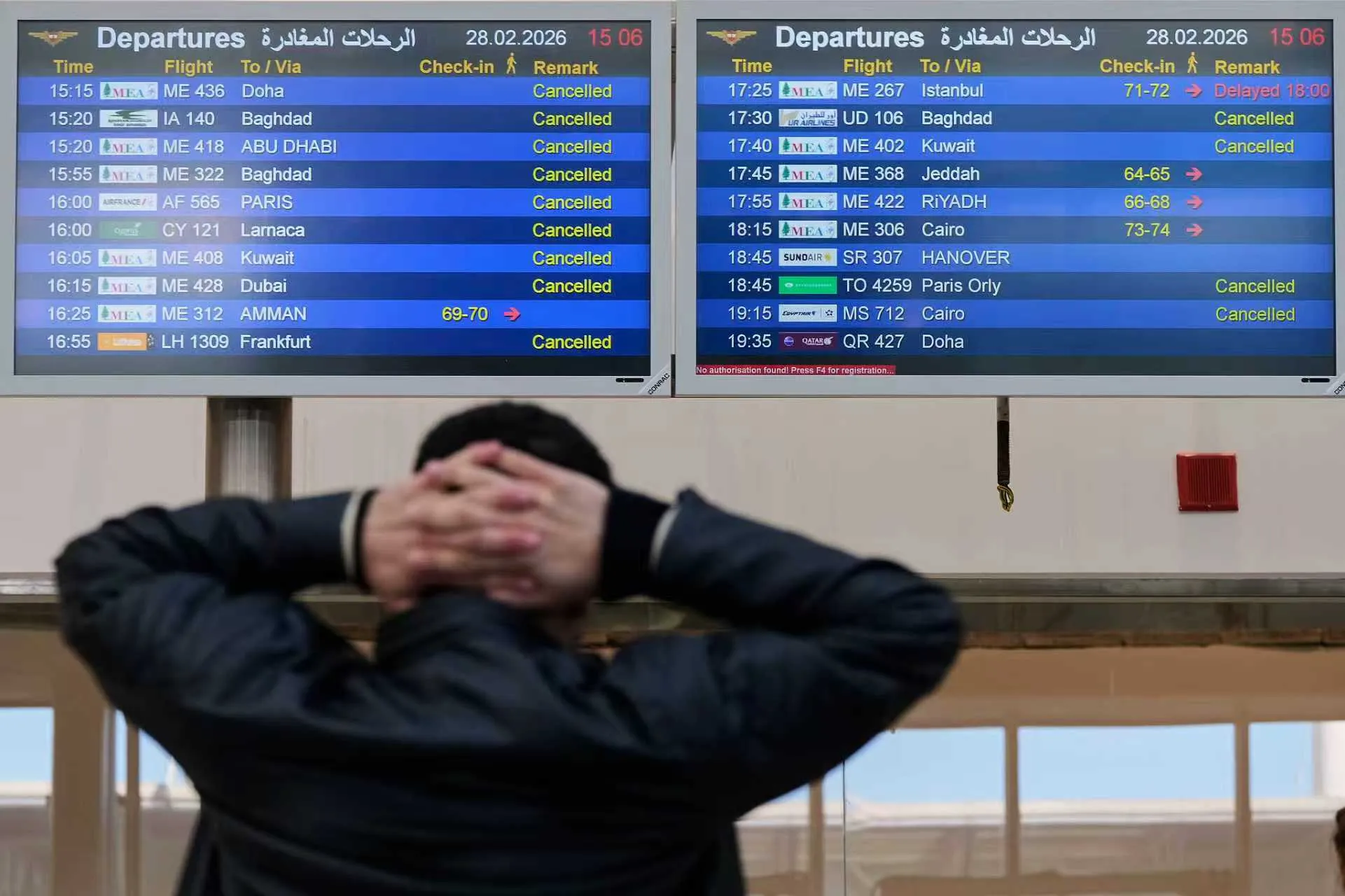
Flights to the Gulf got cancelled
Monitor airline updates proactively (For all affected travelers)
Airlines are operating in a highly dynamic environment with cascading delays worldwide.
- Check with your airline or travel agent constantly for real-time information on rebooking and refunds.
- If you are stuck in transit: Speak with airline ground staff immediately. Depending on the airline’s policy, they may assist with rebooking via alternative routes or provide emergency accommodation.
- Expect severe delays when calling customer service due to exceptionally high call volumes. Use airline apps, official websites, and official social media channels for faster updates.
Contact your travel insurance provider
If you are stranded in a third country unable to fly home or to your expected destination, contact your insurance provider immediately. While “acts of war” may exclude flight rebooking costs, you should still attempt to negotiate or clarify what trip interruption benefits, delay compensations, or emergency medical coverages you can claim while stranded.
Managing bookings and tour operator policies
If your travel is abruptly halted, whether you are stuck midway or a force majeure event occurs just before your trip begins, contact your travel agent or tour operator immediately to manage your bookings.
- Some operators may offer a refund minus any unrecoverable costs (such as pre-paid hotel rooms or domestic flights). In some cases, they may offer travel credits for future use.
- Be aware that some operators have clauses allowing them to cancel or postpone tours at their own discretion without owing compensation.
- Conversely, if the operator deems the situation manageable (e.g., rerouting you safely), the tour may proceed.
- Work closely with your agent to negotiate terms, explore refund options, or safely pause your booking until the situation stabilizes.

Travel Sense Asia’s commitment to our travelers during the current crisis
At Travel Sense Asia, your safety, peace of mind, and overall experience are our absolute highest priorities. We understand that this is a stressful time for global travelers, and we are committed to standing by your side.
Our current operational status (Updated March 2026)
- Safe destinations: Destinations operated by Travel Sense Asia in Southeast Asia (including Vietnam) and the wider Asia-Pacific region remain entirely unaffected by the Middle East crisis.
- Normal operations: All ground services, tours, and accommodations included in our programs are operating normally and safely.
- Active support: For the limited number of our travelers currently experiencing flight disruptions en route to/from Asia, our teams are providing direct, real-time assistance to help adjust arrival logistics.
How we are monitoring the situation
We are monitoring global developments in real-time. Any travelers directly impacted will be contacted personally by email and through their usual dedicated travel consultant. All of our destination managers remain fully mobilized to assess each individual situation and provide necessary ground assistance.
Recommendations for Travel Sense Asia clients
For clients departing or returning in the coming days, we kindly ask that you:
- Regularly check the status of your flight directly with your airline.
- Contact your air carrier or booking platform immediately in the event of any modification or cancellation. (Please note: As international outbound and return flights are booked directly by travelers, ticket management falls exclusively under the responsibility of the airlines).
- Keep all receipts and supporting documents in case of additional costs related to air travel disruptions.
If you experience a travel disruption that impacts your arrival at your destination, our teams remain fully available through your usual contact channels to adjust your itinerary and provide the necessary support.

Travel Sense Asia’s clients
Essential resources and live tracking of Middle East crisis
To stay updated, please bookmark the following reliable sources:
- US Department of State Travel Advisories (For real-time safety levels)
- FlightRadar24 (For live tracking of global airspace closures and active flights)
- World Health Organization (WHO) Travel Advice
Travel Sense Asia will continue to update this page as the situation evolves. Stay safe, and travel smart.