







Leaving the winter blues of the North behind, our 10-day Vietnam travel itinerary continues to the center of the country.
This region is the cultural spine of Vietnam. It is a place where ancient history is perfectly preserved in the monuments of Hue and the charming streets of Hoi An. Here, our writers would taste local culinary masterpieces, connect with skilled artisans, and experience the warmth of the local people. Join Travel Sense Asia to see this part of Vietnam through their eyes.
Meet the storytellers during 10 days in Vietnam
Before we climb the mountains, a quick reminder of whose eyes we are seeing this through:
1. Paola Bertoni (Paola in Viaggio | Instagram) As a single mom and student pilot who once toured Europe in a camper van, she looks for freedom and adventure.
2. Cristina & Marcello (Vi do il Tiro | Instagram) They are true travel veterans. Based in Bologna and married since 1988, they have been exploring the globe for decades.
3. Marina (The Travelling Petsitter | Instagram) The daughter of an Alitalia captain (once the flag carrier of Italy), she grew up with luxury travel but now uses pet-sitting to unlock local experiences worldwide.
4. Veronica (Oggi dove andiamo? | Instagram) A Ligurian soul with a heart for volunteering. She represents the responsible traveler who wants to give back.
5. Annalisa (Tre Valigie | Instagram) A marketing expert who loves the seas. She sees travel through the eyes of a mother and a family planner.
6. Marina Loblundo (Maraina in Viaggio | Instagram) As an archaeologist and a tea expert, for whom this leg of the trip was also what she looked for.
Day 7: From Hanoi to Da Nang and Hoi An
With a short domestic flight, we left the capital city of Hanoi and reached Da Nang. We were immediately greeted by landscapes very different from those of the North. The air was warmer, carrying the salty scent of the ocean. This central region is characterized by deeply rooted artisanal traditions and historic coastal cities.
Marble Mountains in Da Nang
This complex of five limestone hills has been an important spiritual site for centuries. Each mountain is named after one of the five essential elements.
Our guide led the group up the steep steps of Thuy Son, also known as Water Mountain. The climb was demanding in the tropical heat, but the reward was immense. They reached stunning panoramic viewpoints overlooking the sparkling coastline and the sprawling city below.


The true magic, however, was hidden inside the mountain. The group entered the Huyen Khong Cave, a massive cavern illuminated by dramatic shafts of natural light piercing through the ceiling. “We breathed in an incredibly evocative and intimate atmosphere,” Annalisa noted. The Tam Thai and Linh Ung pagodas nested within the rock allowed the writers to deepen their understanding of how Buddhism intertwines with the Vietnamese landscape.
Leaving Da Nang, a short drive brought us to the legendary city of Hoi An. Arriving in the late afternoon, the contrast to the bustling cities was immediate. “The first thing that strikes me is how much less traffic there is compared to the constant hubbub of Hanoi,” Annalisa observed. This peaceful atmosphere was a highly welcomed change.
Hoi An: The Ancient Port of Faifo
The historic center of Hoi An is a true open-air museum. In 1999, it was declared a UNESCO World Heritage Site as an exceptionally well-preserved example of an ancient Far Eastern trading port.
Founded originally by the Cham people, it became a crucial international port between the 16th and 18th centuries. During its golden age, European, Chinese, and Japanese merchants settled along the Thu Bon River. They made this city a major stopover for the global spice and silk trade.

Our writers visiting the famous Japanese Bridge
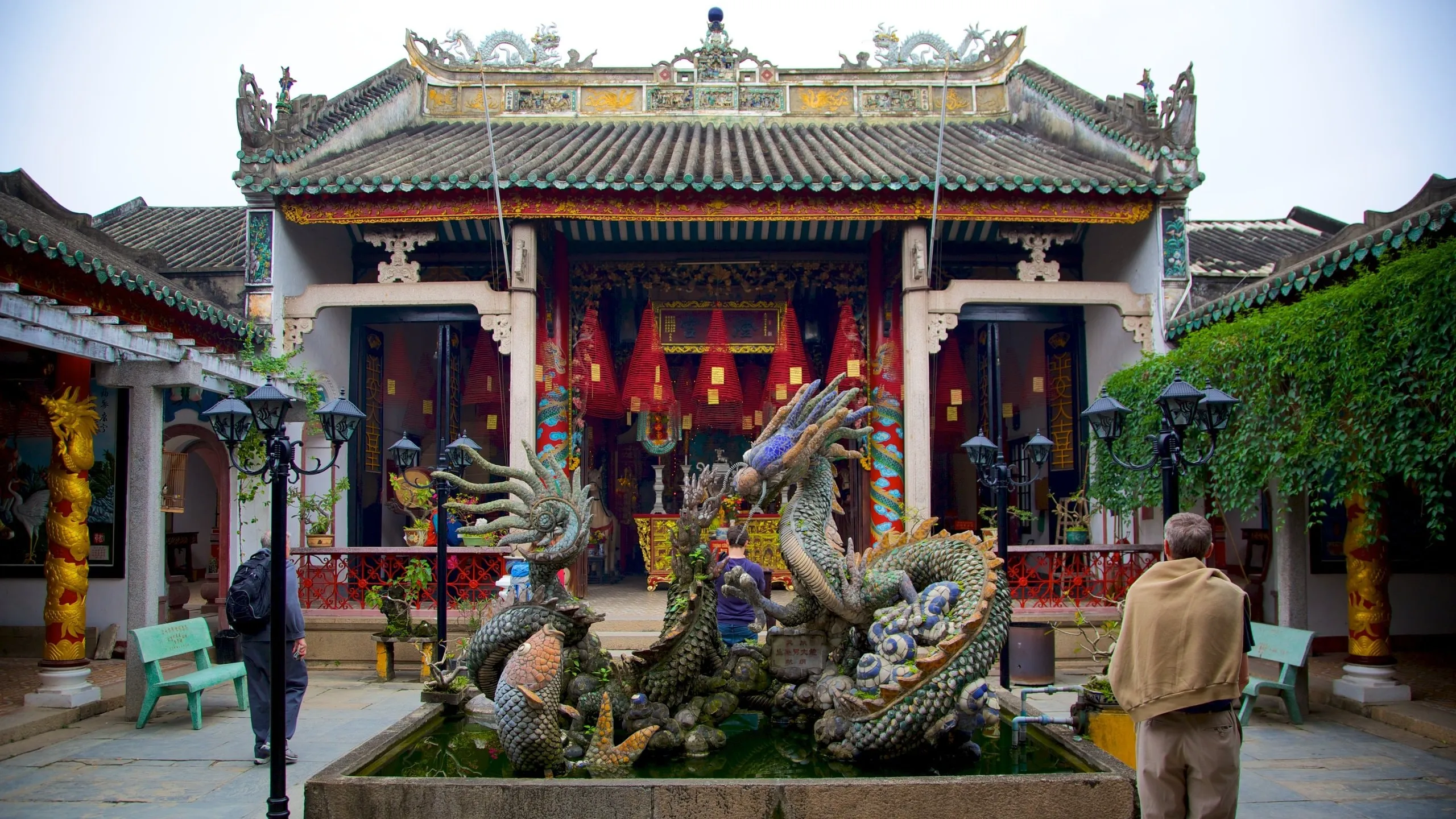
Walking through the pedestrian streets, the Italian writers were captivated by the merchant houses. These buildings, located along the river, have an entrance on the street side and another on the river side. Our guide explained that this clever design facilitated the easy loading and unloading of goods from boats. We visited the famous Tan Ky house, which has miraculously retained its original wooden interior for generations.
Our writers also noticed the sheer abundance of clothing shops. Hoi An is globally famous for its expert tailoring. There are hundreds of small shops where artisans can create a made-to-measure suit in just twenty-four hours. For our fashion-conscious Italian guests, browsing the colorful silk fabrics was an absolute delight.

Lanterns lighting up the sky and the water
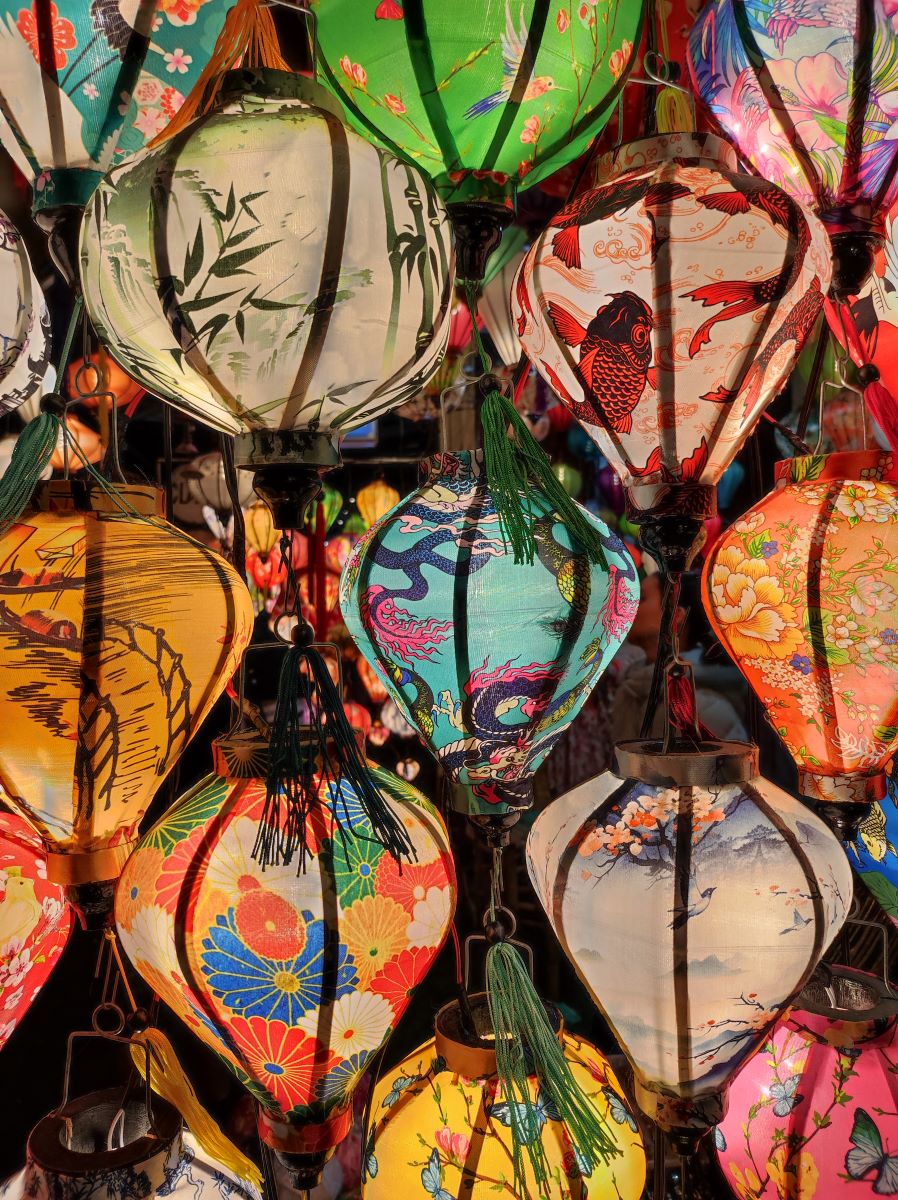
As the sun sets, Hoi An completely transforms. The city lights up with thousands of silk lanterns of every shape, color, and size. They are hung everywhere—on balconies, in front of shops, swaying among the trees, and reflecting along the river. Our writers absolutely fell in love with this visual poetry.
One of the most exciting moments was heading down to the riverbank. Traditional wooden boats began to slowly sail on the dark water, illuminated by the glowing lanterns. While drifting on the gentle current, we participated in the floating lantern ritual. Each writer lit a small paper lantern, made a personal wish, and gently placed it on the water.
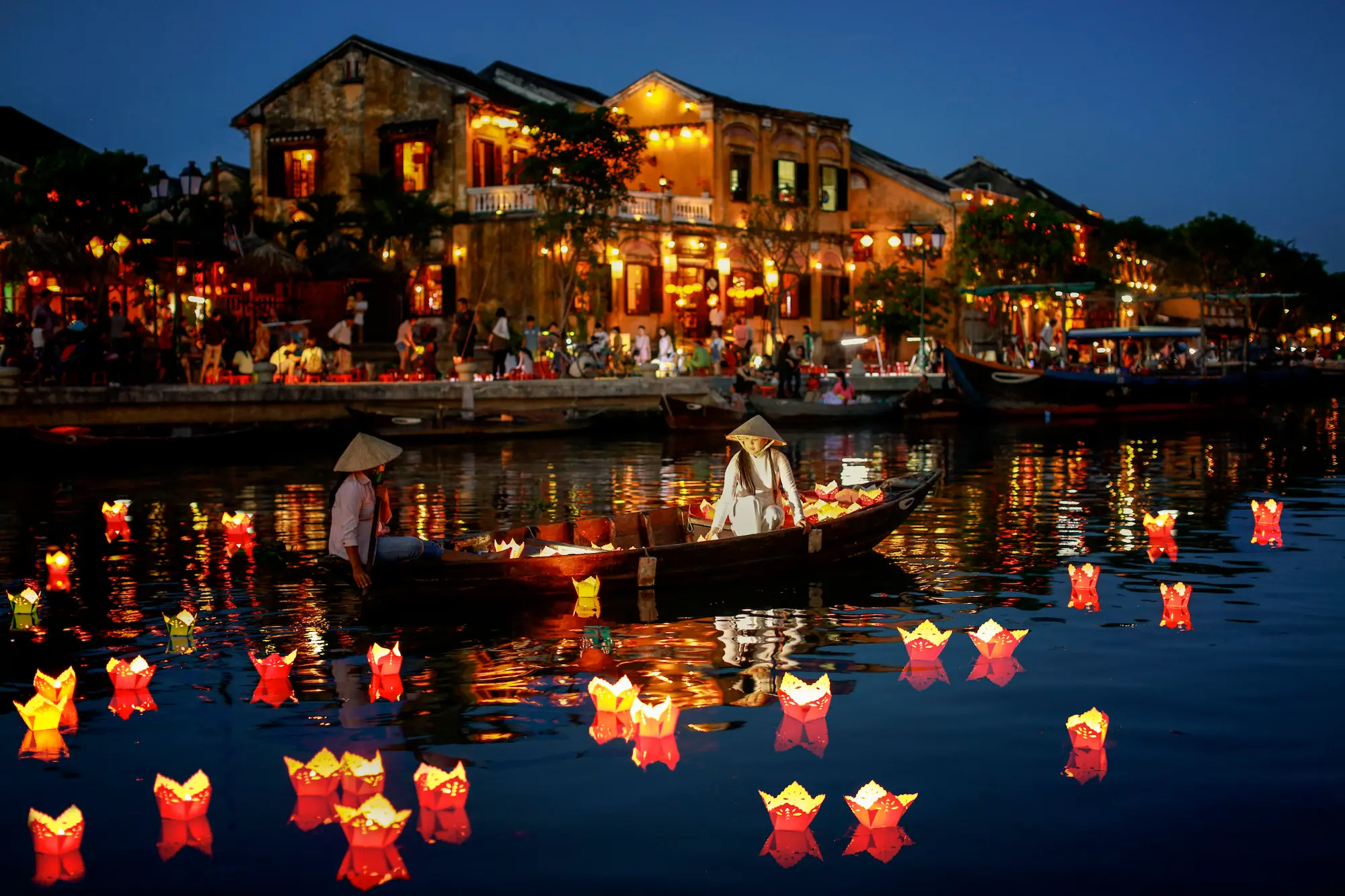
The tradition of releasing floating lanterns on the Thu Bon River
Where to stay in Hoi An: Little Gem Boutique Hotel
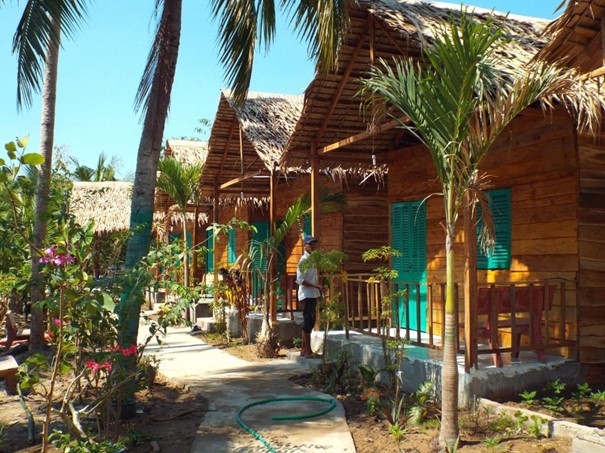
In Hoi An, we chose the Little Gem Boutique Hotel for our writers. It is located in a quiet area, slightly removed from the historic center. This strategic location allowed us to reach the Ancient Town in just a few minutes on foot. At the same time, it guaranteed peace and relaxation away from the hectic evening crowds.
The rooms at Little Gem are spacious, bright, and meticulously designed. They feature an elegant style that perfectly blends contemporary design with warm touches of Vietnamese tradition. The soundproofing was a massive plus for our tired writers.They instantly felt at home in this little haven.

Little Gem Boutuique Hotel
Day 8: Craft Villages and Cooking Class in Hoi An
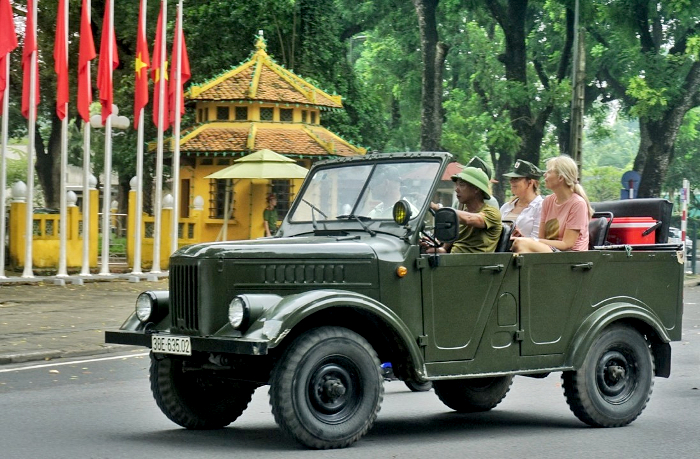
Our original plan was to cycle through the vibrant green rice paddies. However, we had to adapt our Vietnam travel plans because of Paola’s injured knee. Instead of leaving her behind, the whole group decided to travel together in an open-top electric electric car. It turned out to be a fantastic and breezy way to see the countryside without any physical strain.
Kim Bong Village and Cam Thanh Basket Boats
We first took a short ride to Kim Bong, the famous carpenters’ village. This is a famous carpenters’ village with a deeply rooted history in craftsmanship. Here, we could observe the master wood craftsmen diligently at work. They were carving intricate wooden furniture and building traditional riverboats entirely by hand.

Our writers visiting Kim Bong Village
Leaving the woodworkers behind, we moved on to the lush area of Cam Thanh. The journey took us past endless green rice fields and quiet, reflective fishing lakes. Arriving at Cam Thanh, one of the most anticipated and incredibly fun experiences of the trip awaited us.
We boarded the traditional round bamboo basket boats to navigate through a dense water coconut palm forest. Spinning around in these unique, wobbly little vessels brought out a sense of childlike joy in everyone. Navigating the green maze on the calm water was both hilarious and deeply relaxing, offering a unique glimpse into local fishing culture.

Annalisa and Marina on a basket boat in Cam Thanh
Finally, getting off the water, the locals treated us to a vigorous and highly welcomed foot massage using fragrant lemongrass oil. It was the perfect cure for our travel-weary feet.
An Italian-approved cooking class
To end our stop in the countryside on a high note, we participated in a local cooking class. Food is the universal language of travel, and our Italian writers were eager to learn. Under the guidance of a cheerful local chef, we learned the secrets of Central Vietnamese cuisine.
We chopped fresh herbs and rolled delicate Vietnamese spring rolls. We also learned how to fry crispy local pancakes known as Banh Xeo. “I must say they turned out really well,” Marina (The Petsitter) laughed, “because we ate every single bite with absolute gusto!” It was a joyful afternoon filled with laughter, great food, and cultural exchange.


Later that day, we packed our bags and traveled north via the spectacular Hai Van Pass. Our next destination was Hue, the ancient imperial capital of Vietnam. This city represents the pinnacle of Vietnamese feudal history. It is a place of profound poetry, royal tombs, and tragic wartime memories.
Where to stay in Hue: Rosaleen Boutique Hotel
For our stay in the ancient imperial capital, we checked into the Rosaleen Boutique Hotel. The location of this hotel is absolutely strategic. Situated right on Chu Van An Street, it sits in the heart of Hue’s vibrant pedestrian zone. When you step outside, you are immediately surrounded by lively cafes, colorful shops, and excellent local restaurants.
Our rooms were spacious, modern, and filled with natural light. They also featured private balconies that offered lovely views of the city streets below. One of the standout features of this boutique hotel is its beautiful outdoor swimming pool. Surrounded by comfortable sun loungers and umbrellas, it was a great spot to cool down in summer.

Rosaleen Boutique Hotel
Day 9: The Imperial Grandeur of Hue
Imperial City of the Last Emperors
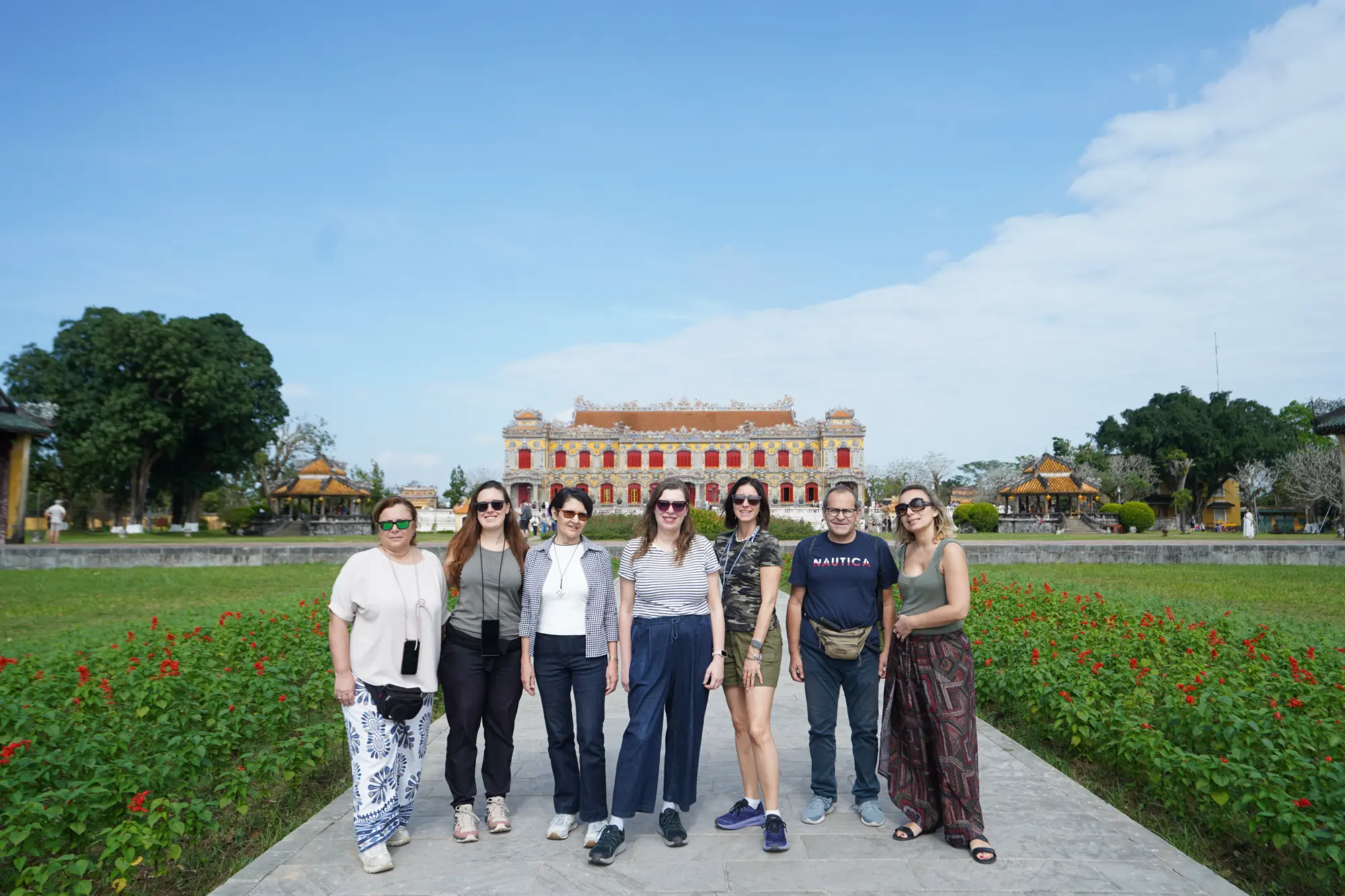
Our guided tour began at the massive Imperial City, the heavily fortified heart of the Nguyen Dynasty’s power. Walking through the imposing stone gates, the elegant architecture immediately reflected a glorious, royal past. We were lucky enough to witness the colorful changing of the guard ceremony at the main entrance.
Our knowledgeable guide painted a vivid picture of life inside these walls. He explained how the Emperor lived in the highest, most inaccessible section of the Purple Forbidden City. Meanwhile, the mandarins, concubines, and servants had strictly separate entrances and dedicated living spaces. The rules of the court were incredibly rigid and complex.


Tragically, due to the heavy bombings during the wars of the 20th century, only about 30 percent of the original complex remains standing today. Yet, the surviving pavilions, lotus ponds, and temples are breathtaking. It takes hours to properly see the intricate tile work and majestic wooden columns that define Vietnam’s imperial architecture.
Tu Duc Mausoleum and Thien Mu Pagoda
Leaving the citadel, we drove along the peaceful Perfume River to visit the Thien Mu Pagoda. This elegant, seven-story octagonal tower is widely considered one of the defining symbols of the city. The serene gardens surrounding the pagoda offered a moment of quiet reflection for our group.
Next, we explored the Tu Duc Mausoleum. Our guide explained that Emperor Tu Duc designed this sprawling complex himself, using it as a summer palace before his death. It is a highly refined example of imperial funerary architecture, uniquely harmonizing with the surrounding pine forests and calm lakes.
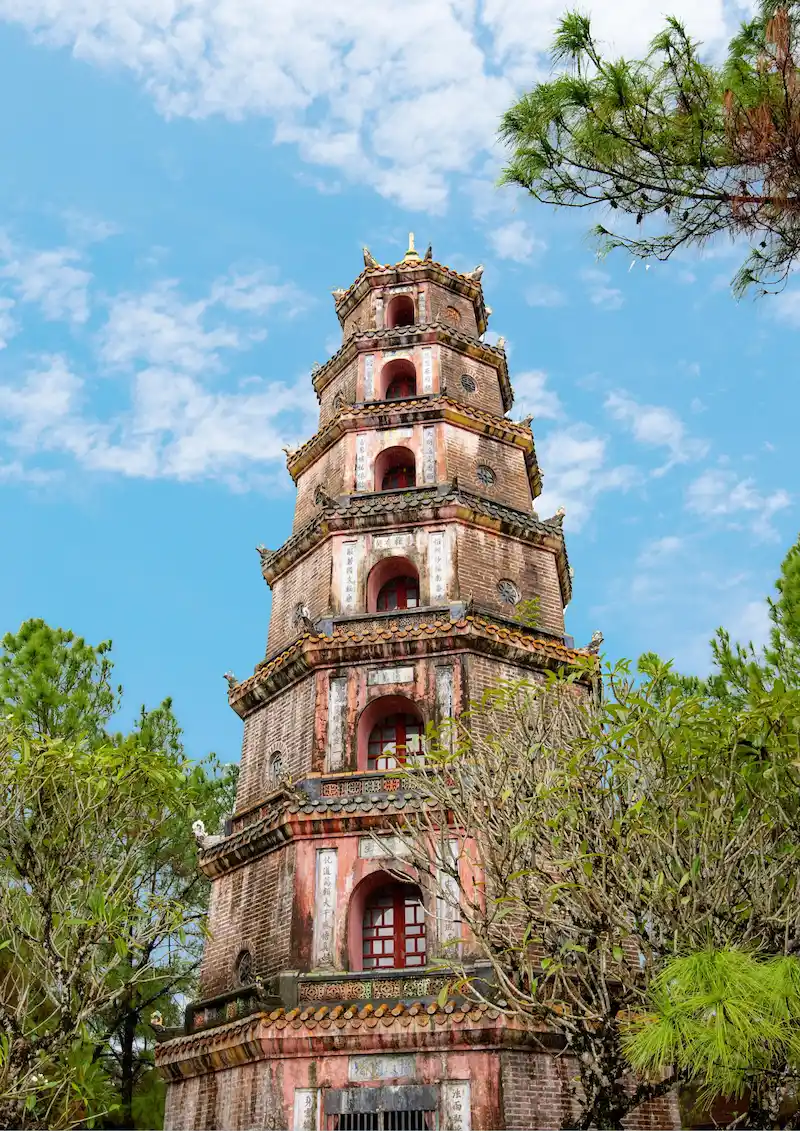
Thien Mu Pagoda
The Insta-famous Incense Village in Hue
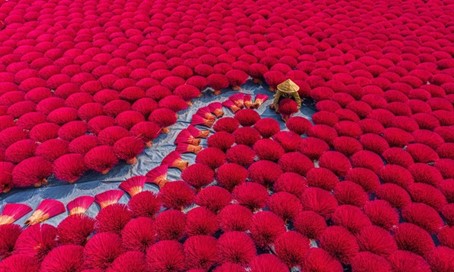
Before concluding our time in Hue, we made a vibrant stop at the famous Thuy Xuan Incense Village. This area is renowned for its centuries-old artisanal production of incense sticks.
The sight was mesmerizing: thousands of brightly dyed bamboo sticks, in shades of vibrant pink, red, and yellow, were fanned out like massive flowers drying in the sun. Our writers took the opportunity to shop for these fragrant souvenirs. We learned about the natural ingredients used to create the distinct scents that waft through Buddhist temples across the country.

Thuy Xuan Incense Village
In the afternoon, We headed to the airport to catch our final domestic flight. We were flying south to the electric, fast-paced metropolis of Ho Chi Minh City. The history of the center was about to be replaced by the soaring skyscrapers and modern energy of the South. We invite you to stay with us for the final chapter of this incredible journey.
Our 10-day Vietnam travel itinerary has crossed the halfway mark. Yet, Vietnam is a captivating country of endless contrasts, and we still have so many fascinating layers to uncover.
The final leg of our journey in Southern Vietnam promises even more thrilling surprises. We are about to discover a bustling metropolis where deep history collides with electric modernity. After that, we will navigate a completely contrasting tranquil world defined by vast rivers, coconut palms, and welcoming people.
Follow our series to discover:
Part 2: Hoang Su Phi, Ha Giang
Part 4: Ho Chi Minh City, Mekong Delta
Would you like to plan a similar 10-day journey in Vietnam? Contact us here for a transparent, personalized consultation.