







Vietnam’s war history cannot be understood without tracing the long decades of resistance, division, and international intervention that shaped the country from the late 19th century to 1975. Across Northern, Central, and Southern Vietnam, war did not unfold only on battlefields; it entered cities, villages, homes, and everyday life.
Today, many of these places remain as significant war attractions in Vietnam: former prisons built under colonial rule, underground tunnel networks created for survival, and museums documenting civilian suffering. This guide takes you through the most important historical sites that you can add to your trip in Vietnam.
A brief history of the modern wars in Vietnam
To better understand the various war attractions in Vietnam, it is important to first look at the two major resistance periods and the different wars in Vietnam that shaped the country from the late 19th to the late 20th century.
Resistance against French Colonialism
The first was Vietnam’s struggle against French colonial rule, which began in the mid-19th century, when the country was transformed into a colonial–semi-feudal society under French Indochina.
After decades of resistance, the August Revolution of 1945 marked the declaration of independence of the Democratic Republic of Vietnam. However, conflict soon resumed, leading to the First Indochina War, which lasted until 1954. This period culminated in the decisive Battle of Dien Bien Phu and the signing of the Geneva Accords in 1954, officially ending French Indochina.

President Ho Chi Minh reading the Declaration of Independence (September 2, 1945)
Resistance against American Imperialism
The second and most internationally known conflict was the Vietnam War, known in Vietnam as the Resistance War against America, which unfolded in the context of a divided country following the 1954 Geneva Accords.
Although the accords called for nationwide elections to reunify Vietnam, these elections were never held. With the involvement of the United States, a separate government was established in the South, aimed at preventing reunification under the communist-led North. This political division gradually escalated into a prolonged and internationally involved conflict until 1975.

American actress and activist Jane Fonda during her visit to Hanoi to protest the American War in Vietnam (1972)
These wars in Vietnam left deep physical, social, and cultural impacts across the country, many of which are preserved today through museums, tunnels, memorials, and former battlefields.
Together, these two resistance periods form the foundation behind most war attractions in Vietnam, helping visitors understand the continuity of struggle, resilience, and national identity reflected in the sites they visit.
Significant war attractions in Northern Vietnam
Northern Vietnam, with Hanoi at its center, has played a central role in Vietnam’s war history from the late 19th century through the 20th century. The city reflects multiple layers of conflict, beginning with resistance against French colonial rule and continuing through later international conflicts involving the United States.
Under French rule, Hanoi became a focal point of political repression and revolutionary movements, leaving behind several historical attractions in Vietnam, such as prisons and military structures, that later took on new roles. After 1954, as Hanoi emerged as the political and military center of North Vietnam, the city faced intense aerial attacks, leading to the construction of underground bunkers, command centers, and air defense systems to protect both leadership and civilians.
Hoa Lo Prison Museum
Address: 1 Hoa Lo, Hanoi
Hoa Lo Prison is one of the most important historical attractions in Vietnam for understanding the nation’s modern resistance history in Northern Vietnam. Built by the French colonial administration in 1896, the prison was originally used to detain Vietnamese political prisoners involved in anti-colonial movements. Many prominent revolutionary figures were once held here, making Hoa Lo a powerful symbol of resistance during the French colonial period.
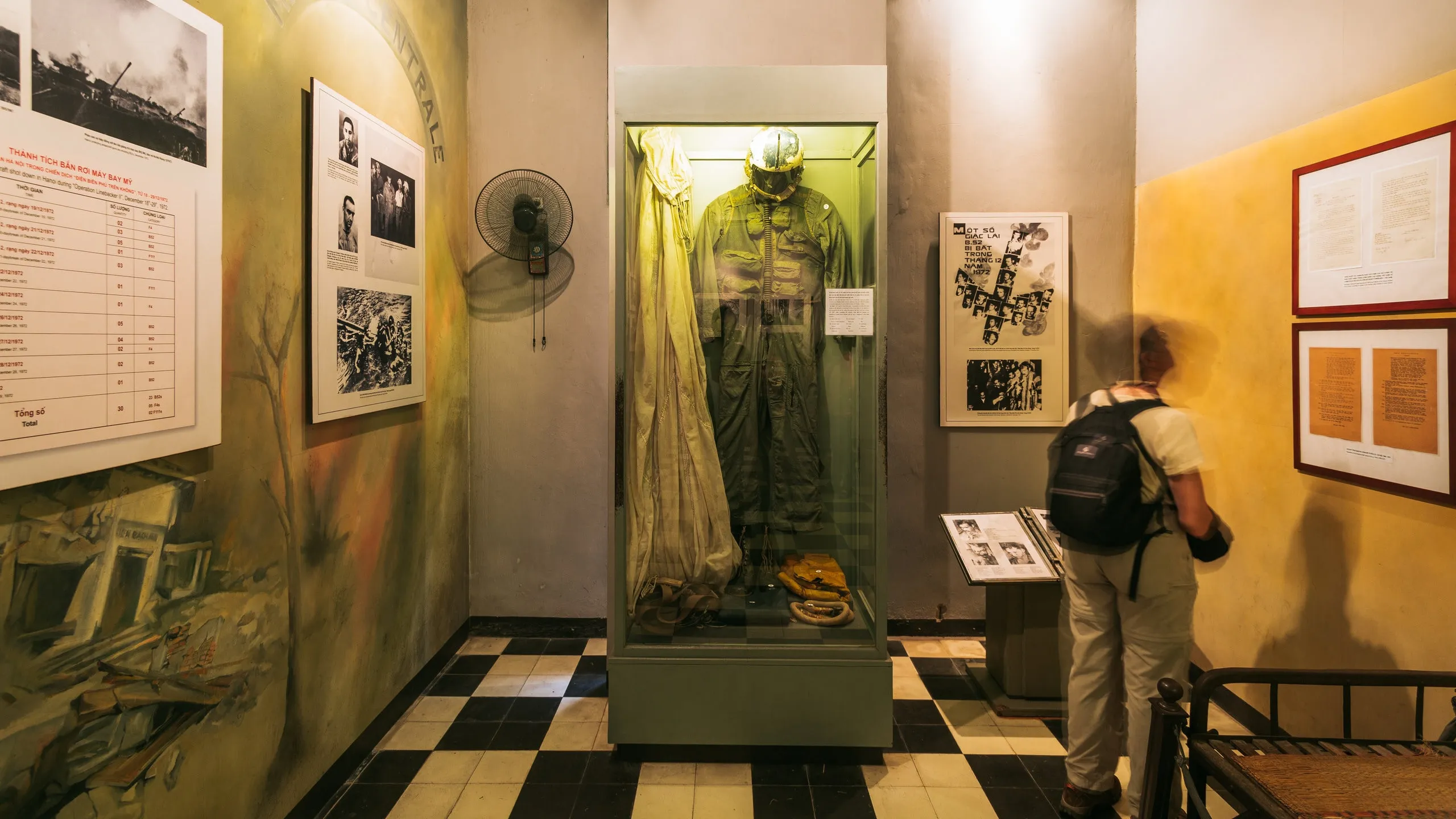
Inside Hoa Lo Prison
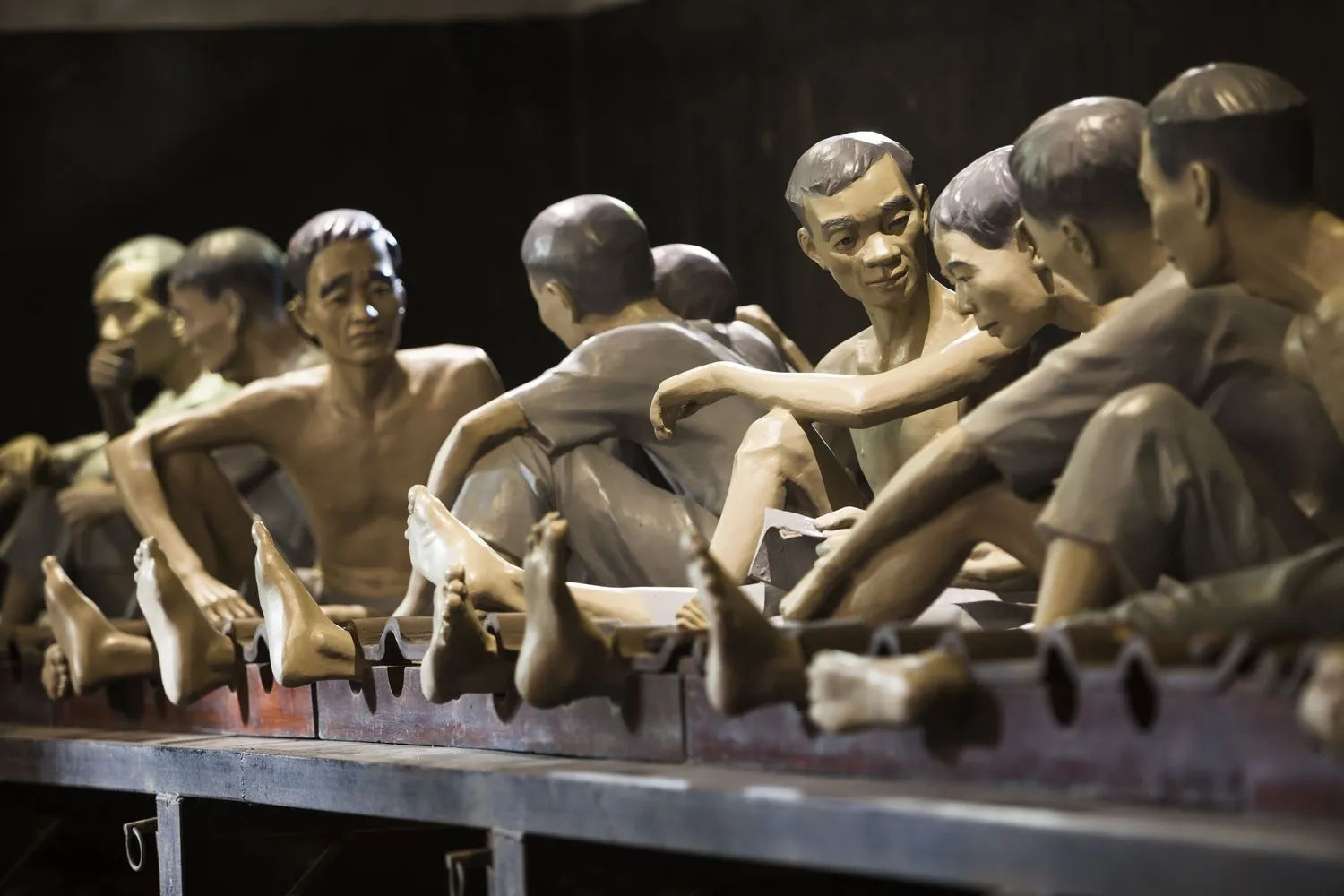
After the end of French rule in 1954, part of the prison complex continued to serve a different role during later wars in Vietnam. Between 1964 and 1973, Hoa Lo was used to detain captured U.S. pilots during the air war over North Vietnam, a period during which the site became known internationally as the “Hanoi Hilton.” While conditions and narratives surrounding this chapter vary by perspective, it remains an important layer of the prison’s complex history and one of the most visited war attractions in Vietnam.
Most of the original complex was demolished in the 1990s to make way for modern development, and today only a portion remains as a museum and historical relic in central Hanoi.

A Night Tour in Hoa Lo Prison
Vietnam Military History Museum
Address: Km 6+500 Thang Long Boulevard, Hanoi
The Vietnam Military History Museum provides a comprehensive overview of Vietnam’s enduring journey toward independence and defense in the 20th century.
The museum houses more than 150,000 artifacts, including four national treasures such as MiG-21 fighter jets, a T-54B tank from the Ho Chi Minh Campaign, and historically significant maps and documents. Indoor galleries are organized into chronological themes covering the country’s long military history (from early defense and resistance against colonial powers, through struggles against French colonialism and U.S. intervention, to post-1975 nation building) while extensive outdoor displays showcase aircraft, artillery, and armored vehicles used in Vietnam’s wars.
With modern presentation technology such as 3D mapping, audio guides, QR codes, and multimedia exhibits, the museum offers visitors an engaging way to explore Vietnam’s military heritage.
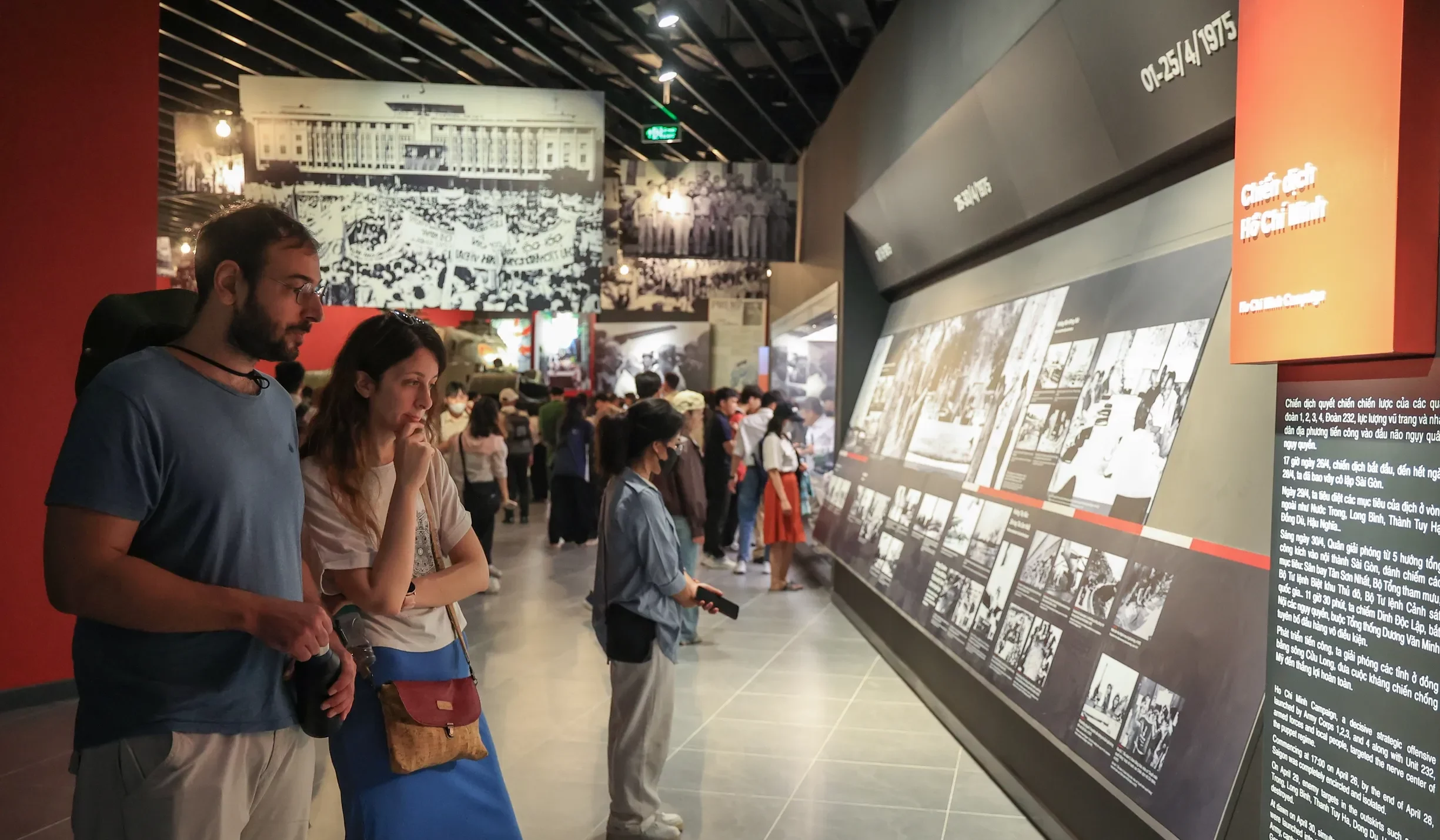
The Ho Chi Minh Campaign (1975) exhibition area at the Vietnam Military History Museum.
Quick-visit attractions in Northern Vietnam
In addition to major museums, Hanoi is home to several smaller yet significant war attractions in Vietnam that can be easily combined in a city tour.
in 19 Days

B-52 Lake (Huu Tiep Lake) in Hanoi preserves the wreckage of a U.S. B-52 bomber shot down during the December 1972 air raids, known as the “Christmas Bombing.” Parts of the aircraft remain visible in the lake, making it one of the few historical attractions in Vietnam where history is integrated into everyday urban life.

The secret bunker at House No. 67 in the Imperial Citadel of Thang Long was built in 1967 as a fortified underground headquarters for the Central Military Commission during intense American bombing of Hanoi. Located beneath Building D67, this bomb-proof shelter once hosted top military planning sessions and strategic meetings that helped shape key wartime decisions.

At Truc Bach Lake in Hanoi, the John McCain Memorial marks the approximate site where U.S. Navy pilot John McCain was shot down and captured in 1967. The simple plaque and flag-lined area honor his story of survival and eventual reconciliation.
Significant war attractions in Central Vietnam
Central Vietnam has long been one of the regions most deeply affected by 20th-century warfare and national division. Due to its strategic geography, this area repeatedly became a frontline during prolonged periods of armed conflict, leaving a landscape marked not only by military installations but also by the lasting impact of the wars in Vietnam on civilian life.
Following the end of French colonial rule in 1954, Central Vietnam lay adjacent to the 17th parallel, the temporary military demarcation line established by the Geneva Accords. Subsequent foreign military involvement, particularly by the United States in support of the South, transformed this zone into one of the most heavily contested areas in the country. Provinces such as Quang Tri experienced sustained bombardment, large-scale troop movements, and widespread displacement, as the region became a focal point of U.S. military operations aimed at preventing national reunification.
Vinh Moc Tunnels
Address: Vinh Moc Village, Quang Tri
The Vinh Moc Tunnels are one of the most remarkable war-related historical sites in Central Vietnam. Built in the late 1960s by local villagers with support from North Vietnamese authorities, this extensive underground system was created by local communities living near the former dividing line of the country, where bombardment was constant and severe.
Unlike tunnel systems designed mainly for combat, Vinh Moc functioned as a complete underground village. Families lived, cooked, studied, and sought shelter here for years, demonstrating how civilians adapted to extreme conditions in order to survive. Today, the tunnels offer visitors a rare insight into everyday life shaped by prolonged conflict rather than battlefield strategy alone.

An entrance to the tunnel at Vinh Moc

Son My (My Lai) Memorial Site
Address: Tu Cung Village, Quang Ngai
The Son My Memorial Site, also known internationally as My Lai, commemorates one of the most tragic civilian incidents in Vietnam’s war history. The site preserves the remains of the former village and documents the loss suffered by local residents during a 1968 military operation in which hundreds of unarmed civilians were killed.

Son My Memorial Site from above

Beside the scale of the tragedy, My Lai became one of the most widely reported civilian massacres of the American War, later investigated by the U.S. military and global media. The event played a significant role in shaping international public opinion about the war and raised lasting questions about military conduct, accountability, and civilian protection in armed conflict.
Through outdoor memorials, sculptures, and a small exhibition space, Son My emphasizes remembrance and reflection rather than military narratives. Visiting this memorial allows travelers to understand the human cost of conflict and the profound, long-term impact such violence had on rural communities in Central Vietnam.
Quick-visit attractions in Central Vietnam
Hien Luong Bridge and the Ben Hai River became a historically significant landmark following the 1954 Geneva Accords, which temporarily divided Vietnam pending nationwide elections.
Due to U.S. intervention in South Vietnam, the Ben Hai River was subsequently transformed into a prolonged political and military boundary rather than a short-term administrative line. It is one of the essential historical attractions in Vietnam for those studying the American War.

Travel Sense Asia team visiting Hien Luong Bridge
Truong Son National Cemetery is one of the largest war cemeteries in the country, serving as the final resting place for tens of thousands of Vietnamese soldiers who died along the Ho Chi Minh supply routes. It offers a solemn space for reflection on the human cost of the wars in Vietnam.

Truong Son National Cemetery from above
Significant war attractions in Southern Vietnam
Southern Vietnam, with Saigon (now Ho Chi Minh City) as its historical center, offers a distinct perspective on Vietnam’s modern wartime history. Unlike the north, which functioned primarily as a political and strategic command center, the south became the main arena of foreign military involvement.
During the late French colonial period, southern Vietnam already contained major prisons and detention centers used to suppress anti-colonial and revolutionary movements. After the country’s temporary division in 1954, Saigon was established as the capital of a southern administration sustained by U.S. political, financial, and military support. As American involvement expanded, the region saw escalating combat operations, intelligence activities, and internal security campaigns, profoundly affecting both urban life in Saigon and the surrounding rural provinces.
War Remnants Museum
Address: 28 Vo Van Tan, Ho Chi Minh City
The War Remnants Museum is one of the most visited historical attractions in Vietnam, focusing on the human consequences of large-scale foreign military intervention. Its exhibitions document the aftermaths of prolonged warfare on civilians, including destruction, displacement, and long-term environmental effects resulting from U.S. military operations.

Inside the War Remnants Museum
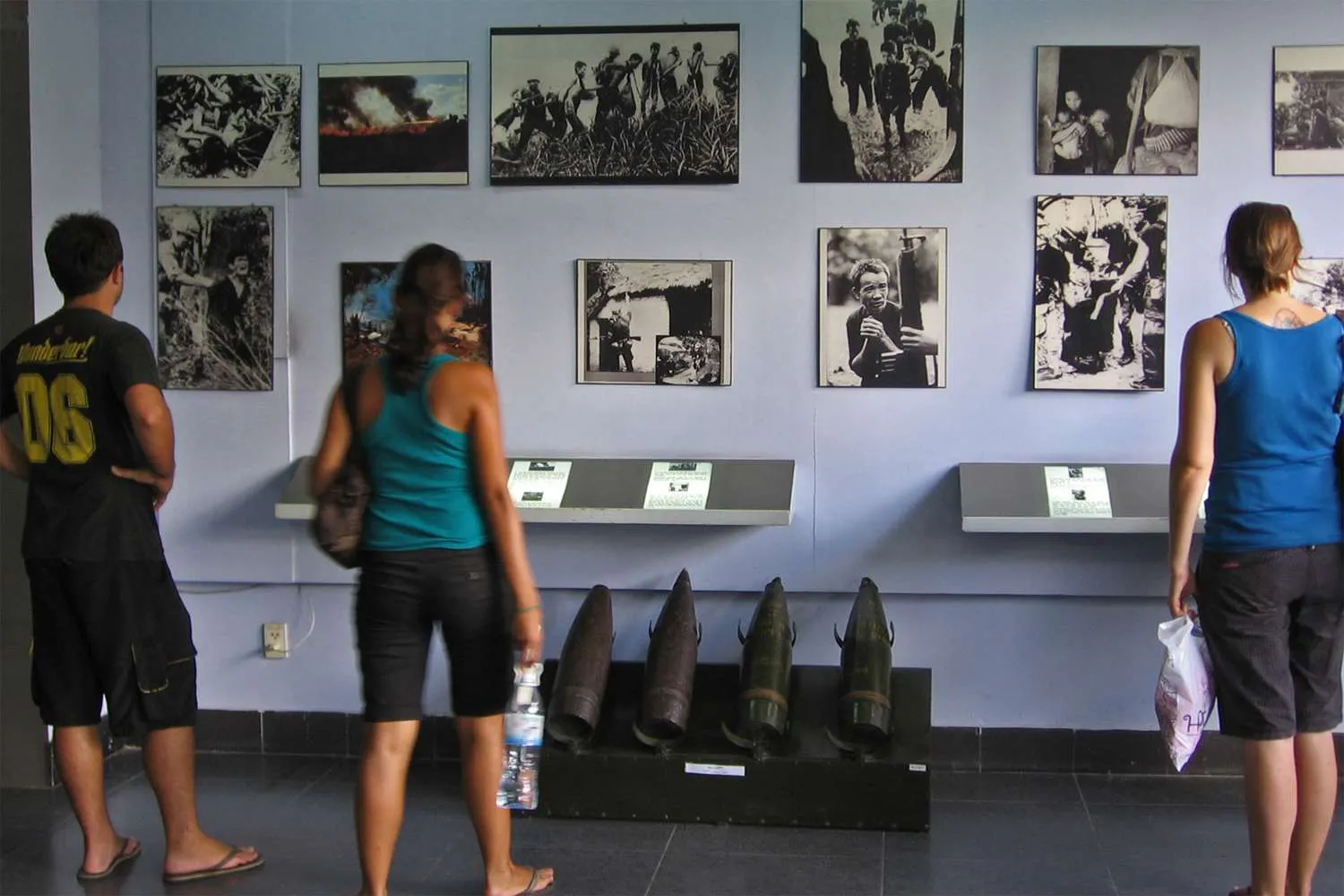
Through powerful photographs, official documents, and preserved military equipment, the museum presents evidence of aerial bombardment, chemical warfare, and large-scale military operations carried out by U.S. forces and their allies, themes that continue to affect communities decades after the war ended.
Beyond historical documentation, the museum also functions as a space of remembrance and reflection. Visitors encounter symbolic elements such as peace memorials created from bomb fragments, emphasizing a message of reconciliation and a collective hope that such destruction will never be repeated.
Cu Chi Tunnels
Address: Phu Hiep, Cu Chi, Ho Chi Minh City
Located northwest of Ho Chi Minh City, the Cu Chi Tunnels are one of the largest and most sophisticated underground resistance networks built by the National Liberation Front (Viet Cong) during the war in southern Vietnam. Constructed and expanded from the late 1940s through the 1960s, the tunnels were designed to withstand intensive U.S. aerial bombardment and ground operations.
The tunnel system served as a hidden world beneath the battlefield, functioning as living quarters, command centers, supply routes, field hospitals, and weapon storage. From here, local resistance forces were able to move, communicate, and launch operations while avoiding detection by U.S. and allied troops equipped with overwhelming technological and firepower advantages.
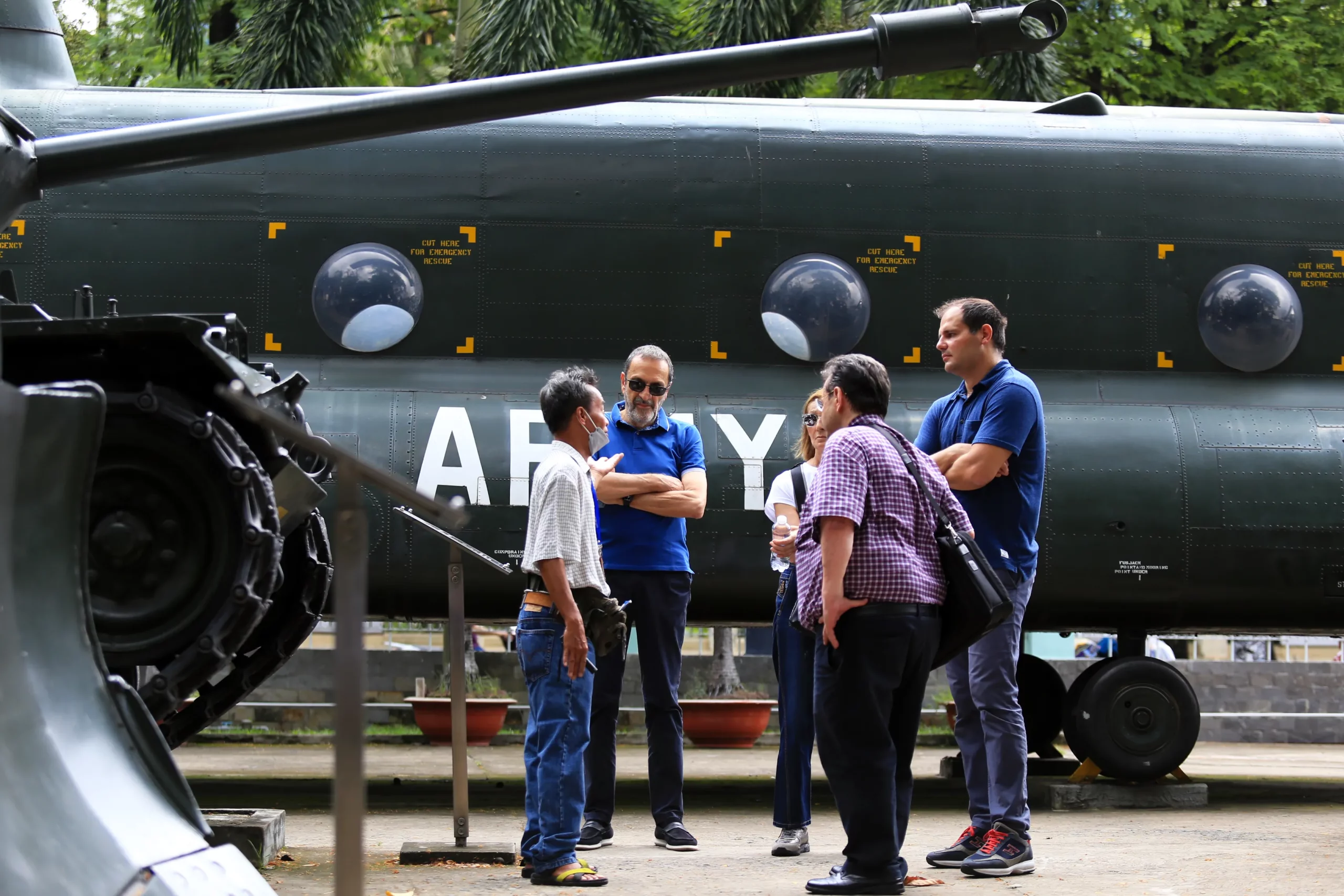
Today, the Cu Chi Tunnels are among the most famous war attractions in Vietnam, offering visitors a hands-on understanding of life underground. Travelers can crawl through widened tunnel sections and view reconstructed meeting rooms and camouflage techniques.

A bunker at Cu Chi

Con Dao Prison
Address: Nguyen Chi Thanh, Con Dao
Con Dao Prison is one of the most significant detention sites in Vietnam’s war history. Established by the French colonial administration in 1862, the prison was used to incarcerate political dissidents and anti-colonial revolutionaries.
After the end of French rule, the prison continued to operate under the South Vietnam regime, serving as a high-security detention center for political prisoners throughout the 1950s and 1960s. Its most notorious structures were the “tiger cages”, a system of harsh isolation cells designed for punishment and control. Conditions inside the prison drew international attention in 1970, when U.S. Congressman Tom Harkin exposed the treatment of detainees, prompting widespread global condemnation.
Today, Con Dao Prison stands as a powerful reminder of human resilience and the long struggle for national independence, making it a must-visit among the historical attractions in Vietnam.

A typical Tiger Case inside Con Dao Prison
Quick-visit attraction in Southern Vietnam: Secret Weapon Bunker at Do Phu Coffee
Hidden beneath what is now Do Phu Coffee in Ho Chi Minh City, this secret bunker was part of the Saigon Special Forces network of the National Liberation Front during the American War. It reflects how the anti-government resistance operated secretly inside the city, turning everyday urban spaces into strategic military assets.
Above ground, the building was a humble coffee and broken rice shop run by Mr. Do Mien and his wife, serving locals and even Korean soldiers stationed nearby, which helped conceal its covert use. Beneath this everyday setting, resistance member and leader Tran Van Lai used the hidden bunker to store weapons and supplies for coordinated attacks during the 1968 Tet Offensive, including operations targeting key symbols of the South Vietnamese and U.S.-backed government.

The secret way leading to the underground bunker
Frequently Asked Questions (Q&A) about war attractions in Vietnam
Q: Are the war attractions in Vietnam suitable for children?
Yes, many sites are educational and suitable for families. However, certain historical attractions in Vietnam, like the War Remnants Museum or Hoa Lo Prison, contain graphic imagery. We recommend parents review the exhibits first or focus on sites like the Cu Chi Tunnels, which offer a more interactive look at Vietnam’s war history.
Q: How much time should I dedicate to exploring Vietnam’s war history?
To see the major sites in the North, Center, and South, we recommend a trip of at least 14 days. This allows you to visit key historical attractions in Vietnam such as the tunnels in Quang Tri and Cu Chi, as well as the major museums in Hanoi and Ho Chi Minh City.
Q: Is it respectful to take photos at these historical attractions in Vietnam?
Generally, photography is allowed at most war attractions in Vietnam. However, in solemn areas like the Ho Chi Minh Mausoleum or the cemeteries, it is important to be quiet and respectful. Always look for signage indicating where photography is prohibited.
Q: What is the best way to understand the complex wars in Vietnam during a visit?
Hiring a local guide is the best way to gain context. A guide can explain the nuances of Vietnam’s war history and provide local perspectives that you might not find in textbooks, making your visit to these historical attractions in Vietnam much more meaningful.
Q: Are the underground war attractions in Vietnam (like tunnels) safe for claustrophobic visitors?
At popular sites like the Cu Chi Tunnels, certain sections have been widened for tourists. However, if you are very claustrophobic, you can still enjoy the outdoor exhibits and reconstructions without entering the tunnels themselves. Most war attractions in Vietnam offer plenty to see above ground.
Conclusion
Exploring these war attractions in Vietnam from Hanoi to Central Vietnam and onward to the south allows travelers to understand Vietnam’s war history as a continuous process rather than a single event. More than reminders of conflict, these sites emphasize resilience, survival, and remembrance, offering meaningful insight into how the past continues to shape Vietnam today.
At Travel Sense Asia, we believe meaningful travel begins with understanding. By thoughtfully connecting these historical landmarks into well-paced itineraries, we help travelers explore Vietnam’s war history with context, sensitivity, and local insight, ensuring that each visit goes beyond sightseeing. If you are looking to explore the most important historical attractions in Vietnam in a deeper, more informed way, contact our team here and start planning a journey that suits your needs.